
Desserts
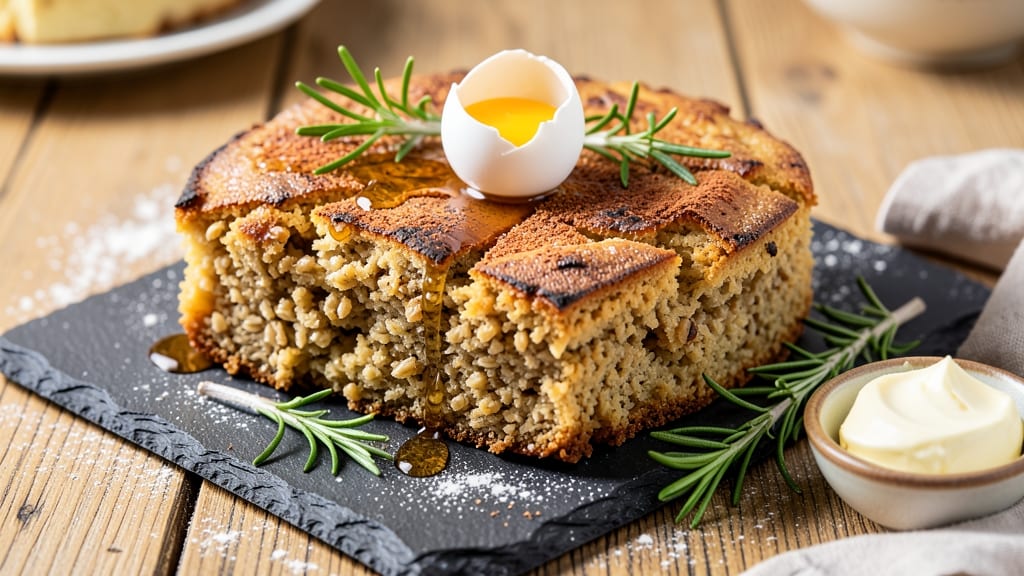
This ancient barley cake recipe brings history to your kitchen with its nutty, chewy texture and honeyed sweetness. 🌾 Unlike modern desserts, this cake relies on barley flour—a staple of ancient diets—for its distinctive flavor and hearty crunch.
The combination of warm spices and honey creates a dessert that feels both nostalgic and deeply satisfying.
What makes this recipe special is its simplicity and authenticity. No refined sugars or artificial ingredients—just whole grains, honey, and a touch of butter or oil to bind. The cake develops a golden crust while staying tender inside, with a subtle nuttiness that comes from the barley.
It’s perfect for those who appreciate traditional baking methods with a modern twist.
Baking at a steady 350°F ensures even cooking, while the natural sweetness of honey balances the earthy barley. The result is a cake that’s rich in texture and flavor, yet light enough to enjoy as a dessert or even breakfast.
This recipe honors ancient techniques while delivering a dessert that feels both familiar and exciting.
Whether you’re exploring historical recipes or simply craving something unique, this barley cake delivers. The nutty depth and honeyed crunch make it a standout treat that’s sure to impress. Let’s get baking!
Ingredients for ancient barley cake
Ancient grains, warm spices, and honeyed sweetness—this cake brings history to your kitchen table.
| Ingredient | Amount | Notes |
|---|---|---|
| Barley Flour 🌾 | 2 ½ cups | Stone-ground preferred for texture |
| Unsalted Butter 🧈 | 1 cup | Cold, cubed for even mixing |
| Raw Honey 🍯 | 1 cup | Wildflower variety for depth |
| Large Eggs 🥚 | 2 whole | Room temperature for even baking |
| Vanilla Extract 🌿 | 1 tbsp | Pure, high-quality extract |
| Ground Cinnamon 🌶️ | 1 ½ tsp | Freshly ground for warmth |
| Ground Nutmeg 🌶️ | ½ tsp | Freshly grated preferred |
| Ground Ginger 🌶️ | 1 tsp | Freshly ground for zing |
| Salt 🧂 | ½ tsp | Fine sea salt for balance |
| Warm Milk 🥛 | 1 cup | Whole milk for richness |
| Almond Flour 🌰 | ½ cup | For added crunch and nuttiness |
| Baking Soda 🧪 | 1 tsp | Ensures proper rise |
| Toasted Walnuts 🥜 | ½ cup | Chopped for texture contrast |
Barley flour is the heart of this cake, so choose stone-ground for that authentic, hearty texture. Most health food stores carry it, but Bob’s Red Mill or King Arthur Flour are reliable brands online. If you can’t find barley flour, whole wheat pastry flour works in a pinch, though the flavor will be slightly different. The almond flour adds richness—blend your own from whole almonds for the best flavor, or grab pre-ground from the baking aisle. Toast your walnuts in a dry pan until golden for extra depth of flavor.
No honey? Maple syrup or agave nectar will work, though honey’s floral notes are irreplaceable. Freshly ground spices make all the difference—Penzeys or Spicewalla are great for quality whole spices you can grind yourself. If you’re short on time, pre-ground spices are fine, but toast them lightly in a dry pan first to wake up their flavors. The warm milk helps tenderize the barley flour, so don’t skip it—any milk will do, but whole milk gives the best texture.
This cake keeps well for 5-7 days in an airtight container at room temperature, though it’s best enjoyed fresh. For longer storage, wrap tightly in plastic and refrigerate for up to 2 weeks. The texture stays chewy, but the crust firms up slightly after a day—reheat slices in a 300°F oven for 5 minutes to restore its warmth. Slice with a serrated knife for clean cuts through the dense crumb.
Why You'll Love This Recipe
- No-Fuss Mixing: I swear by this recipe because it’s literally three bowls and a whisk. No sifting, no creaming butter for ages—just fold in that barley flour, crack in the eggs, and let the honey and vanilla do their magic. My hands are always sticky from kneading, but not here. The dough comes together faster than I can finish my first cup of coffee.
- Honey-Butter Bliss: That raw honey isn’t just sweet—it’s rich, cutting through the earthy depth of barley flour like a warm hug. And the butter? Don’t skimp. It keeps the cake tender without being greasy, while the vanilla ties everything into this cozy, slightly nutty finish. Honestly, I’ve made this with store-bought vanilla and real extract, and the difference is night and day.
- Breakfast or Dessert: Here’s what sold me—this cake works for both. Serve it warm with a drizzle of extra honey for a lazy weekend breakfast, or dust it with powdered sugar and a sprinkle of flaky salt for an after-dinner treat. My kids ask for it at 7 AM, and my husband sneaks slices at midnight. No judgment here.
- Budget-Friendly Staples: Barley flour might sound fancy, but it’s cheaper than all-purpose and packs more nutrition. Plus, eggs, butter, and honey are pantry basics you’re already buying. I’ve made this for potlucks, last-minute gifts (wrapped in parchment, tied with twine), and even frozen slices for when I’m too tired to bake. It’s my go-to for feeding a crowd without breaking the bank.
Step-by-step instructions for ancient barley cake
Here's the method for crafting a cake with ancient grain richness and nutty depth.
👨🍳 Step 1: Cream Butter, Honey, and Eggs
In a stand mixer fitted with the paddle attachment, beat the 1 cup Unsalted Butter on medium speed for 2-3 minutes until completely smooth and pale. Add the 1 cup Raw Honey and mix for another 2 minutes until fully incorporated and the mixture lightens in color.
Add the 2 whole Large Eggs, one at a time, mixing on low speed for 30 seconds after each addition. This gradual incorporation prevents curdling. Scrape down the sides of the bowl as needed to ensure all ingredients combine evenly. The mixture should be thick and ribbon-like at this stage.
👨🍳 Step 2: Combine Dry Ingredients
In a separate medium bowl, whisk together the 2.5 cups Barley Flour, 0.5 cup Almond Flour, 1.5 tsp Ground Cinnamon, 0.5 tsp Ground Nutmeg, 1 tsp Ground Ginger, 0.5 tsp Salt, and 1 tsp Baking Soda. Sift the dry ingredients through a fine-mesh sieve directly into the bowl to aerate them and prevent lumps in the final batter.
Make a well in the center of the dry ingredients and pour in the 1 cup Warm Milk. Use a whisk to gradually incorporate the milk into the dry ingredients, mixing just until combined. Avoid overmixing at this stage—you should still see small streaks of flour in the mixture. This ensures a tender crumb rather than a dense one.
🥘 Step 3: Fold Wet and Dry Mixtures Together
With the mixer on low speed, gradually add the dry ingredient mixture to the butter-honey-egg mixture in the mixer bowl. Mix just until the batter comes together—about 30-45 seconds. Scrape down the sides of the bowl again to ensure all ingredients are fully incorporated.
Remove the bowl from the mixer and stir in the 1 tbsp Vanilla Extract and 0.5 cup Toasted Walnuts by hand using a silicone spatula. Fold gently to distribute the walnuts evenly throughout the batter. The walnuts should be dispersed but still visible, adding texture contrast to each bite. Let the batter rest for 10 minutes at room temperature while you prepare your baking pan.
🔥 Step 4: Bake to Golden Perfection
Preheat your oven to 350°F. Grease a 9-inch round cake pan or 8x8-inch square pan with butter or line it with parchment paper for easy removal. Pour the batter into the prepared pan and smooth the top with a spatula. Bake for 40-45 minutes or until a toothpick inserted into the center comes out clean.
Watch for the edges to turn golden brown and the top to develop a slightly cracked texture—this indicates the cake is fully baked. If the top browns too quickly, tent the pan with aluminum foil to prevent over-browning while the center finishes cooking. The cake should spring back slightly when pressed gently in the center.
⏰ Step 5: Cool and Serve
Remove the cake from the oven and let it cool in the pan for 10 minutes. Then transfer it to a wire rack to cool completely. The cake will continue to set as it cools, developing a firmer texture and more pronounced flavors. Serve slices at room temperature for the best texture and flavor balance.
This ancient barley cake delivers a perfect harmony of nutty barley, honeyed sweetness, and toasted walnut crunch. The spices add warmth that lingers with each bite, making it ideal for breakfast, dessert, or an afternoon treat. Store leftovers in an airtight container at room temperature for up to 3 days or refrigerate for up to 5 days.
Pro Tips For Making Ancient Barley Cake
- WHISK EGGS ROOM TEMP: Barley flour’s dense texture needs eggs that blend smoothly—cold eggs create lumps like nobody’s business. Pop those eggs out of the fridge 30 minutes before mixing, or even better, let them sit in warm water for 5 minutes if you’re in a rush. Trust me, your cake’s texture will thank you.
- MELT BUTTER SLOWLY: Butter burns faster than you’d think, especially when paired with honey’s liquid gold. Warm it in a bowl over barely simmering water (double boiler style) until just melted—no sizzling allowed. Cold butter? The cake turns out dense. Hot butter? You’ll taste smoke. Aim for 90 seconds max.
- WEIGH FLOUR LIKE A PRO: Scooping barley flour from the bag packs it tight, and your cake will turn out heavier than a medieval loaf. Use a kitchen scale and spoon the flour into the cup—don’t press it down. If you’re eyeballing, you’re already losing. A few grams make a difference in crumb texture.
- HONEY FIRST, THEN VANILLA: Add the honey to the butter mix first—it dissolves faster and makes the batter silkier. Vanilla extract? Stir it in last, right before folding in the eggs. Otherwise, it’ll cook off too early and leave you with a cake that tastes like plain honeyed dough. Timing matters here.
Essential equipment for this dish
Stone-Ground Flour Essentials
Barley flour is the star of this cake, so invest in a stone-ground variety for that authentic, rustic texture. Most health food stores carry it, but brands like Bob’s Red Mill or King Arthur Flour offer reliable quality online.
If you can't find barley flour, whole wheat pastry flour works in a pinch, though the flavor will be slightly less distinct. The almond flour adds richness—blend your own from whole almonds for the best flavor, or grab pre-ground from the baking aisle. 🌾
Precision Mixing Tools
A stand mixer with a paddle attachment is ideal for creaming the butter and honey, but a hand mixer works too. For sifting dry ingredients, a fine-mesh sieve ensures no lumps in your batter. I also recommend a silicone spatula for folding in walnuts—it won’t scratch your mixing bowl.
A 9-inch round cake pan or 8x8-inch square pan is perfect for baking, but any oven-safe pan will do. Grease it well or line with parchment paper for easy removal. 🥄
Spice Grinders Matter
Freshly ground spices make all the difference in this recipe. Invest in a small spice grinder or buy whole spices from brands like Penzeys or Spicewalla to grind yourself.
If you're short on time, pre-ground spices are fine, but toast them lightly in a dry pan first to wake up their flavors. A digital kitchen scale (even a basic one) ensures accurate measurements, especially for the almond and barley flours. 🌶️
Temperature Control
An oven thermometer is non-negotiable for accurate baking. Many home ovens run hot or cold, and this cake relies on precise 350°F for even cooking. A wire cooling rack is essential for proper cooling—it prevents soggy bottoms and helps the cake set evenly.
For extra insurance, I keep a toothpick or cake tester nearby to check doneness. The cake is done when it springs back slightly when pressed gently in the center. 🌡️
Optional Extras
A food processor comes in handy if you're toasting walnuts in bulk. For serving, a serrated knife gives clean slices through the dense crumb. If you want to elevate presentation, a dusting brush lets you lightly coat slices with powdered sugar or cocoa.
For storage, airtight containers (glass or plastic) keep the cake fresh for up to 5-7 days at room temperature. ❄️
Nutrition facts
Frequently asked questions
Why does this ancient barley cake need almond flour?
The almond flour adds richness and a delicate nuttiness that complements the earthy barley. It also helps create a tender crumb while balancing the barley's natural density. Without it, the texture might be too heavy—especially since barley flour absorbs more moisture. Think of it as the ancient equivalent of modern cake enhancers!
Can I substitute honey with another sweetener?
Yes, but honey's floral notes are irreplaceable. For a 1:1 swap, try maple syrup or agave nectar, though the flavor will be slightly less complex. If using maple, reduce other liquids by 1 tablespoon since it's thicker. For a neutral option, light brown sugar works but lacks the honey's depth—reduce by 1/4 cup since it's denser.
What's the secret to preventing a dense barley cake?
Don't overmix! The key is gentle folding and proper resting. Mix dry ingredients just until combined, and let the batter rest for 10 minutes before baking. Overmixing develops gluten in the barley flour, making the cake tough. Also, use room-temperature eggs and butter for even distribution—cold ingredients create pockets that don't bake uniformly.
How do I store leftovers to keep them fresh?
Wrap slices tightly in plastic wrap or store in an airtight container. At room temperature, it stays fresh for 3 days. For longer storage, refrigerate for up to 5 days. To revive stale slices, warm them in a 300°F oven for 5 minutes—the heat restores moisture without overcooking. The cake's texture actually improves after a day as the barley flour firms up!
Can I make this cake gluten-free?
Yes, but with adjustments. Replace barley flour with a 1:1 gluten-free flour blend (like Bob's Red Mill 1-to-1) and add 1/2 teaspoon xanthan gum to mimic barley's binding properties. The texture will be slightly different—more crumbly—but still delicious. For best results, use a gluten-free baking pan and grease it well to prevent sticking.