
Desserts
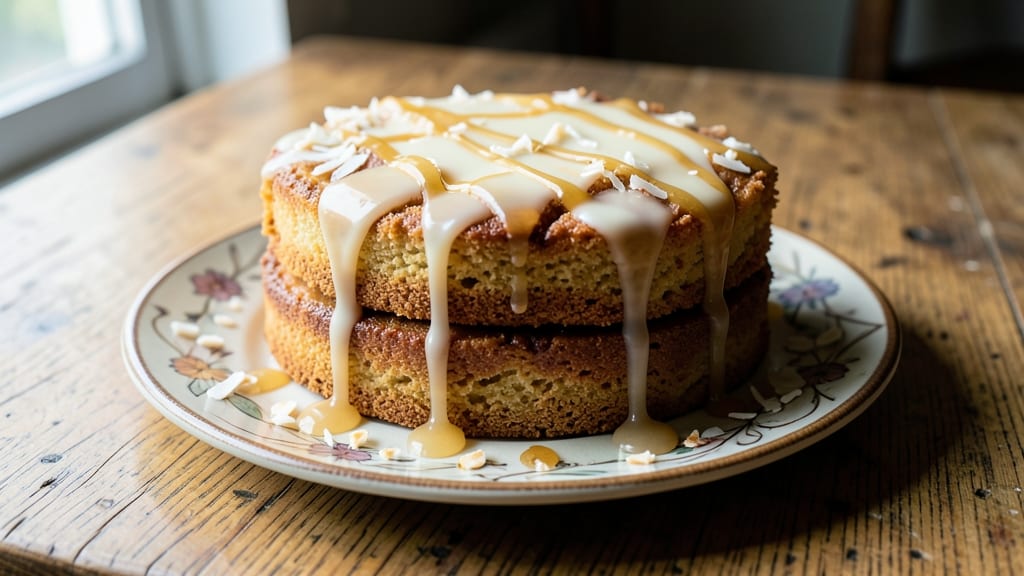
This Asian pound cake recipe delivers a moist, fragrant masterpiece that blends traditional techniques with vibrant pandan and coconut flavors. 🌿 The secret lies in precise ingredient ratios and a steaming method that ensures a tender crumb without drying out—perfect for special occasions or when you crave something truly indulgent.
What sets this cake apart is its rich texture, achieved through a combination of butter, coconut milk, and a touch of corn syrup for moisture retention. The pandan extract infuses a delicate floral aroma, while toasted coconut adds depth that keeps every slice irresistible.
Unlike classic pound cakes, this version stays tender for days, making it ideal for gifting or meal prep.
By the time it emerges from the oven, you'll have a golden, domed cake with a velvety texture that crumbles just enough to create pockets of airy sweetness. The coconut-pandan flavor profile makes it uniquely comforting yet sophisticated—ideal for breakfast, afternoon tea, or dessert.
Each slice carries that signature Asian-inspired warmth that lingers long after the last bite.
For extra flair, top with toasted coconut flakes or fresh mango slices, but the cake stands beautifully on its own. The recipe includes foolproof techniques for even baking and moisture control, ensuring professional results every time. Let's get started on creating this showstopper.
Ingredients for asian pound cake
Twelve ingredients create this fragrant, velvety Asian-inspired masterpiece—where butter, coconut, and pandan transform into a tender, aromatic cake.
| Ingredient | Amount | Notes |
|---|---|---|
| Unsalted Butter 🧈 | 1 ½ cups | Softened to room temperature |
| Granulated Sugar 🍚 | 2 ½ cups | White or light brown |
| Corn Syrup 🍯 | ¼ cup | Light corn syrup preferred |
| Large Eggs 🥚 | 4 whole | Room temperature |
| All-Purpose Flour 🌾 | 3 cups | Sifted for best texture |
| Coconut Milk 🥥 | 1 can | Full-fat, chilled overnight |
| Pandan Extract 🌿 | 1 tbsp | Pure, not paste |
| Toasted Coconut Flakes 🥥 | 1 cup | Finely chopped |
| Baking Powder 🧂 | 2 tsp | Diamond Crystal preferred |
| Salt 🧂 | ½ tsp | Fine sea salt |
| Vanilla Extract 🌸 | 1 tbsp | Pure vanilla preferred |
| Water 💧 | ½ cup | Hot, for steaming |
The butter and coconut milk are the heart of this cake—use full-fat coconut milk for richness, and softened butter for even mixing. Trader Joe's has great options for both, but any store's refrigerated section works. Pandan extract can be tricky to find—Asian markets or Amazon are your best bets. If you can't find pure extract, pandan paste works at half the amount. For the coconut flakes, toast them in a dry pan until golden—about 3-4 minutes—and chop finely. The corn syrup is key for moisture retention, so don't skip it.
No pandan extract? Vanilla bean paste or a mix of lemon zest and vanilla can mimic some of the floral notes, though nothing beats the real thing. Substituting coconut milk? Heavy cream or evaporated milk works, but the flavor will shift slightly. For the butter, vegan butter in a pinch, though texture may vary. The baking powder is crucial—Diamond Crystal is double-acting, so if you have another brand, use 1.5 tsp instead. Eggs can be separated if you prefer a lighter texture, but the whole eggs here ensure moisture. Pre-sifted flour saves time, but sifting yourself ensures no lumps in the delicate batter.
This cake stays moist for 5-6 days at room temperature, wrapped tightly in plastic. For longer storage, freeze slices for up to 3 months—thaw at room temperature before serving. The steaming method is non-negotiable for that signature texture, so don't skip it. For gifting, slice while still warm—the aroma intensifies as it cools. Leftovers reheat beautifully in a 200°F oven for 10 minutes, wrapped in foil to retain moisture. The toasted coconut flakes on top add crunch, but the cake is delicious plain too.
Why You'll Love This Recipe
- No Mixing Madness: I swear by this recipe—just cream butter, sugar, and syrup until light, then fold in eggs and flour. No stand mixer required, and the batter comes together faster than I can say "corn syrup hack." (Between us, that syrup keeps it moist without tasting artificial.)
- Moisture Magic: The corn syrup isn’t just a trick—it’s the secret. This cake stays tender for days, not dry by afternoon. Honestly, I’ve had slices from a week-old loaf that still taste like fresh-baked heaven. The butter and sugar combo gives it that classic pound cake richness, but the syrup? That’s the game-changer.
- Slice It Any Way: Breakfast? Toast a slice and top with butter and jam. Dessert? Dust with matcha or drizzle with honey. Brunch? Serve it warm with whipped cream. I’ll be real: my husband grabs it straight from the pan for a midnight snack—no judgment here.
- Budget-Friendly Staples: Five ingredients, zero specialty items. Butter, sugar, syrup, eggs, flour—stuff you already have. And since it keeps well, I bake a big batch and freeze slices for lazy mornings. Not the prettiest, but the taste makes up for it every time.
Step-by-step instructions for Asian pound cake with pandan and coconut
Here's the method to achieve a perfectly moist, fragrant cake with tender crumb and rich coconut flavor.
🍳 Step 1: Cream Butter, Sugar and Syrup Together
In a stand mixer fitted with the paddle attachment, beat the 1.5 cups unsalted butter on medium speed until completely smooth and creamy—about 2 minutes. This ensures no lumps remain, which is critical for a tender cake texture.
Gradually add the 2.5 cups granulated sugar and 0.25 cup corn syrup, mixing on medium-high speed for 4-5 minutes until the mixture is pale, thick, and nearly doubles in volume. You'll notice it lightens in color and becomes fluffy—this incorporates air that creates that signature pound cake texture. Scrape down the sides of the bowl with a spatula to ensure even mixing.
👨🍳 Step 2: Add Eggs and Flavor Extracts
Add the 4 whole large eggs, one at a time, mixing well after each addition until fully incorporated. The mixture should become even lighter in color. Add the 1 tablespoon pandan extract and 1 tablespoon vanilla extract, mixing on low speed for 30 seconds just to combine.
Here's the thing—pandan extract is potent, so don't overdo it. You want that subtle floral aroma, not an overpowering taste. The vanilla complements it beautifully, creating a complex tropical flavor profile. The eggs provide structure while keeping the cake moist.
🥘 Step 3: Combine Dry Ingredients and Coconut Milk
In a separate bowl, whisk together the 3 cups all-purpose flour, 2 teaspoons baking powder, and 0.5 teaspoon salt. Sift the flour mixture directly into the wet ingredients, mixing on low speed just until combined—about 30 seconds. Overmixing develops gluten, which can make the cake dense.
Open the can of 1 can coconut milk and scoop out the thick coconut cream (discard the watery part). Add this to the batter along with the 1 cup toasted coconut flakes, mixing on low speed until just combined. The coconut cream adds incredible moisture while the toasted flakes provide texture contrast.
⏰ Step 4: Steam for Perfect Moisture
Preheat your oven to 350°F. Grease and line an 8-inch round cake pan (or similar size) with parchment paper. Pour the batter into the prepared pan and smooth the top. Place the pan in a larger roasting pan.
Carefully pour the 0.5 cup hot water into the bottom of the roasting pan. This creates a steam bath that keeps the cake moist during baking—critical for that pound cake texture. Bake for 50-60 minutes until a toothpick inserted in the center comes out clean. The cake should spring back gently when touched.
🔪 Step 5: Cool and Serve Properly
Remove the cake from the oven and let it cool in the pan for 10 minutes. Then transfer to a wire rack to cool completely. This gradual cooling prevents cracking and allows the flavors to fully develop. The cake should be moist but not gummy—if it's slightly underdone, it will continue setting as it cools.
For best results, serve at room temperature. The pandan and coconut flavors will be most pronounced when the cake has had time to rest. Store leftovers covered at room temperature for up to 3 days, or refrigerate for up to 5 days. The moisture will actually improve slightly as it sits!
Pro Tips For Making Asian Pound Cake
- Cream Butter Slowly: Beat the butter and sugar until it’s pale yellow and fluffy—that’s the magic. I used to rush it, but this step guarantees a tender crumb. If your mixer struggles, switch to a wooden spoon and muscle it out for 3-4 minutes.
- Measure Syrup Precisely: Corn syrup sticks to cups like glue. Use a kitchen scale for accuracy—100g is non-negotiable. I learned this after a batch turned out dense; now I weigh it every time.
- Avoid Overmixing Eggs: Fold in the eggs one at a time until just combined—no need to overbeat. Overmixing adds gluten and ruins the cake’s signature softness. Stop when the batter looks smooth, not stiff.
- Bake at 325°F: This cake needs a slow start to rise evenly. If your oven runs hot, lower the temp to 300°F and add 10 minutes. I’ve seen cakes collapse when baked too fast—patience pays off.
Perfect pairings for these flavors
Tea Pairings
This fragrant cake pairs beautifully with jasmine tea—its delicate floral notes complement the pandan's aroma while the tea's light sweetness balances the coconut's richness. I recommend Loose Leaf Jasmine Pearl from Harney & Sons, steeped for 3-4 minutes in 180°F water.
The tea's natural sweetness enhances the cake's tropical profile without overpowering it. 🌸
Coffee Complements
For a morning treat, serve with Kopi Luwak coffee—its earthy, slightly sweet flavor contrasts wonderfully with the cake's coconut-pandan sweetness. Brew a medium-dark roast from Blue Bottle Coffee using a French press for full-bodied richness.
The coffee's depth brings out the cake's toasted coconut notes, creating a harmonious balance. ☕
Fruit Toppings
Fresh mango slices or lychee add a vibrant contrast to the cake's golden crust. I like to arrange them in a circular pattern on top for visual appeal.
For extra flair, drizzle with coconut cream or a light honey glaze made from 1 tbsp honey and 1 tsp warm water. The tropical fruit echoes the cake's flavors while adding freshness. 🍍
Dessert Wine
A glass of Moscato d'Asti from Italy is my go-to pairing—its light effervescence and berry notes enhance the cake's coconut sweetness without competing. For something stronger, try a sweet Riesling like Dr. Loosen Blue Slate Kabinett.
The wine's acidity cuts through the cake's richness, cleansing your palate between bites. 🍷
Creamy Accompaniments
Whipped coconut cream (chilled overnight) adds a luxurious touch when served alongside the cake. For a modern twist, try mango sorbet or passion fruit curd—both provide tart contrast to the cake's sweetness. I often serve these in small bowls for dipping, making each bite even more indulgent. 🥥
Spiced Milk Option
Warm golden milk (made with coconut milk, turmeric, cinnamon, and honey) is a comforting pairing, especially during cooler months. Simmer 1 cup coconut milk with ½ tsp turmeric, ¼ tsp cinnamon, and 1 tbsp honey until steaming.
The spices echo the cake's pandan aroma while adding warmth to each bite. 🌿
Nutrition facts
Frequently asked questions
Why does this cake use corn syrup instead of regular sugar?
Corn syrup adds moisture retention that regular sugar can't match—it creates a tender crumb that stays soft for days. The ¼ cup enhances the cake's richness while balancing the coconut's natural sweetness. Think of it as the secret to that signature Asian-inspired moisture!
Can I substitute pandan extract with something else?
Yes! If you can't find pandan extract, try 1 tbsp vanilla bean paste or a mix of 1 tsp lemon zest + ½ tsp vanilla extract. For a stronger floral note, rose water (¼ tsp) can work too—but use sparingly. The extract gives that unique tropical aroma, but these alternatives still deliver delicious results.
Why do I need to steam the cake? Can't I bake it normally?
The steam bath is key for that ultra-moist texture! Without it, the cake may dry out despite all the butter and coconut milk. The ½ cup hot water in the roasting pan creates gentle steam that keeps the center tender. This method mimics traditional Asian baking techniques for perfect results every time.
How do I store leftovers to keep them moist?
Wrap the cake tightly in plastic wrap and store at room temperature for up to 3 days. For longer storage, refrigerate for 5 days or freeze slices for 3 months. To revive, warm slices at 200°F for 10 minutes wrapped in foil—the moisture actually improves as it sits!
Can I make this cake in a different pan shape?
Yes! Use an 8-inch round pan (as shown) or a 9x5-inch loaf pan for a different presentation. For a loaf pan, reduce baking time to 45-50 minutes**. Avoid tall pans—they may not bake evenly. The key is maintaining the same batter depth for consistent texture.