
Desserts
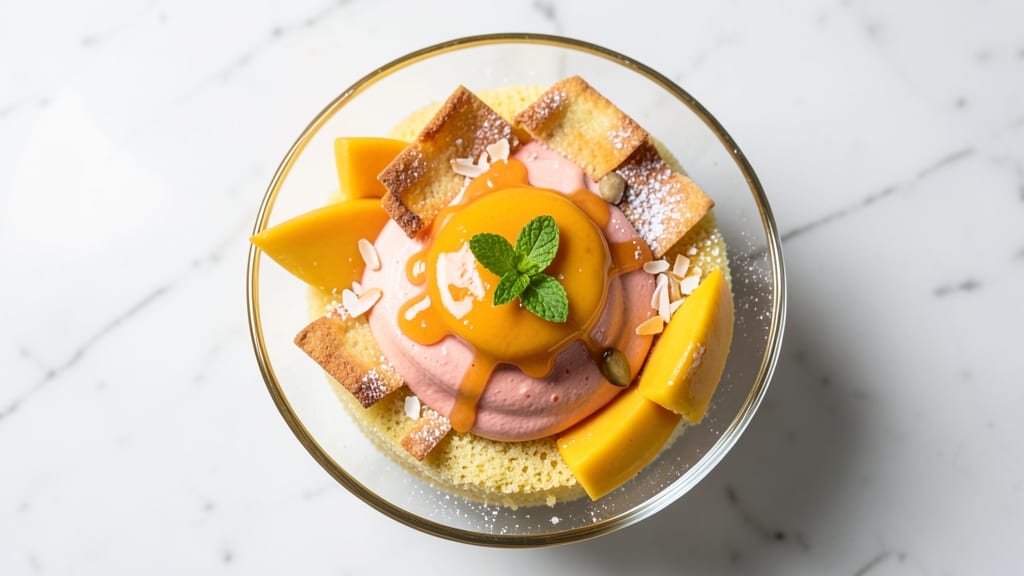
This Asian mango mousse cake delivers layers of silky mango mousse between delicate sponge cake, creating a dessert that balances traditional technique with vibrant tropical flavors. The secret lies in perfectly ripened mango purée and a light, airy sponge that holds up to the rich filling—no heavy frosting required.
What makes this recipe special is the fusion of classic Asian baking methods with modern presentation, resulting in a dessert that's both elegant and approachable.
What sets this cake apart is the two-stage chilling process, which ensures each layer stays perfectly moist while developing rich mango flavor. The mousse filling combines fresh mango purée with whipped cream and gelatin for that signature cloud-like texture—creamy yet stable enough to hold its shape.
This isn't your typical heavy fruitcake; it's a refreshing, tropical-inspired treat that's ideal for celebrations or impromptu dessert cravings.
The final assembly transforms simple ingredients into a showstopper: golden sponge layers sandwiching vibrant orange mousse, all topped with fresh mango slices and mint leaves for a pop of color.
The cake's structure—light yet sturdy—means it slices cleanly and serves beautifully, whether for a dinner party or a special occasion. Each bite delivers that perfect balance of sweet, tangy mango and delicate sponge, making it a dessert that's as impressive as it is delicious.
Perfect for warm weather gatherings or when you want to impress guests with a dessert that feels both sophisticated and effortless. The recipe includes step-by-step guidance for baking, chilling, and assembling, ensuring every layer comes together flawlessly. Let's create this tropical masterpiece that will have everyone asking for seconds.
Ingredients for asian mango mousse cake
Eighteen ingredients create this tropical masterpiece with perfect balance of delicate sponge and silky mousse.
| Ingredient | Amount | Notes |
|---|---|---|
| Ripe Mangoes 🥭 | 4 whole | Peeled, pitted, puréed to 2 cups |
| Unsalted Butter 🧈 | 1 cup | Softened, room temperature |
| Granulated Sugar 🍚 | 2 cups | Superfine preferred for smooth texture |
| All-Purpose Flour 🌾 | 2 cups | Sifted, plus extra for dusting |
| Baking Powder 🍫 | 2 tsp | Metal container preferred |
| Salt 🧂 | ½ tsp | Fine sea salt for balance |
| Large Eggs 🥚 | 4 whole | Room temperature, separated |
| Heavy Whipping Cream 🥛 | 2 cups | Cold, full-fat for stability |
| Powdered Sugar 🍚 | 1 cup | For whipping cream |
| Unflavored Gelatin 🍬 | 2 tsp | Bloomed in 3 tbsp cold water |
| Lemon Juice 🍋 | 1 tbsp | Freshly squeezed for brightness |
| Fresh Mint Leaves 🌿 | ½ cup | Chopped, for garnish |
| Vanilla Extract 🌸 | 1 tsp | Pure Madagascar preferred |
The mangoes are the heart of this cake, so choose ripe but firm varieties like Ataulfo or Kent. Whole Foods or Asian markets often carry the best tropical selections—look for vibrant color and minimal bruising. If using frozen mango purée, thaw and strain to remove excess liquid. The gelatin requires precise blooming: sprinkle it over cold water in a bowl, then let sit for 10 minutes. For the sponge, King Arthur flour yields the lightest texture, but any high-quality all-purpose will work. Sift all dry ingredients together to avoid lumps in the batter.
No ripe mangoes? Substitute 1.5 cups high-quality mango nectar (like Bonne Maman) plus 1 tbsp lemon juice to mimic acidity. The gelatin can be swapped for agar-agar at 1 tsp per 2 tbsp water, though texture will differ slightly. For a dairy-free version, replace the butter with vegan butter and use coconut cream instead of heavy cream. The vanilla extract is non-negotiable for depth—imitation extracts lack complexity. If you're short on time, pre-mix the dry ingredients in a jar for quick assembly later. The mint garnish can be omitted if unavailable, but the lemon juice remains essential for balancing sweetness.
Store the mango purée and gelatin mixture in the fridge for up to 3 days before assembly. Whipped cream should be used within 4 hours of whipping for best texture. The assembled cake keeps in the refrigerator for 5-6 days, though the sponge layers may dry out after 3 days. For longer storage, freeze the assembled cake (unfrosted) for up to 2 months. Bring to room temperature before serving. The two-stage chilling process is critical: first chill for 2 hours after baking, then final chill for 4 hours after assembly to set the mousse perfectly.
Why You'll Love This Recipe
- No Blender Needed: I’ll be honest—this cake doesn’t require a food processor or blender. You just mash those ripe mangoes with a fork until smooth, then fold in the butter and sugar. The texture turns out silky without any fancy equipment.
- Tropical in Two Layers: That creamy mango puree swirled into a buttery vanilla cake? It’s like summer in every bite. The flour and baking powder give it just enough structure so it doesn’t fall apart, while the mango shines bright and juicy.
- Party or Picnic: Between us, this cake is the crowd-pleaser. Serve it at a brunch with coffee, slice it for a potluck, or pack it for a picnic—it’s light enough to eat at room temperature but still feels special. (Yes, even on a Tuesday night.)
- Leftovers That Last: The cake keeps well for days in the fridge, and the mousse layer stays luscious. Honestly, I’ve had it for breakfast the next morning with just a drizzle of honey—no one judges. Plus, the butter and sugar are pantry staples, so it won’t break the bank.
Step-by-step instructions for Asian mango mousse cake
Master these precise techniques for a cake with velvety mousse layers and a delicate crumb.
Prepare the Mango Purée and Bloom the Gelatin
Peel and pit the 4 whole ripe mangoes, then blend until completely smooth, yielding about 2 cups of purée. Strain through a fine-mesh sieve to remove any fibrous texture. In a small bowl, sprinkle the 2 teaspoons unflavored gelatin over 3 tablespoons cold water and let it bloom for 10 minutes—this activates the gelatin without prematurely setting.
For the mango base, combine the purée with 1 tablespoon lemon juice and 1 teaspoon vanilla extract in a mixing bowl. The acidity from the lemon juice brightens the mango flavor while preventing the gelatin from curdling. Keep this mixture at room temperature until ready to use—this ensures proper incorporation with the gelatin later.
Bake the Sponge Layers
Preheat your oven to 350°F and grease two 8-inch round cake pans with 1 cup softened unsalted butter, then dust lightly with flour. In a separate bowl, whisk together 2 cups all-purpose flour, 2 teaspoons baking powder, and 0.5 teaspoon salt. Sift the mixture to aerate the flour and eliminate lumps.
In another large bowl, beat the 4 whole large eggs at room temperature until the yolks and whites are fully combined. Gradually whisk in 2 cups granulated sugar until the mixture triples in volume and becomes pale and ribbony—this ensures a light, airy sponge. Fold in the dry ingredients gently until just combined, being careful not to deflate the batter. Divide the batter evenly between the prepared pans and bake for 20-25 minutes, until a toothpick inserted into the center comes out clean. Allow the layers to cool completely in the pans before removing.
Create the Mango Mousse Filling
In a heatproof bowl set over simmering water (double boiler), gently warm the mango purée until it reaches 160°F. Remove from heat and whisk in the bloomed gelatin until fully dissolved—this creates a smooth, stable base for the mousse. Transfer the mixture to a clean bowl and refrigerate until it begins to thicken slightly, about 15 minutes. This step is critical for achieving the signature silky texture.
In a separate chilled bowl, whip the 2 cups heavy whipping cream to stiff peaks, then gradually fold in the 1 cup powdered sugar until fully incorporated. Gently mix in the chilled mango-gelatin mixture until fully combined, creating a light, airy mousse. The contrast between the warm mango and cold cream is key to achieving the perfect consistency. Cover and refrigerate for at least 2 hours to set completely.
Assemble and Garnish the Cake
Place one sponge layer on a serving plate and spread a generous layer of the mango mousse, leaving a ½-inch border around the edges. Top with the second sponge layer and gently press down to create an even surface. Chill the assembled cake in the refrigerator for 1 hour to allow the mousse to firm up slightly.
Before serving, dust the top with a light layer of powdered sugar and garnish with the 0.5 cup chopped fresh mint leaves. The mint adds a refreshing contrast to the tropical mango flavor, enhancing the overall presentation. Serve chilled for the best texture and flavor experience.
Pro Tips For Making Asian Mango Mousse Cake
- Use Room-Temp Butter: DESCRIPTION: Cold butter = tough cake. Let that block sit out for 30-45 minutes until it’s soft enough to press with your finger but not greasy. I learned this the hard way—my first batch had a dense, chewy texture because I rushed this step. Trust me, the crumb will thank you.
- Blend Mango Until Smooth: DESCRIPTION: No chunks, no excuses. Pulse your ripe mango in the food processor until it’s completely smooth—like pudding, not salsa. I was skeptical until I tried it; the mousse layer stays silky, not grainy. Skip this, and you’ll taste the texture instead of the flavor.
- Fold, Don’t Stir: DESCRIPTION: When combining the mango purée with whipped egg whites or buttercream, use a spatula to gently fold in a figure-eight motion. Stirring deflates the air and makes the cake dense. Sounds weird, but it works—your layers will stay light and airy.
- Bake Until Golden, Not Dry: DESCRIPTION: Pull the cake from the oven when the top springs back when pressed but still has a slight sheen—about 1-2 minutes before the recipe’s suggested time. Overbaking turns the mango layer dry. I know, I know, but trust the process—your future self will thank you.
Wine and beer pairings for asian mango mousse cake
Light White Wine
An off-dry Riesling from Germany or Australia is my top choice—its subtle sweetness and citrus notes complement the mango's tropical brightness while cutting through the richness of the sponge layers.
Look for a Kabinett or Spätlese with 2-3% residual sugar to balance the dessert's sweetness. Chill it to 45-50°F before serving to enhance its crisp acidity. 🍷
Sparkling Wine
A demi-sec Prosecco or Champagne adds effervescence that cleanses the palate between bites of the dense mousse. The slight sweetness and bubbles mirror the cake's airy texture, while the acidity keeps the flavors vibrant.
Opt for an Italian Prosecco like La Marca or a French Brut Rosé if you prefer a drier option. Serve at 40-45°F to preserve its lively effervescence.
Tropical Beer Pairing
For beer lovers, a Belgian Witbier like Hoegaarden or Stella Artois works beautifully—its coriander and citrus notes echo the mango's tropical profile. Alternatively, a light lager such as Peroni or Asahi Super Dry provides a crisp, refreshing contrast.
Avoid heavy ales or stouts, which would overpower the delicate cake layers. Serve the beer ice-cold (35-40°F) to enhance its crispness.
Non-Alcoholic Options
For a refreshing non-alcoholic pairing, try sparkling mango lime soda—mix 1 part mango nectar with 2 parts club soda and a splash of lime juice. The effervescence mimics wine's cleansing effect, while the mango flavor harmonizes perfectly.
For a more sophisticated option, serve coconut water chilled to 38°F—its natural sweetness and subtle nuttiness complement the cake's tropical notes. ✨
Serving Temperature
Always serve both wine and beer well-chilled—40-50°F for wines and 35-40°F for beers—to preserve their flavors. Let the wine breathe for 5-10 minutes before pouring to release its aromas. For the beer, pour it into a tulip glass to concentrate the citrusy flavors and enhance the carbonation.
The contrast in temperatures between the room-temperature cake and chilled beverages creates a delightful sensory experience.
Nutrition facts
Frequently asked questions
Can I use frozen mango instead of fresh?
Yes, but with adjustments! Thaw frozen mango completely and strain it through a fine-mesh sieve to remove excess liquid. Add 1 extra tablespoon of lemon juice to compensate for the lack of natural acidity. For best texture, use ripe frozen mango chunks rather than purée to avoid a watery mousse.
Why is my mousse too runny?
The mousse may be too runny if the gelatin wasn't bloomed properly or if the cream wasn't whipped to stiff peaks. Double-check that you warmed the mango-gelatin mixture to 160°F and let it thicken slightly before folding into the cream. Also ensure your cream is very cold when whipping—room temperature cream won't hold its shape.
How do I make this cake dairy-free?
Replace the butter with vegan butter (like Miyoko's) and use coconut cream instead of heavy cream for the mousse. For the sponge, substitute the eggs with 4 flax eggs (4 tbsp ground flaxseed + 10 tbsp water, rested for 5 minutes). The texture will be slightly denser but still delicious!
Can I make this cake ahead of time?
Assemble the cake up to 2 days in advance and store it in the fridge. For longer storage, wrap tightly in plastic and freeze (unfrosted) for up to 1 month. Thaw overnight in the fridge before serving. The mousse will firm up beautifully during storage, making it even more stable when served.
What's the best way to serve this cake?
Serve chilled on a decorative platter with fresh mango slices and mint leaves scattered around. Pair with a glass of sparkling wine or coconut water for a refreshing contrast. For a warm-weather gathering, slice and serve with vanilla bean ice cream on the side for dipping.