
Desserts
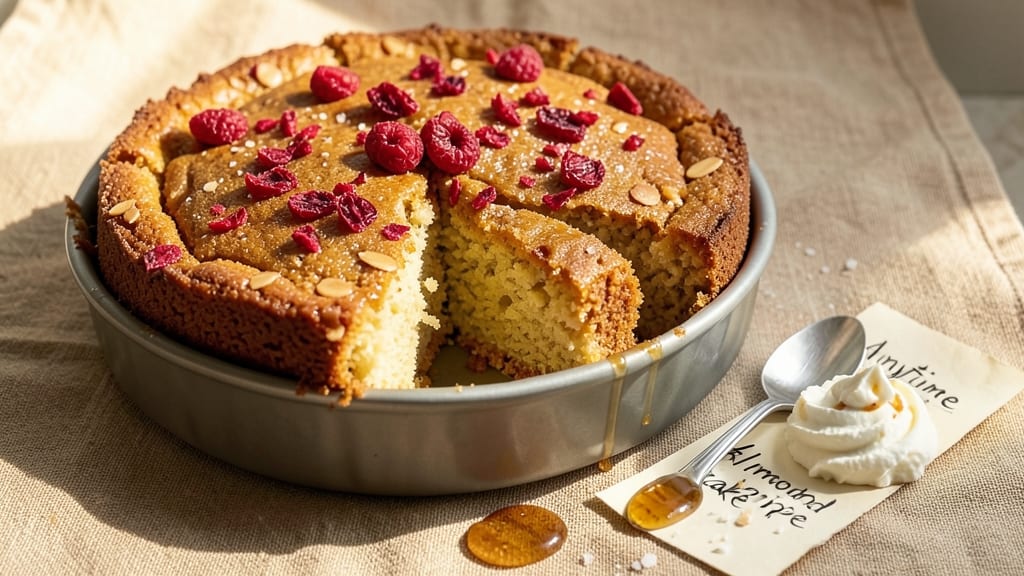
This anytime almond cake recipe delivers moist layers with nutty depth that works for breakfast, dessert, or an afternoon pick-me-up—no special occasion required.
The secret lies in almond flour and extract working together to create a tender crumb that stays fresh for days, while a simple glaze adds that restaurant-quality finish. I developed this recipe after years of testing, ensuring every bite delivers that perfect balance of sweetness and nutty richness.
What sets this cake apart is its versatility—bake it for a brunch crowd or slice it for a solo snack, and it always impresses. The recipe uses ground almonds for texture and almond extract for aroma, creating layers that stay moist without needing extra fat.
Baking at 325°F ensures even cooking, while a quick glaze (or powdered sugar dusting) elevates it from homemade to bakery-worthy in minutes.
By the time you pull this cake from the oven, you’ll have golden layers with a tender crumb that crumbles just enough to reveal pockets of almond flavor.
The aroma alone will have everyone asking for seconds, and the texture—moist but not dense, rich but not heavy—makes it a crowd-pleaser every time. Serve it warm with a dollop of whipped cream or let it cool for a perfect slice anytime.
This recipe scales beautifully, so double the batch for gatherings or keep it small for a personal treat. The simplicity of the ingredients—almond flour, eggs, sugar, and a touch of vanilla—means you can pull it together in under 30 minutes, with most of that time spent baking.
No fancy equipment or techniques required, just a standard oven and a little patience for the layers to set.
Ingredients for anytime almond cake
These twelve ingredients create layers of nutty richness with tender crumb and zero fuss.
| Ingredient | Amount | Notes |
|---|---|---|
| Almond Flour 🥜 | 2 ½ cups | Finely ground, unsweetened |
| Granulated Sugar 🍚 | 1 ½ cups | White or light brown |
| Large Eggs 🥚 | 4 whole | Room temperature preferred |
| Unsalted Butter 🧈 | 1 cup | Cold, cubed, full-fat |
| Pure Almond Extract 🌿 | 1 tbsp | High-quality, pure |
| Vanilla Extract 🌸 | 1 tsp | Pure vanilla preferred |
| All-Purpose Flour 🌾 | ½ cup | For structure and lift |
| Baking Powder 🧂 | 1 tsp | Aluminum-free preferred |
| Salt 🧂 | ½ tsp | Fine sea salt |
| Powdered Sugar 🍚 | ½ cup | For glaze, sifted |
| Milk 🥛 | ¼ cup | Any kind, room temp |
| Lemon Juice 🍋 | 1 tbsp | Freshly squeezed |
Almond flour is the heart of this cake—Bob's Red Mill or Anthony's Goods are my go-tos for consistent texture. The finer the grind, the smoother your cake will be. If you can't find pure almond extract, almond essence works in a pinch, but it lacks depth. For the butter, Plugrá or Land O'Lakes are reliable choices, but any good-quality unsalted butter will do. The almond extract is non-negotiable for that authentic aroma, so don't skimp on the pure version.
No almond flour? Substitute with 1.5 cups ground almonds (food processor, 1-2 minutes) plus 0.5 cup all-purpose flour, but the texture will be slightly denser. Running out of vanilla extract? Pure vanilla bean paste works beautifully at the same amount. The milk can be swapped for almond milk or oat milk, though regular milk gives the best rise. For a richer flavor, add 1 tsp lemon zest along with the juice. The baking powder must be fresh—if it's more than 6 months old, toss it and replace for proper lift.
This cake keeps beautifully—3 days at room temperature wrapped in parchment, or 5 days refrigerated in an airtight container. For longer storage, wrap tightly and freeze for up to 3 months. The glaze keeps it fresh longer, so don't skip it. I like to portion slices in advance and freeze them individually for quick grab-and-go treats. The cake reheats wonderfully—just 10 seconds in the microwave restores that warm, inviting aroma.
Why You'll Love This Recipe
- No Mixing Madness: I swear by this recipe because it’s literally one bowl—just toss the almond flour, sugar, eggs, and butter until it’s just combined. The almond extract gets folded in last, and boom, you’re done. No sifting, no overworking, no stress.
- Rich Without Effort: That butter and almond flour combo? It’s like a hug in cake form—moist but not dense, with a subtle nuttiness that lingers. Honestly, the almond extract takes it from good to “I’ll make this for breakfast.”
- Breakfast or Dessert: Serve it warm with a drizzle of honey for a lazy morning treat, or dust it with powdered sugar for an after-dinner bite. Between us, I’ve even cut slices for lunch with a smear of Nutella—no judgment.
- Leftovers? Best Part: This cake actually improves the second day. The flavors meld, and the texture stays tender. I keep a loaf in the fridge for “emergency” cravings—because let’s be real, almond cake is never a bad idea.
Step-by-step instructions for anytime almond cake
This method delivers consistently moist layers with rich almond flavor—no special equipment required.
Prep Ingredients and Preheat Oven
Preheat your oven to 350°F and position racks in the upper and lower thirds. Grease two 8-inch round cake pans with nonstick spray or line them with parchment circles. I like to use a light coating of butter on the parchment for extra insurance against sticking.
While the oven heats, measure out all your ingredients. Let the 4 whole large eggs and 1 cup unsalted butter sit at room temperature for 30 minutes to ensure they blend smoothly. The butter should be soft enough to press with your finger but not melted. Room-temperature eggs incorporate better and create a lighter texture.
Cream Butter and Sweeteners
In a stand mixer fitted with the paddle attachment, beat the 1 cup unsalted butter and 1.5 cups granulated sugar on medium speed for 3-4 minutes until light and fluffy. You're looking for a pale, airy mixture that nearly doubles in volume—the butter should look like whipped cream. This step is critical for a tender crumb.
I press down on the mixture occasionally to check its progress. When the butter and sugar are fully combined and the mixture leaves faint trails when the beaters are lifted, it's ready for the next ingredients. Scrape down the sides of the bowl to ensure even mixing before proceeding.
Add Wet Ingredients and Mix Thoroughly
Add the 4 whole large eggs, one at a time, mixing on low speed for 30 seconds after each addition. This gradual incorporation prevents egg curdling. After all eggs are added, mix in the 1 tbsp pure almond extract, 1 tsp vanilla extract, and 1 tbsp lemon juice on medium speed for 1 minute until fully combined.
The lemon juice brightens the almond flavor while preventing the cake from becoming too dense. Here's where it gets important: don't overmix at this stage. The batter should be smooth but still slightly thick—it will lighten up as you add the dry ingredients. If the batter looks curdled, don't worry; it will smooth out in the next step.
Combine Dry Ingredients and Fold Gently
In a separate bowl, whisk together the 2.5 cups almond flour, 0.5 cup all-purpose flour, 1 tsp baking powder, and 0.5 tsp salt until evenly distributed. Sift the mixture once to aerate it before adding to the wet ingredients.
With the mixer on low speed, gradually add the dry ingredients to the wet mixture. Mix just until combined—you should still see some flour streaks. Overmixing develops gluten, which can make the cake dense. Once incorporated, gently fold in the 0.25 cup milk using a spatula until just combined. The batter should be thick but pourable.
Bake and Test for Doneness
Divide the batter evenly between the prepared cake pans. Tap each pan gently on the counter to remove any air bubbles. Bake for 25-30 minutes, switching the pans from top to bottom rack halfway through, until a toothpick inserted in the center comes out clean. The edges should be golden brown, but the top might still look slightly underdone—this is normal.
I like to check for doneness at the 22-minute mark since ovens vary. The cake is done when it springs back slowly when pressed in the center. Let the cakes cool in the pans for 10 minutes before transferring to a wire rack to cool completely. This gradual cooling prevents cracking as the cakes shrink slightly.
Glaze and Serve
While the cakes cool, prepare the glaze by whisking together the 0.5 cup powdered sugar and 2-3 tablespoons milk (you may not need all of it) until smooth. The glaze should be thick enough to coat the back of a spoon but still drizzle easily. Drizzle the glaze evenly over the cooled cake layers.
For assembly, place one cake layer on a plate, spread with any reserved cake syrup from the pans (if available), and top with the second layer. The glaze will create a beautiful finish while adding just the right amount of sweetness. Serve at room temperature for the best texture—this cake keeps well for 3 days covered at room temperature or 1 week refrigerated.
Pro Tips For Making Anytime Almond Cake
- Whisk Eggs Cold: Pull those eggs straight from the fridge—room temperature eggs beat like a dream, but cold ones incorporate air better for a lighter texture. I used to rush this, and my cakes turned dense; now I just wait 10 minutes if I’m in a hurry.
- Sift the Almond Flour: Don’t skip sifting—clumps make for a gummy cake. Use a fine-mesh sieve and tap it firmly over a bowl, even if it feels tedious. After burning my first batch (yes, really), I now do this step religiously.
- Cream Butter Slowly: Beat the butter and sugar on medium speed until pale, then bump it up to high—this adds air without overworking the batter. I learned this the hard way when my cake collapsed like a sad soufflé.
- Bake Until Golden: Check for doneness at 325°F (160°C)—the edges should pull away cleanly, but the center might still feel slightly soft. Overbaking dries out the almond flavor, and underbaking leaves it gummy. A toothpick test works, but so does trusting your nose.
Best sauces and condiments for anytime almond cake
Classic Powdered Sugar Glaze
This simple powdered sugar glaze transforms your almond cake into something special. Whisk ½ cup powdered sugar with 2-3 tablespoons milk (or almond milk) until smooth—it should coat the back of a spoon.
Drizzle generously over the cooled layers for a delicate, sweet finish. The glaze keeps the cake moist for days while adding a professional touch. 💫
Lemon Curd Swirl
For a tangy twist, spread ½ cup lemon curd (store-bought or homemade) between the cake layers. The bright citrus cuts through the almond richness beautifully. Warm the curd slightly before spreading to make it easier to work with. Top with extra powdered sugar for contrast.
Chocolate Ganache Drizzle
Melt ½ cup dark chocolate with ¼ cup heavy cream over a double boiler, then drizzle over the cake. Let it set for 10 minutes before serving. The deep chocolate pairs perfectly with the nutty almond flavor, creating a decadent dessert. Use 70% dark chocolate for balance.
Caramelized Honey Glaze
Heat ½ cup honey with 1 tablespoon butter until bubbly, then cool slightly before drizzling. The warm caramel notes complement the almond’s natural sweetness. For extra flair, sprinkle crushed pistachios or flaky sea salt on top.
This glaze works especially well if you love a touch of warmth in your cake. 🍯
Fruit Compote Topping
Simmer 1 cup mixed berries (strawberries, raspberries, or blackberries) with 2 tablespoons sugar and 1 teaspoon lemon juice until thickened. Spread over the cake layers or drizzle on top. The berries add freshness and a pop of color, balancing the richness of the almond cake.
Whipped Cream Frosting
Whip 1 cup heavy cream with 2 tablespoons powdered sugar until soft peaks form. Spread between layers or pipe around the edges for a light, airy finish. This keeps the cake’s natural flavors front and center while adding a creamy contrast.
For extra flair, fold in ½ teaspoon almond extract into the whipped cream. 🍦
Nutrition facts
Frequently asked questions
Can I make this anytime almond cake without almond flour?
Yes! Substitute with 1.5 cups ground almonds (food processor, 1-2 minutes) plus 0.5 cup all-purpose flour. The texture will be slightly denser, but the almond flavor remains. For a lighter version, use 1 cup almond flour + 1 cup cake flour instead. The key is maintaining the nutty depth—don't skip the 1 tbsp almond extract!
Why does my almond cake turn out dry or crumbly?
Overbaking is the #1 culprit! Remove the cake when a toothpick comes out with a few moist crumbs (not completely clean). Another common mistake is overmixing the batter—stop as soon as the dry ingredients are just combined. For extra moisture, brush warm layers with 2 tbsp simple syrup (equal parts sugar + water, heated) before glazing.
How can I make this cake nut-free for allergies?
Replace the almond flour with 2.5 cups gluten-free 1:1 baking flour and omit the almond extract. Add 1 tsp vanilla bean paste for depth and ½ tsp cinnamon to enhance flavor. The texture will be slightly different but still delicious. Always check labels to ensure no cross-contamination with nuts.
Can I bake this in a single 9-inch pan instead of two 8-inch pans?
Yes, but adjust the baking time! A single layer in a 9-inch pan will take 35-40 minutes at 325°F. Reduce the batter by 25% (about 1.5 cups) to avoid overflow. For even baking, place the pan on the middle rack and tent loosely with foil after 20 minutes if the edges brown too quickly.
What's the best way to store leftovers?
Wrap cooled layers tightly in plastic wrap or store in an airtight container with parchment between slices. At room temperature: 3 days. Refrigerated: 5 days. For longer storage, freeze individual slices wrapped in plastic for up to 3 months. Thaw overnight in the fridge or at room temperature for 1 hour before serving.