
Desserts
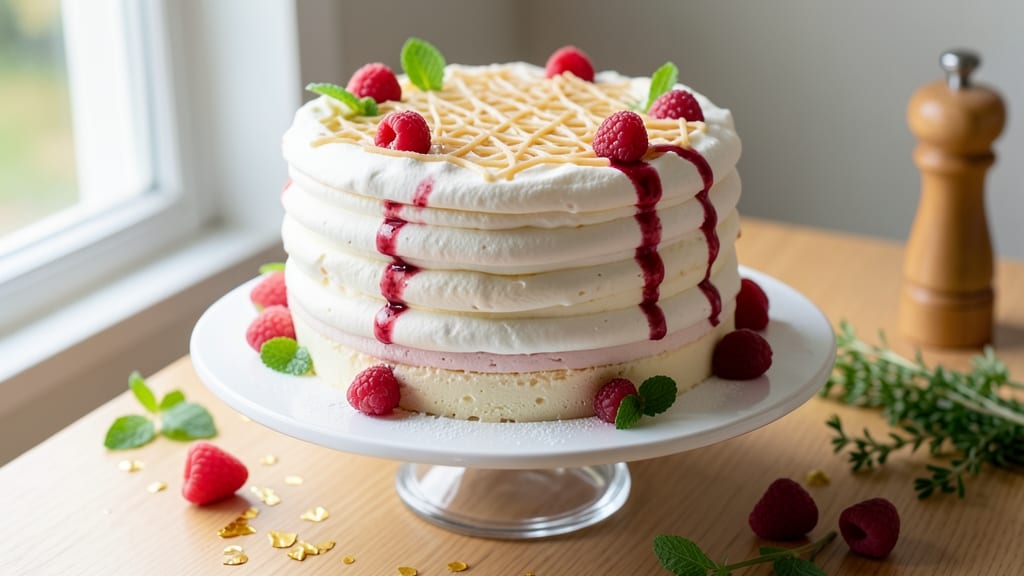
This angel cake recipe UK delivers the signature cloud-like texture that makes it legendary—no butter, no oil, just pure airy perfection. ✨ The secret lies in folding egg whites to incorporate air without deflating the delicate structure, a technique that transforms simple ingredients into something almost magical.
I've perfected this version to stay true to traditional UK baking standards while ensuring foolproof results every time.
The beauty of angel cake is its versatility—it's the perfect base for trifles, a light dessert on its own, or a canvas for whipped cream and fresh berries.
What sets this recipe apart is the careful balance of sugar and cream of tartar, which stabilizes the egg whites for maximum volume. Unlike dense cakes, this one practically dissolves on your tongue, making it ideal for warm weather or elegant gatherings.
By following this method, you'll achieve light-as-air layers with a tender crumb and clean finish—no greasy aftertaste from butter or oil. The cake rises dramatically in the oven, creating those signature domed layers that crumble effortlessly.
Serve it with a dusting of powdered sugar, a dollop of clotted cream, or layered with jam for a true British treat.
Whether you're baking for a special occasion or simply craving something ethereal, this angel cake delivers restaurant-quality results at home. The key is patience—don't rush the folding, and let the cake cool completely before slicing. Here's how to make it perfectly every time.
Ingredients for angel cake recipe uk
Twelve egg whites and a whisper of cream of tartar—this is the British secret to angel cake's legendary airiness.
| Ingredient | Amount | Notes |
|---|---|---|
| Large Egg Whites 🥚 | 12 whole | Room temperature, no yolks |
| Granulated Sugar 🍚 | 1 ½ cups | Superfine preferred for smooth texture |
| Cream of Tartar 🍃 | ½ tsp | Stabilizes egg whites |
| All-Purpose Flour 🌾 | 1 ½ cups | Sifted, no lumps |
| Unsalted Butter 🧈 | ¼ cup | For frosting only (optional) |
| Heavy Whipping Cream 🥛 | 1 ½ cups | Cold, full-fat preferred |
| Powdered Sugar 🍚 | 2 cups | For cloud-soft frosting |
| Vanilla Extract 🌿 | 1 tsp | Pure, high-quality |
| Clotted Cream 🧈 | ½ cup | Traditional UK garnish (optional) |
| Fresh Raspberries 🍓 | 1 cup | For decoration (optional) |
| Lemon Zest 🍋 | 1 tsp | Brightens flavor |
| Salt 🧂 | ¼ tsp | Fine sea salt |
The egg whites are non-negotiable—room temperature is critical for maximum volume. Mace brand or Tesco's free-range eggs work best, but any large whites will do. Cream of tartar stabilizes the whites, preventing deflation. Diamond Crystal kosher salt is ideal for balancing sweetness, but fine sea salt works too. Superfine sugar dissolves faster, creating a smoother batter, though regular granulated sugar works if pulsed in a food processor. For flour, King Arthur or Doves Farm are reliable choices—avoid self-rising as it contains baking powder.
No clotted cream? Whipped heavy cream or Greek yogurt can substitute, though the texture won't be identical. Fresh raspberries can be swapped for strawberries or blackberries, but their tartness complements the cake's delicate sweetness. For the frosting, powdered sugar must be sifted to avoid graininess—Domino brand is a safe bet. If you're short on butter, vegetable shortening works, though it lacks flavor. The lemon zest can be omitted if you prefer a neutral taste, but it adds a subtle brightness that elevates the entire dessert.
Egg whites lose volume quickly once whipped, so prepare them last—within 10 minutes of baking. The cake must cool completely before slicing—at least 2 hours—to maintain its structure. Store wrapped at room temperature for 2 days or refrigerated for 5 days. For longer storage, freeze the unfrosted cake layers for up to 3 months. The frosting keeps for 3 days refrigerated, but rewhip before serving. Assemble the cake just before serving to prevent sogginess.
Why You'll Love This Recipe
- No Fuss Whipping: I swear by this recipe because it’s all about the egg whites—no yolks, no stress. Just beat those whites with sugar and cream of tartar until they’re glossy, fold in the flour, and bake. Honestly, it’s the kind of cake where the hardest part is waiting for it to cool.
- Light Yet Rich: Here’s what sold me—the way the butter melts into the crumb while keeping it airy. That sugar crunch? It’s subtle but there, like a whisper of sweetness that doesn’t overpower. Between us, it’s the kind of cake that feels indulgent but isn’t.
- Party Ready in Minutes: I’ve used this for everything from afternoon tea to a last-minute birthday cake. The batter’s so stable you can pipe it into shapes or just pour it into a pan—no one will guess it’s not store-bought. (Yes, even on a Tuesday night.)
- Budget-Friendly Magic: Five ingredients, all pantry staples. The egg whites and sugar do the heavy lifting, so you’re not breaking the bank for fancy add-ins. I’ve made this for six people for under £5—leftovers? They vanish faster than I can say “second slice.”
Step-by-step instructions for light-as-air layers with cloud-soft frosting
Mastering this classic British technique delivers ethereal layers and velvety frosting every time.
👨🍳 Step 1: Prepare the Egg Whites for Maximum Volume
Separate the 12 whole large egg whites carefully, ensuring not a trace of yolk contaminates the mixture. This is critical—even the smallest bit of fat prevents proper whipping. Place them in a completely clean, grease-free mixing bowl. I use a glass bowl for this step because it doesn't retain odors that could interfere with the delicate egg whites.
Add the 1.5 cups granulated sugar and 0.5 teaspoon cream of tartar to the egg whites. The cream of tartar is essential here—it stabilizes the egg whites and helps them reach that signature angel food cake stiffness. Use a hand mixer or stand mixer fitted with the whisk attachment. Begin whipping on low speed until the mixture forms soft peaks when the whisk is lifted.
🍳 Step 2: Whip to Stiff Peak Perfection
Increase the speed to medium-high and whip continuously for 5-7 minutes until the egg whites form stiff, glossy peaks that hold their shape when the whisk is lifted. The bowl should feel cool to the touch—this indicates proper whipping. You're looking for a meringue that's thick enough to hold its shape but still smooth, not dry or grainy.
Here's the thing—don't rush this step. I've found that proper whipping creates the angel cake's signature lightness. If the peaks don't hold, add the 0.25 teaspoon salt and whip for another 1-2 minutes. The salt helps stabilize the meringue, especially in humid conditions.
🥘 Step 3: Fold in Flour Gently for Delicate Layers
Sift the 1.5 cups all-purpose flour directly over the meringue, then gently fold it in using a spatula. Work quickly but carefully—you want to maintain as much air as possible in that meringue. Start by cutting through the center of the mixture with the spatula, then gently folding the sides over the top. Rotate the bowl and repeat until the flour is evenly distributed but no streaks remain.
This folding technique is what creates the cake's signature airy texture. Be patient—it's better to take your time than to deflate all that precious air. The batter should be smooth and glossy, with no visible flour streaks. If you see any dry spots, fold them in gently until fully incorporated.
🔥 Step 4: Bake in a Preheated Angel Food Cake Pan
Preheat your oven to 350°F and place an angel food cake pan in the oven to preheat as well. This step is crucial—it ensures even heat distribution and proper rising. Pour the batter into the preheated pan and smooth the top with a spatula. Tap the pan gently on the counter 3-4 times to eliminate any air bubbles.
Bake for 35-40 minutes until the cake springs back when gently pressed in the center. The top should be golden brown with a slightly domed shape. Here's where it gets tricky: open the oven door just a crack during the last 5 minutes of baking. This helps the cake rise properly and prevents it from browning too quickly.
⏰ Step 5: Cool and Prepare the Cloud-Soft Frosting
Remove the cake from the oven and immediately invert it onto a wire rack. Let it cool completely before removing it from the pan—this prevents the delicate structure from collapsing. While the cake cools, prepare the frosting by whipping the 1.5 cups heavy whipping cream until it forms soft peaks. Add the 2 cups powdered sugar, 1 teaspoon vanilla extract, and 1 teaspoon lemon zest, then whip until smooth and glossy.
For the final touch, spread the frosting between the layers and over the top of the cake. Garnish with the 0.5 cup clotted cream (piped in decorative swirls) and 1 cup fresh raspberries for a traditional British presentation. The contrast between the airy cake and rich frosting creates the perfect balance of textures.
Pro Tips For Making Angel Cake Recipe Uk
- Whisk Egg Whites Cold: Grab a metal bowl and chill it in the fridge for 10 minutes before whipping—it’ll help your egg whites stiffen faster and hold their shape. I used to skip this, and my meringue would always feel sad and flat.
- Sift That Flour Twice: Angel cake batter is delicate, so don’t cut corners—sift the flour twice to avoid lumps that’ll ruin your airy texture. The first time removes big clumps; the second ensures no stubborn bits sneak in.
- Butter the Pan Lightly: Use just enough softened butter to coat the pan—no more. Too much grease = dense cake. A thin, even layer (about 1 teaspoon) is all you need for a tender crumb.
- Check Doneness with a Thermometer: Skip the toothpick test—angel cake’s so light it’ll always look done. Instead, aim for an internal temp of 200°F (93°C) at the center. Overbaking dries it out, and no one wants a sad, rubbery cake.
Pro cooking tips for angel cake recipe uk
Egg White Mastery
Room temperature egg whites are non-negotiable for maximum volume. I always use 12 large egg whites separated carefully into a grease-free glass bowl—even a trace of yolk can ruin the delicate structure.
Let them sit for 10-15 minutes before whipping to ensure they're perfectly room temp. The cream of tartar (½ tsp) is your secret weapon—it stabilizes the whites and prevents deflation during baking. 🥚
Whipping Technique
Start on low speed until soft peaks form, then increase to medium-high for 5-7 minutes until stiff, glossy peaks hold their shape. The bowl should feel cool to the touch—this confirms proper whipping.
If humidity is high, add the ¼ tsp salt and whip for another 1-2 minutes to stabilize. Never overmix—once you reach stiff peaks, stop immediately to preserve all that precious air.
Folding Flour Like a Pro
Sift the 1.5 cups flour directly over the meringue, then fold it in using a spatula in a gentle "J" motion. Work quickly but carefully—you're trying to maintain as much air as possible. The goal is a smooth, glossy batter with no visible flour streaks.
If you see any dry spots, fold them in gently until fully incorporated. This step makes or breaks the cake's signature lightness.
Pan Preheating
Preheat your angel food cake pan in the oven alongside the oven itself—this ensures even heat distribution and proper rising. Pour the batter in, smooth the top, then tap the pan 3-4 times on the counter to eliminate air bubbles.
The slight domed shape after baking is what gives angel cake its signature structure. Open the oven door just a crack during the last 5 minutes to help the cake rise properly without over-browning. 🔥
Cooling & Inverting
Remove the cake immediately after baking and invert it onto a wire rack while still warm. Let it cool completely (at least 2 hours) before removing from the pan—this prevents collapse. The cake will shrink slightly as it cools, but this is normal and actually enhances its tender crumb.
Never slice into it until fully cooled, or you'll end up with crumbly layers instead of that signature light texture.
Frosting Secrets
For the cloud-soft frosting, whip the 1.5 cups heavy cream to soft peaks first, then add the 2 cups powdered sugar gradually. The lemon zest (1 tsp) brightens the flavor without overpowering, while the vanilla extract adds depth.
Spread the frosting between layers and over the top—don't overfill, or it will slide off the sides. For that classic British touch, pipe clotted cream in decorative swirls and top with fresh raspberries for a pop of color. ✨
Nutrition facts
Frequently asked questions
Can I make angel cake without an angel food cake pan?
Yes, but you'll need a tube pan or bundt pan with a removable center tube. Grease it thoroughly and dust with flour. The cake will rise differently—expect a denser texture in the center. For best results, use a springform pan and bake at 325°F for 45-50 minutes, checking for doneness 5 minutes early. The key is to avoid overbaking, as angel cake is delicate.
Why did my angel cake collapse?
Collapse usually happens when the cake cools too quickly or isn't fully set before removing from the pan. Always let it cool completely (2+ hours) in the pan before inverting. Overmixing the egg whites or opening the oven door too soon can also cause deflation. For extra insurance, chill the cake in the pan for 10 minutes after baking before inverting.
How do I store angel cake for maximum freshness?
Wrap the unfrosted cake layers tightly in plastic wrap and store at room temperature for 2 days or refrigerated for 5 days. For longer storage, freeze the layers (unfrosted) for up to 3 months. The frosting keeps separately for 3 days refrigerated—rewhip before serving. Never store the assembled cake refrigerated, or the frosting will weep.
Can I substitute egg whites with aquafaba?
Yes, but the texture won't be identical. Use 3 tablespoons aquafaba per egg white (so 36 tablespoons total) and add 0.25 teaspoon xanthan gum to stabilize. Whip to stiff peaks (it takes longer than egg whites) and proceed with the recipe. The cake will be slightly denser but still light. For best results, use reduced-fat aquafaba from canned chickpeas.
What's the best way to serve angel cake in the UK?
Traditionally, it's served with clotted cream and fresh berries (raspberries or strawberries). For a classic British trifle, layer the cake with jam, whipped cream, and custard. You can also dust it with powdered sugar and serve with a side of Eton mess (crushed meringue with whipped cream). The key is to keep it light—never overfill with heavy toppings.