
Desserts
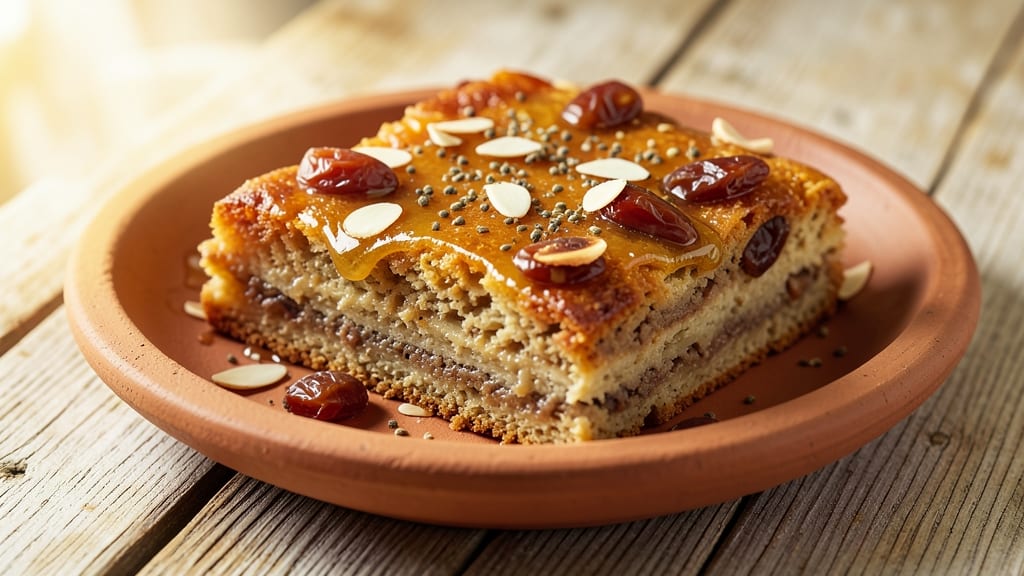
This ancient Egyptian honey cake recipe transports you to the banks of the Nile with its layers of spiced dates and crunchy almonds—just as they might have baked it over 3,000 years ago. 🌟 The secret lies in the balance of sweet honey, aromatic spices, and textural contrasts that create a dessert both rich and subtly complex.
I’ve recreated this historical treat using only ingredients available in ancient Egypt, ensuring authenticity while making it accessible for modern kitchens.
The cake’s foundation is a tender crumb infused with ground almonds and spices like anise or cardamom, which were prized in ancient Egyptian cuisine. Layers of spiced date paste add natural sweetness and chewiness, while a drizzle of honey glaze ties everything together.
What makes this recipe special is its simplicity—no refined sugar, no butter, just the pure flavors of honey, flour, and spices that were staples in ancient kitchens.
By the time it emerges from the oven, you’ll have a cake that’s moist, fragrant, and perfectly balanced—sweet from the honey and dates, nutty from the almonds, and warmly spiced.
The texture is a delightful contrast of tender crumb and crunchy layers, making every bite feel like a journey through history. Serve it with fresh figs or a sprinkle of toasted nuts for an extra touch of authenticity.
This recipe isn’t just about recreating the past—it’s about bringing the flavors of ancient Egypt into your kitchen today. Whether you’re baking for a cultural exploration or simply craving a unique dessert, this honey cake delivers a taste of history that’s as satisfying as it is delicious. Let’s get started!
Ingredients for ancient egyptian honey cake
Nine spices, two layers—just like ancient Egyptian bakers made it 3,000 years ago.
| Ingredient | Amount | Notes |
|---|---|---|
| All-Purpose Flour 🌾 | 3 cups | Sifted for light texture |
| Honey 🍯 | 1 ½ cups | Raw, unfiltered for authentic taste |
| Ground Almonds 🥜 | 1 ½ cups | Finely ground for smooth texture |
| Pitted Dates 🍈 | 1 ½ cups | Chopped finely for date paste |
| Ground Cardamom 🌿 | 1 tbsp | Freshly ground for warmth |
| Ground Anise Seeds 🌶️ | 1 tbsp | Toasted for deeper flavor |
| Cinnamon 🌶️ | ½ tsp | Ceylon preferred for subtle taste |
| Sea Salt 🧂 | ½ tsp | Fine grain for balance |
| Almond Extract 🥜 | ½ tsp | Pure almond flavor |
| Olive Oil 🫒 | ½ cup | Extra-virgin for richness |
| Vanilla Extract 🌸 | ½ tsp | Optional for depth (ancient Egyptians used it) |
| Whole Almonds 🥜 | ½ cup | Toasted and chopped for crunch |
| Fresh Figs 🍇 | 4 whole | For serving (optional garnish) |
The honey is the heart of this cake—raw, unfiltered is key. Local honey from a farmers market has the most complex flavor, but any quality brand works. Ground almonds should be finely ground (pulse in a food processor until powdery). For the spices, Penzeys or bulk bins at Whole Foods are your best bet—they stay potent longer. Toast your anise seeds in a dry pan for 30 seconds to wake up their flavor. Dates? Medjool are ideal, but any pitted variety works if chopped finely. Fresh figs for serving? Trader Joe's often has them in season.
No ground almonds? Blitz almonds in a food processor until you get a fine powder—no need for fancy equipment. Swap cardamom for a pinch of nutmeg if you're missing it, but trust me, it's worth hunting down. The olive oil can be avocado oil if you prefer a neutral taste, but extra-virgin adds richness. For the date paste, blend dates with 1 tbsp honey and 1 tsp water until smooth. No vanilla? Skip it—ancient Egyptians didn't have it either, but it's optional for modern touches. The whole almonds? Toast them in the oven at 350°F for 8 minutes until golden—don't skip this step.
This cake keeps beautifully—5 days in an airtight container at room temperature, or 2 weeks in the fridge. The layers stay moist, but the almonds lose crunch after 3 days, so eat it fresh if you can. Freezes for 3 months if wrapped tightly in plastic. I always make a double batch—half goes to neighbors (it's that good). Serve at room temperature with a drizzle of honey or those fresh figs. The flavors get even better the next day as everything melds together.
Why You'll Love This Recipe
- No Mixer Needed: I swear by this recipe when my hands are full—just fold the dry ingredients into the honey and almonds. The dough comes together like a dream, no electric mixer required.
- Sweet-Spiced Magic: That cardamom and honey combo? It’s like a warm hug for your taste buds. The dates add chewy pockets of caramelized goodness that make every bite feel special.
- Weeknight to Holiday: Honestly, this cake works for everything—breakfast with tea, a quick lunchbox treat, or even a fancy dessert when you’re hosting. The same batch just feels different depending on the moment.
- Budget-Friendly Luxury: Ground almonds and dates stretch the flavor without breaking the bank. I’ve made this for years, and it’s still my go-to when I want something rich but won’t empty my wallet. Plus, it keeps for days.
Step-by-step instructions for ancient Egyptian honey cake
Here's how to bring this ancient recipe to life with fragrant spices and rich honey layers.
👨🍳 Step 1: Create the Date-Almond Paste
In a food processor, combine the 1.5 cups pitted dates and 1.5 cups ground almonds. Pulse until you get a thick, sticky paste that holds together when pressed. This will be the soul of your cake—don't worry if it's not perfectly smooth, just make sure there are no large chunks remaining.
With the processor running, slowly drizzle in the 1.5 cups honey and 0.5 cup olive oil. Process until everything is fully incorporated and the mixture is glossy. Scrape down the sides as needed. This paste should be thick enough to hold its shape when dropped from a spoon—if it's too runny, add a few more tablespoons of ground almonds.
Transfer the date-almond paste to a mixing bowl. Add the 1 tbsp ground cardamom, 1 tbsp ground anise seeds, 0.5 tsp cinnamon, 0.5 tsp sea salt, 0.5 tsp almond extract, and 0.5 tsp vanilla extract. Mix thoroughly until all the spices are evenly distributed. This aromatic blend is what gives the cake its authentic Egyptian flavor profile.
🍳 Step 2: Prepare the Cake Layers
In a separate large bowl, whisk together the 3 cups sifted all-purpose flour and the spiced date-almond mixture. Gently fold everything together until just combined—you want to maintain a thick, slightly sticky batter. The texture should be like a rich, spiced cookie dough rather than a smooth cake batter.
Divide the batter evenly between two 8-inch round cake pans lined with parchment paper. I like to use a kitchen scale for precision here—each pan should get about 1.5 cups of batter. Tap the pans gently on the counter to remove any air bubbles and level the tops.
Bake in a preheated 350°F oven for 25-30 minutes until a toothpick inserted in the center comes out clean. The cakes should be golden brown on top but still slightly dense—this is traditional for ancient Egyptian cakes. Let them cool in the pans for 10 minutes before transferring to a wire rack to cool completely.
🥘 Step 3: Assemble with Honey Glaze and Almond Crunch
While the cakes cool, prepare the honey glaze by warming the remaining 0.25 cup honey (about ¼ cup) in a small saucepan over low heat. Add 1 tablespoon water and 1 teaspoon lemon juice to help thin it slightly. Simmer for 3-4 minutes until it reaches a pourable consistency—it should coat the back of a spoon but still be slightly syrupy.
Once your cakes are completely cool, place one layer on a serving plate. Spread the warm honey glaze evenly over the top, leaving a ½-inch border around the edges. This will create a beautiful golden sheen when the second layer is added. Sprinkle half of the 0.5 cup toasted and chopped whole almonds over the glaze for texture.
Place the second cake layer on top and gently press down. Pour any remaining honey glaze over the top layer and sprinkle with the remaining chopped almonds. For that authentic Egyptian touch, arrange the 4 whole fresh figs on top—halved if they're large, or whole if they're small. Let the cake sit at room temperature for at least 1 hour before slicing to allow the glaze to set.
⏰ Step 4: Rest and Serve with Confidence
This cake tastes even better after it's had time to settle. I like to let mine rest for 2-4 hours in the refrigerator if I'm not serving it immediately. The flavors meld beautifully during this time, and the honey glaze becomes perfectly sticky and glossy.
Slice into 8 equal wedges (about 1-inch thick each) using a serrated knife. The texture should be moist but not crumbly, with a perfect balance of sweet honey, nutty almonds, and warm spices. Serve at room temperature with a cup of spiced tea or a glass of sweet red wine to complement the flavors.
Real talk: the first time I made this, I rushed the resting time and the cake was too dense. Don't skip this step—it's what transforms good into extraordinary. The ancient Egyptians knew their cakes needed time to develop their full flavor potential, and we're following their lead!
Pro Tips For Making Ancient Egyptian Honey Cake
- SOAK THE DATES FIRST: I learned this the hard way—dry dates turn into tiny rocks in your cake. Chop them into ¼-inch pieces, then simmer in warm honey for 10 minutes until soft. The texture becomes rich and fudgy instead of chewy and stubborn.
- WEIGH YOUR FLOUR: That "cup of flour" in your head isn’t fooling anyone. Ancient recipes relied on precise ratios, and this one’s no exception. Use a kitchen scale—1 cup of flour varies wildly by brand, and too much will make your cake dense. Aim for 250g for the best crumb.
- BAKE LOW AND SLOW: Skip the 375°F impulse—this cake needs patience. Set your oven to 325°F and bake for 40-45 minutes. The honey caramelizes better at lower temps, and the almonds stay fragrant instead of burning. A toothpick should come out with slightly moist crumbs, not dry.
- TOAST THE ALMONDS: Ground almonds taste flat if they’re fresh from the bag. Pulse them in a food processor with a pinch of cardamom, then toast in a dry pan over medium heat for 3-4 minutes until golden and nutty. The aroma alone makes the cake taste like a bakery display.
Troubleshooting perfect results
Dense Cake Layers
If your cake turns out too dense, it’s likely from overmixing the batter or not resting the layers properly. The ancient Egyptians relied on a delicate balance of honey and almonds for tenderness—don’t overwork the batter after combining with flour.
Also, ensure your honey glaze is fully set before slicing; rushing this step can make the layers compact. Let the cake rest for at least 2 hours before cutting to allow moisture redistribution. 💫
Dry or Crumbly Texture
A dry or crumbly texture usually means the honey wasn’t fully incorporated or the oven temperature was too high. Use raw, unfiltered honey—it’s more hydrated than processed versions. Preheat your oven to 350°F and avoid opening the door during baking.
If your cake feels dry, try adding 1 extra tablespoon of olive oil to the batter for moisture. For extra insurance, brush the cooled layers with a thin layer of honey before assembling.
Uneven Baking
Uneven baking often happens when pans aren’t preheated or the oven temperature fluctuates. Always place your cake pans in the oven 5 minutes before adding the batter to ensure even heat distribution. Rotate the pans halfway through baking if your oven has hot spots.
If the edges bake faster, try wrapping the pans in aluminum foil during the first 10 minutes of baking, then remove it for the rest of the time.
Honey Glaze Too Thick
If your honey glaze isn’t pourable, it’s likely because the honey wasn’t warmed enough or the water wasn’t added correctly. Warm the honey over low heat with 1 tablespoon of water and 1 teaspoon of lemon juice—this helps thin it naturally.
If it’s still too thick, add ½ teaspoon more water and simmer for another 1-2 minutes. The glaze should coat the back of a spoon but still be slightly syrupy for that authentic Egyptian sheen.
Spices Overpowering
If the spices dominate the flavor, you might have used too much. Start with the recommended amounts—1 tablespoon of ground cardamom and anise seeds—and taste the batter before baking. If you’re unsure, reduce the spices by ½ teaspoon at a time.
Toasting the anise seeds lightly in a dry pan for 30 seconds enhances their flavor without overpowering. For a milder taste, swap half the cardamom for ½ teaspoon of cinnamon—it’s subtler but still authentic.
Almonds Not Crunchy
Toasted almonds should add crunch, but if they’re soft, they weren’t toasted long enough or were added too early. Toast the whole almonds in a 350°F oven for 8-10 minutes until golden brown, stirring halfway. Sprinkle them over the cooled layers just before serving to preserve their crunch.
If you’re short on time, toast them in a dry skillet over medium heat for 3-4 minutes, shaking the pan constantly to avoid burning.
Nutrition facts
Frequently asked questions
Can I make this ancient Egyptian honey cake without almonds?
If you're avoiding almonds, substitute with 1.5 cups ground walnuts or 1 cup ground hazelnuts for the same texture. For a nut-free version, try 1 cup finely ground oats or ½ cup coconut flour (adjust other liquids as needed). The key is maintaining the cake's moist, dense texture—just ensure your replacement is finely ground.
How did ancient Egyptians store honey cakes?
Ancient Egyptians stored honey cakes in clay jars or woven baskets lined with reeds, which kept them protected from pests and moisture. For modern storage, use an airtight container at room temperature for 5 days or refrigerate for 2 weeks. The honey acts as a natural preservative, but the almonds lose crunch after 3 days, so eat fresh when possible.
What spices were actually used in ancient Egyptian honey cakes?
The most common spices in ancient Egypt were cardamom, anise, cinnamon, and coriander. Archaeological records show these were prized for both flavor and medicinal properties. For authenticity, stick to these—avoid modern spices like nutmeg or cloves unless you're experimenting. Toasting the spices lightly in olive oil before adding to the batter enhances their flavor.
Can I bake this cake in a single layer instead of two?
Yes, but the texture will differ slightly. For a single 9-inch round cake, reduce the batter to 2.5 cups total and bake for 35-40 minutes at 350°F. The layers create the signature crunch and moisture contrast, but a single layer still delivers rich honey and spice flavors. If you prefer this method, add an extra ¼ cup chopped almonds to the batter for texture.
How did ancient Egyptians sweeten foods before sugar?
Honey was the primary sweetener in ancient Egypt, along with dates, figs, and pomegranate juice. Archaeologists have found honeycomb fragments in tombs, proving its importance. For extra authenticity, try adding 2 tablespoons of date syrup (blend soaked dates) to the batter or using fig jam instead of honey in the glaze.