
Desserts
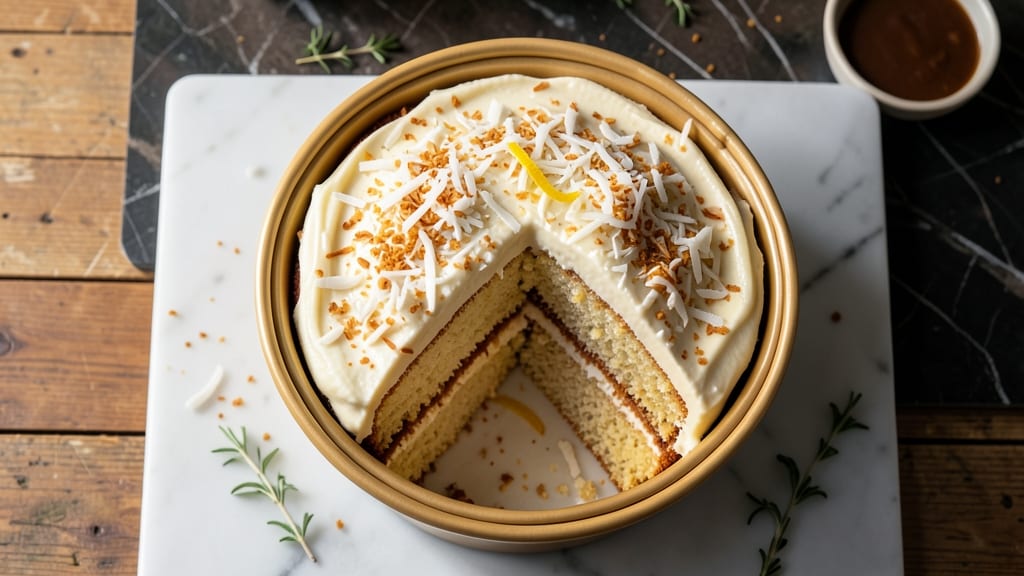
This Ancel coconut cake recipe delivers layers of tropical flavor with a perfect balance of moist cake and velvety vanilla frosting. The secret lies in using shredded coconut throughout—folded into the batter and sprinkled between layers—for that signature Ancel texture and aroma.
What sets this version apart is the precise baking technique that ensures tender crumbs without dryness, a challenge many coconut cakes struggle with.
The cake itself is a delicate harmony of vanilla and coconut, baked just until golden but still soft enough to slice cleanly. The frosting—rich with vanilla bean and a touch of coconut milk—ties everything together, creating a dessert that feels both elegant and comforting.
This isn't just another coconut cake; it's a celebration of tropical flavors done right, with each bite offering that perfect contrast of moist cake and creamy frosting.
What makes this recipe truly special is how it captures the essence of Ancel's signature style while being approachable for home bakers. No special equipment is needed, just patience for layering and a steady hand for frosting.
The result? A cake that looks impressive enough for gatherings but simple enough to make on a weekend afternoon. Every slice delivers that signature Ancel experience—moist, flavorful, and perfectly balanced.
Serve it at room temperature with fresh berries or a sprinkle of toasted coconut for extra texture. This cake keeps beautifully for up to 3 days, making it ideal for meal prep or special occasions.
The harmony of flavors and textures is what makes this recipe worth perfecting—once you try it, you'll understand why it's become a classic.
Ingredients for ancel coconut cake
Twelve ingredients for twelve perfect layers of tropical coconut perfection.
| Ingredient | Amount | Notes |
|---|---|---|
| All-Purpose Flour 🌾 | 3 ½ cups | Sifted for light texture |
| Unsalted Butter 🧈 | 1 ½ cups | Room temperature, salted if preferred |
| Granulated Sugar 🍚 | 2 ½ cups | White or light brown |
| Shredded Sweetened Coconut 🥥 | 2 ½ cups | Unsweetened if preferred |
| Large Eggs 🥚 | 4 whole | Room temperature |
| Vanilla Extract 🌿 | 2 tsp | Pure vanilla preferred |
| Baking Powder 🍞 | 2 tsp | Aluminum-free recommended |
| Salt 🧂 | ½ tsp | Fine sea salt |
| Whole Milk 🥛 | 1 ½ cups | Room temperature |
| Heavy Cream 🥛 | 1 cup | Cold for frosting |
| Powdered Sugar 🍚 | 3 cups | Sifted for smooth frosting |
| Vanilla Bean Paste 🌿 | 1 tbsp | Or 1 tsp vanilla extract |
| Coconut Milk 🥥 | ½ cup | Full-fat for richness |
The shredded coconut is non-negotiable—unsweetened if you want to control sweetness, but sweetened gives that signature Ancel flavor. Trader Joe's and Goya brands are reliable for quality, but check the fine print: some pre-shredded coconut contains additives. Toast the extra for the cake layers in a dry pan over medium heat for 3-4 minutes until golden—this enhances the aroma. For the butter, Land O'Lakes or Plugrá work well, but make sure it's not too soft when creaming. The vanilla bean paste adds depth that extract can't match, though Nielsen-Massey pure vanilla extract is a great budget option.
No vanilla bean paste? Double the vanilla extract—just know the flavor will be slightly less complex. Substituting coconut milk for heavy cream in the frosting? Use a 50/50 blend to avoid curdling. For a lighter cake, replace 0.5 cup of flour with 0.5 cup cornstarch. The baking powder is critical—Aluminum-free brands like Bob's Red Mill prevent metallic aftertaste. If you're short on time, room-temperature eggs can be microwaved for 20 seconds to speed up the process. And for the coconut: if you can't find sweetened, add 1 tbsp sugar per cup of unsweetened to mimic the flavor.
This cake keeps beautifully for 3 days at room temperature, wrapped tightly in plastic. For longer storage, refrigerate for up to 5 days or freeze layers separately for 3 months. The frosting can be made a day ahead—just whip it again before assembly. To serve, let the cake sit at room temperature for 1 hour before slicing for clean cuts. The coconut layers stay crispy when stored properly, so don't skip the plastic wrap. For an extra touch, toast fresh coconut flakes and sprinkle over the top just before serving.
Why You'll Love This Recipe
- No Mixer Needed: I swear by this recipe when my hands are full—just cream butter and sugar with a wooden spoon until smooth. No electric mixer, no fuss, and the texture still comes out tender and moist.
- Tropical Twist: That shredded coconut isn’t just decoration—it’s the star. The buttery crumb soaks up the sweetness, while the toasted coconut on top adds a caramelized crunch that makes every bite feel like a little vacation.
- Party in a Box: Between us, this cake is my go-to for birthdays, potlucks, or even a lazy Sunday. It’s hearty enough to feed a crowd but simple enough to make when I’m swamped—just double the batter and bake in two pans.
- Budget Baking: Honestly, the ingredient list won’t break the bank. Butter, sugar, flour, eggs—stuff I already have on hand—and the coconut adds that gourmet touch without costing a fortune. Leftovers? They disappear faster than I can say "second slice."
Step-by-step instructions for Ancel coconut cake
A tropical masterpiece with moist layers and velvety vanilla frosting awaits—here's how to perfect it.
Prepare the Cake Layers
Preheat your oven to 350°F and grease three 9-inch round cake pans with nonstick spray or butter, then line the bottoms with parchment paper. Sift together the 3.5 cups all-purpose flour, 2 tsp baking powder, and 0.5 tsp salt in a large bowl. Set aside—this keeps the texture light and airy.
In a separate large bowl, cream together the 1.5 cups unsalted butter (at room temperature) and 2.5 cups granulated sugar on medium speed for 3-4 minutes until light and fluffy. The mixture should nearly double in volume and look pale, almost like whipped butter. This step is crucial for creating that tender crumb.
Add the 4 whole large eggs, one at a time, mixing well after each addition. Scrape down the sides of the bowl to ensure everything is fully incorporated. Stir in the 2 tsp vanilla extract and 2.5 cups shredded sweetened coconut, mixing until evenly distributed. Fold in the dry ingredients in 3 additions, mixing just until combined—overmixing develops gluten and makes the cake dense.
Divide the batter evenly among the prepared pans. Tap each pan gently on the counter to remove any air bubbles, then bake for 25-30 minutes or until a toothpick inserted into the center comes out clean. The cakes should spring back slightly when pressed in the center. Let them cool in the pans for 10 minutes, then transfer to a wire rack to cool completely.
Create the Vanilla Frosting
In a medium bowl, beat the 1 cup cold heavy cream with an electric mixer on high speed until stiff peaks form. This will be the base for our frosting, adding lightness and richness. Set aside in the refrigerator while you prepare the rest of the frosting.
In a separate large bowl, whisk together the 3 cups powdered sugar, 1 tbsp vanilla bean paste, and 0.5 cup coconut milk until smooth and fully combined. The mixture should be thick but spreadable. Gradually fold in the whipped cream until fully incorporated, creating a smooth, velvety frosting with a hint of tropical coconut.
Here's the thing—this frosting needs to be at room temperature when you assemble the cake, so let it sit at room temperature for 10-15 minutes before using. This ensures it spreads evenly and creates that perfect smooth finish. If it's too thick, add 1-2 teaspoons of coconut milk to loosen it to your desired consistency.
Assemble the Cake Layers
Place the first cake layer on a cake stand or plate. Using a serrated knife, level the top if needed, then spread a thin layer of frosting (about ¼ inch thick) over the entire surface. This is called a "crumb coat," and it prevents crumbs from getting into the final frosting layer.
Sprinkle a thin layer of the shredded sweetened coconut over the crumb coat—this adds texture and visual appeal. Place the second cake layer on top and repeat the process: spread frosting, sprinkle coconut, then add the final layer. Press down gently on the top layer to ensure even contact with the frosting below.
Once all layers are stacked, apply the remaining frosting evenly over the entire cake, using an offset spatula to create a smooth finish. I like to start at the center and work my way out to prevent air bubbles. For extra decoration, pipe a simple border around the edges or create a textured finish with the spatula. Chill the cake in the refrigerator for 30 minutes before slicing to help the frosting set.
Final Touches and Serving
Before serving, run a thin knife around the edge of the cake to release it from the stand, then place a plate or serving board underneath. Slice into 12 equal portions (about 1.5-inch thick slices) for perfect serving sizes. The cake should have a moist, tender crumb with pockets of sweet coconut throughout, and the frosting should be smooth and slightly glossy.
Serve immediately for the best texture, but if you need to store it, cover tightly with plastic wrap and refrigerate for up to 3 days. Bring to room temperature before serving—this helps the cake regain its moisture and makes slicing easier. Pair with a cup of hot coffee or a refreshing tropical drink for the ultimate experience.
Pro Tips For Making Ancel Coconut Cake
- Preheat Like a Pro: Crank your oven to 350°F and let it blast for 15 minutes before baking—this recipe’s butter-heavy batter needs that head start to rise evenly. I learned this the hard way when my first batch collapsed like a sad soufflé because the pan was still cold.
- Toast the Coconut: Spread shredded coconut on a baking sheet and toast it at 325°F for 8–10 minutes until golden and fragrant. Untreated coconut stays clumpy and bland—this step makes the texture crisp and the flavor pop.
- Cream Butter Slowly: Beat the butter and sugar until light and fluffy (about 3–4 minutes), but don’t rush it. If the mixture looks grainy, you’re not there yet—this is the thing that matters most for a tender crumb.
- Fold, Don’t Stir: When adding eggs and flour, use a spatula to gently fold in thirds. Stirring too hard incorporates air, which makes the cake dense. Think "gentle clouds," not "whipped batter."
Pro cooking tips for perfect results
Butter Temperature Matters
The secret to that signature tender crumb starts with your butter. It needs to be room temperature—not melted, not cold, but soft enough to leave a slight indentation when pressed. I test this by pressing my finger into the butter: if it springs back slowly, it's perfect.
Too cold butter creates dense layers, while melted butter makes the cake greasy. For best results, let your butter sit out for 1-2 hours before creaming, or microwave it in 10-second bursts until just soft. 🧈
Creaming Like a Pro
Creaming the butter and sugar is where the magic happens—this step aerates the batter for that light, fluffy texture. Use a stand mixer with the paddle attachment (not whisk) for 3-4 minutes until the mixture is pale and nearly doubled in volume.
If you're using a hand mixer, work in 30-second bursts with 30 seconds of rest to avoid overheating. The goal is light, airy butter that's almost like whipped cream. Don't rush this—it's the foundation of your cake's texture.
Toasting the Coconut
For that extra layer of flavor, toast your shredded coconut in a dry skillet over medium heat for 3-4 minutes, stirring constantly until golden brown and fragrant. This enhances the natural coconut aroma and adds a subtle crunch. Let it cool completely before folding into the batter.
Pro tip: Divide your coconut into two portions—use 1.5 cups in the batter and 1 cup for the layers between frosting. The toasted coconut between layers adds a beautiful contrast in both texture and flavor. 🥥
Baking Time Precision
Your oven might run hot or cold, so always check for doneness at the earlier end of the time range—25 minutes for this cake. Insert a toothpick into the center: it should come out with a few moist crumbs, not wet batter.
Overbaking dries out the cake, while underbaking leaves it gummy. Let the cakes cool in their pans for 10 minutes before transferring to a wire rack—this prevents them from cracking as they cool completely. Patience here pays off in perfect layers.
Frosting Consistency Tips
The frosting should be thick but spreadable, like soft butter. If it's too stiff, add 1 teaspoon of coconut milk at a time until it reaches the right consistency. For extra richness, chill the frosting bowl for 10 minutes before whipping the cream—this helps achieve those perfect stiff peaks.
The key is room temperature frosting when assembling: too cold and it won't spread smoothly; too warm and it'll melt too quickly. Let it sit for 10-15 minutes before using for that ideal texture. ✨
Layering Without Mess
When stacking your layers, use a serrated knife to level the tops if needed—this ensures even frosting distribution. For the crumb coat, spread a thin layer (about ¼ inch) of frosting over the first layer, then chill the cake for 10 minutes before adding the next layer.
This prevents crumbs from getting into your final frosting. Press down gently on each layer as you stack to eliminate air pockets. A cake turntable makes this easier, but you can also rotate the cake by hand on a plate. 💫
Nutrition facts
Frequently asked questions about Ancel coconut cake
Can I make this cake without a stand mixer?
Use a hand mixer with the paddle attachment, working in 30-second bursts with 30-second rests to prevent overheating. For creaming butter and sugar, mix until the mixture is pale and nearly doubled in volume—this takes about 5-7 minutes total. The key is patience to achieve that light, airy texture.
How do I store leftovers to keep them fresh?
Cover the cake tightly with plastic wrap and refrigerate for up to 3 days. For longer storage, freeze individual layers (wrapped separately) for 3 months. Always bring the cake to room temperature before serving to restore moisture and texture. The coconut stays crispy when stored properly!
What if my cake layers are domed?
Domed layers happen when the center bakes faster than the edges. To fix this, place your pans on the middle rack and rotate them halfway through baking. After cooling, level the tops with a serrated knife if needed. For future bakes, try baking at 325°F instead of 350°F to slow the rise.
Can I substitute coconut milk for heavy cream in the frosting?
Use a 50/50 blend of coconut milk and heavy cream for the best results. Pure coconut milk frosting may separate or lack richness. If you must use all coconut milk, chill the mixture for 1 hour before whipping to help stabilize it. The texture will be lighter but less creamy.
Why does my frosting look grainy?
Grainy frosting usually means powdered sugar wasn't sifted properly. Always sift the 3 cups powdered sugar before mixing. If it's too late, strain the frosting through a fine-mesh sieve to remove any lumps. For extra smoothness, chill the frosting for 15 minutes before whipping the cream.