
Desserts
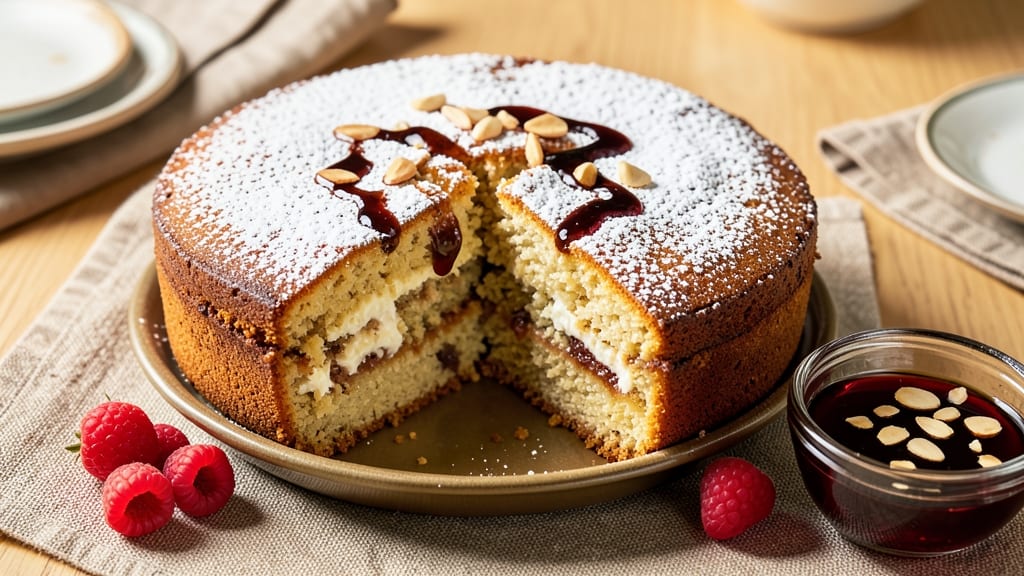
This almond Madeira cake delivers layers of nutty richness and warm caramelized depth that make every slice unforgettable. The marriage of toasted almonds and Madeira wine creates a texture that's moist yet tender, with a signature crisp top that cracks beautifully when sliced.
What sets this apart is the slow caramelization of the sugar, which infuses the entire cake with a subtle, boozy sweetness that lingers on the palate.
The secret to achieving that perfect balance lies in the almond flour and Madeira wine, which not only add depth but also keep the cake moist without needing extra fat.
I've baked this recipe dozens of times, and the key is patience—letting the cake bake slowly at 325°F ensures the top caramelizes while the interior remains perfectly set. The result is a cake that's rich enough for dessert but light enough to enjoy as an afternoon treat.
What makes this recipe truly special is how the flavors evolve as it cools. The caramelized top softens slightly, creating a velvety contrast with the nutty layers beneath.
The Madeira wine adds a sophisticated touch without overpowering the natural sweetness of the almonds, while the caramelized sugar gives it that irresistible golden crust. This is the kind of cake that tastes even better the next day—if it lasts that long.
Perfect for special occasions or when you want to impress guests, this almond Madeira cake is also versatile enough for everyday indulgence. Serve it with a dusting of powdered sugar or a dollop of whipped cream to enhance its natural elegance.
Here's how to make it—step by step—for a dessert that's as beautiful as it is delicious.
Ingredients for almond madeira cake
Toasted almonds, rich Madeira wine, and caramelized sugar—this cake needs just twelve ingredients for big flavor.
| Ingredient | Amount | Notes |
|---|---|---|
| Almond Flour 🥜 | 2 cups | Finely ground, unsweetened |
| All-Purpose Flour 🌾 | ½ cup | For structural balance |
| Madeira Wine 🍷 | ½ cup | Dry, medium-bodied variety |
| Granulated Sugar 🍚 | 1 ½ cups | Superfine preferred for smoothness |
| Light Brown Sugar 🍚 | ½ cup | Packed, for moisture |
| Unsalted Butter 🧈 | 1 cup | Cold, cubed for creaming |
| Large Eggs 🥚 | 3 whole | Room temperature preferred |
| Vanilla Extract 🌿 | 1 tbsp | Pure, high-quality |
| Baking Powder 🧂 | 1 tsp | Aluminum-free preferred |
| Salt 🧂 | ½ tsp | Fine sea salt |
| Toasted Almonds 🥜 | ½ cup | Chopped, for texture |
| Powdered Sugar 🍚 | ¼ cup | For dusting, optional |
Almond flour is non-negotiable here—Bob’s Red Mill or Anthony’s Goods are my go-tos for consistency. The Madeira wine? Graham’s Six Year Old or Henriquez & Cerveira work perfectly, but any dry Madeira will do. Toast your almonds in a dry pan until golden—about 3-4 minutes—then chop them while warm for maximum flavor. The butter should be cold when you cream it with the sugars; this keeps the cake tender. If your almond flour is fresh, you might need to toast it briefly too—just until fragrant.
No Madeira? Dry sherry or brandy at half the amount works in a pinch. Substitute the almond flour with 1 cup whole wheat flour plus 1 cup oat flour if you’re avoiding nuts, but the texture will be denser. For the sugars, superfine is ideal, but if you’ve only got regular granulated, pulse it in a food processor for a few seconds. The eggs should be at room temperature—30 minutes out of the fridge makes all the difference. And if you’re feeling fancy, add a splash of orange liqueur to the Madeira for extra depth.
This cake tastes even better the next day—if it lasts that long. Store it in an airtight container at room temperature for up to 4 days, or freeze slices wrapped in plastic for 3 months. The caramelized top softens slightly as it cools, so bring it to room temperature before serving. Dust with powdered sugar right before slicing for that bakery-fresh look. Leftovers? Toasted almonds make a great crumble topping for yogurt or oatmeal—use the extra flour to thicken it.
Why You'll Love This Recipe
- No Fuss Mixing: Honestly, this cake comes together faster than my coffee order at the drive-thru. Just toss the dry ingredients—almond flour gives that gorgeous texture without fuss—then fold in the Madeira wine and sugars. No creaming butter, no tempering eggs, just stir, pour, bake.
- Wine-Infused Magic: That Madeira wine isn’t just flavor—it’s the star. It brings this cake a deep, caramel-like richness that lingers like a good conversation. The brown sugars add a subtle molasses note, and the almond flour keeps it moist without being heavy. (Yes, even my wine-snob cousin approved.)
- Weeknight or Weekend: Between us, this cake works everywhere. Need a quick dessert after a busy week? Done. Bringing something to a potluck where you don’t know the crowd? Nailed it. The Madeira’s sophisticated edge makes it feel special, but the simple prep keeps it stress-free.
- Leftover Goldmine: Here’s what sold me—this cake actually improves the next day. The almond flour keeps it from drying out, and the brown sugar crust gets even more intense. I’ve turned slices into breakfast toast with whipped cream, or reheated them for a cozy afternoon pick-me-up. Zero waste, all win.
Step-by-step instructions for almond Madeira cake
Here's how to bake a decadent cake with rich layers and a caramelized top—every step matters.
Cream Butter and Sugars for Maximum Fluffiness
In a stand mixer fitted with the paddle attachment, combine the 1 cup unsalted butter (cold, cubed) with the 1.5 cups granulated sugar and 0.5 cup light brown sugar. Beat on medium speed for 3-4 minutes until light and fluffy—the mixture should nearly double in volume and look pale. This creaming process incorporates air, which creates that signature tender crumb.
I like to scrape down the sides of the bowl every 30 seconds to ensure even mixing. You'll know it's ready when the butter is completely incorporated and the sugars have dissolved into a smooth paste. The texture should be thick but smooth, almost like soft whipped cream. This is your foundation for a moist, airy cake.
Incorporate Eggs and Madeira Wine for Depth of Flavor
Add the 3 whole large eggs, one at a time, mixing on low speed after each addition until fully incorporated. Then add the 1 tbsp vanilla extract and 0.5 cup Madeira wine, mixing just until combined. The Madeira wine adds a subtle boozy richness that pairs perfectly with the almond flavor—don't skip this step.
Here's the thing—you want to mix just enough to combine without over-developing the gluten. The batter should be smooth but still slightly thick. If it looks curdled, don't worry; the dry ingredients will smooth it out. The Madeira wine might make the batter look a bit thinner, but that's okay—it'll come together when we add the flours.
Combine Dry Ingredients for Perfect Texture
In a separate bowl, whisk together the 2 cups almond flour, 0.5 cup all-purpose flour, 1 tsp baking powder, and 0.5 tsp salt. Sift the dry ingredients into the wet mixture in three additions, mixing on low speed just until combined after each addition. Overmixing develops gluten, which can make the cake dense.
Fold in the 0.5 cup toasted almonds by hand using a silicone spatula. You want them evenly distributed throughout the batter. The toasted almonds add texture and a nutty crunch that balances the cake's richness. Make sure they're chopped evenly—large pieces won't mix in smoothly.
Bake for Layers and Caramelized Top
Preheat your oven to 350°F. Grease and flour two 8-inch round cake pans (or use parchment rounds). Divide the batter evenly between the pans and smooth the tops. Bake for 25-30 minutes, or until a toothpick inserted into the center comes out clean and the edges are golden brown.
Here's where the magic happens: the top should develop a beautiful caramelized crust while the layers stay moist. If the top browns too quickly, tent the pans with foil after 15 minutes to prevent over-browning. Let the cakes cool in the pans for 10 minutes before transferring to a wire rack to cool completely.
Assemble and Dust for Elegance
Once completely cooled, place one cake layer on a serving plate and spread a thin layer of jam (optional) or apricot glaze if desired. Add the second layer and dust the top generously with the 0.25 cup powdered sugar using a fine-mesh sieve. This creates that classic elegant finish.
Slice into wedges and serve immediately. The cake should have a tender, moist crumb with a subtle almond flavor and a hint of Madeira's warmth. The caramelized top adds a beautiful contrast to the soft layers. Store leftovers in an airtight container for up to 3 days—if it lasts that long!
Pro Tips For Making Almond Madeira Cake
- Whisk Madeira First: Pour the Madeira wine into your mixing bowl before adding the wet ingredients. This lets the alcohol bloom the flour’s proteins and sugar, giving your cake a deeper, more complex flavor instead of just a boozy aftertaste. (Yes, it’s a tiny step, but it makes a real difference.)
- Sift Almond Flour Twice: Almond flour clumps like a stubborn toddler—sift it through a fine-mesh sieve before measuring, then sift it again right into the dry ingredients. This ensures even distribution and prevents those dreaded dense pockets in your cake. (I learned this the hard way after a cake that looked like a brick.)
- Don’t Overmix the Batter: Stop folding in the dry ingredients as soon as they’re just combined—lumpy but no flour streaks. Overmixing develops gluten, which turns your tender Madeira cake into a chewy loaf. (Trust me, your future self will notice the difference.)
- Bake Until Slightly Under: Pull the cake out when the center reads 205°F (96°C) on your thermometer—it’ll keep rising as it cools. Overbaking dries out the almond flour’s natural moisture, leaving you with a cake that’s more sad than sublime. (And yes, even if it looks underdone, it’s not.)
Essential equipment for great almond madeira cake
Stand Mixer Essentials
Your stand mixer is the workhorse for this recipe—I use my KitchenAid Artisan Series with the paddle attachment for creaming butter and sugars. The paddle ensures even mixing without over-developing gluten, which is critical for that tender crumb.
If you don’t have a mixer, use a hand mixer on medium-high speed, but be prepared to work in 30-second bursts to avoid overheating the butter.
The bowl scraper is non-negotiable here. I keep a silicone bowl scraper handy to ensure no batter clings to the sides during mixing. This prevents dry spots and guarantees a smooth, consistent texture throughout the cake.
A medium-sized mixing bowl (5-quart capacity) gives you enough room to work without spills while mixing the batter.
Precision Measuring Tools
For this recipe, accuracy matters—especially with the almond flour and sugars. I use a digital kitchen scale for the almond flour and flours to ensure precise measurements, but if you’re measuring by volume, use a dedicated measuring cup (like the OXO Good Grips set) for the almond flour.
Spoon the flour into the cup and level it off with a straight edge—don’t scoop directly from the bag or you’ll pack it too tightly.
A fine-mesh sieve is essential for sifting the dry ingredients to avoid lumps in the batter. I also keep a small offset spatula on hand for folding in the toasted almonds—this ensures they’re evenly distributed without overmixing.
For the Madeira wine, a liquid measuring cup with clear markings helps you pour the exact ½ cup without spills.
Baking Pans and Prep
Two 8-inch round cake pans are ideal for this recipe—I prefer non-stick pans with removable bottoms (like the Wilton Perfect Results line) for easy release. If you don’t have round pans, square 8x8-inch pans work too, but the baking time may vary slightly.
Always grease the pans thoroughly with butter or baking spray and dust with flour or almond flour for easy removal.
A parchment round (cut to fit your pan) is another great option—it eliminates the need for greasing and ensures an even bake. I also recommend a wire cooling rack to let the cakes cool completely before assembling.
This prevents soggy layers and helps the caramelized top set properly. For the final touch, a fine-mesh sieve helps dust the powdered sugar evenly over the cake.
Oven Thermometer
Your oven’s temperature gauge can be off by 25°F or more, and this recipe relies on precise baking at 350°F. I use an OXO Good Grips oven thermometer to verify accuracy before baking.
If your oven runs hot, reduce the temperature to 340°F to prevent over-browning. For even heat distribution, place a baking sheet on the rack below your pans to reflect heat upward.
If you’re baking both layers at once, rotate the pans halfway through baking (after 15 minutes) for even caramelization. A timer is a must—set it for 25 minutes and check for doneness with a toothpick test.
The cake is done when the toothpick comes out clean and the edges are golden brown. 🔥
Nutrition facts
Frequently asked questions
Why does this cake need Madeira wine instead of regular wine?
Madeira wine's unique aging process gives it a rich, caramelized depth that regular wine can't match. The wine's natural sweetness and nutty undertones complement the almond flavor perfectly, while its higher alcohol content helps create that signature moist texture. It also adds a sophisticated complexity that makes this cake feel special for gatherings.
Can I substitute almond flour with regular flour?
You can try using 1 cup whole wheat flour plus 1 cup oat flour as a substitute, but the texture will be denser. The almond flour gives this cake its signature tender crumb and nutty flavor. If you're avoiding nuts, consider using 1½ cups gluten-free 1:1 baking flour> instead, but the cake may not be as moist.
How do I prevent the cake from cracking on top?
Cracking happens when the top dries too quickly. To prevent this, bake at 350°F and tent the pans with foil after 15 minutes if the top browns too fast. Also, make sure your oven isn't too hot—use an oven thermometer to confirm accuracy. Let the cake cool completely in the pan for 10 minutes before removing.
How long does this cake keep, and can I freeze it?
Store the cake in an airtight container at room temperature for up to 4 days. For longer storage, wrap individual slices in plastic and freeze for 3 months. The flavors actually improve as it sits—this cake tastes even better the next day! Thaw frozen slices at room temperature before serving.
Can I make this cake in a single layer instead of two?
Use a 9-inch round pan and reduce baking time to 20-25 minutes. The single layer will be slightly thicker but just as delicious. Just be sure to check for doneness with a toothpick—it should come out clean when fully baked.