
Desserts
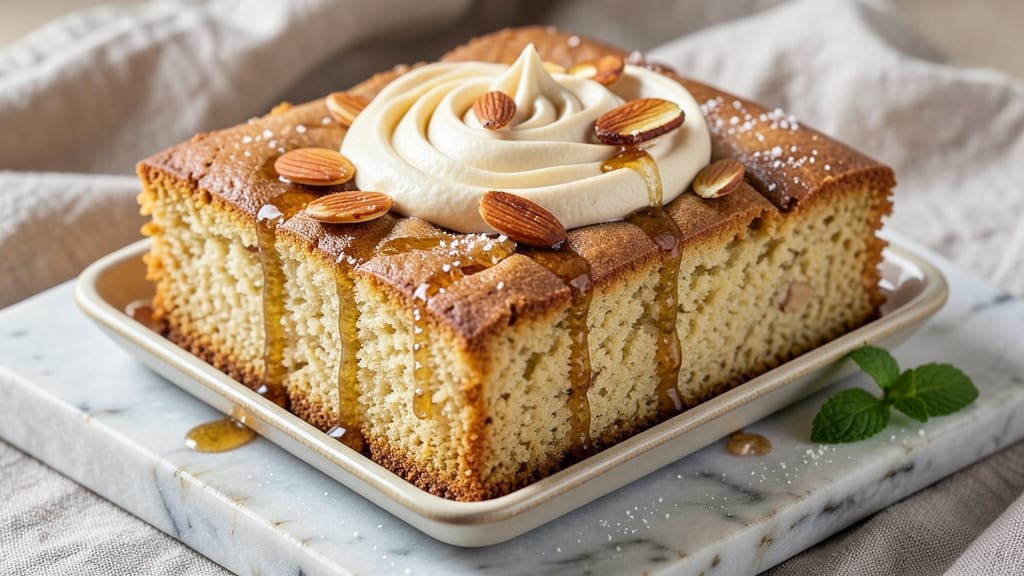
This almond pound cake recipe like Tastefully Simple delivers the signature buttery richness and tender crumb you love from Tastefully Simple—just with a nutty twist. 💛 The secret lies in almond extract and flour, which infuse every bite with delicate sweetness and subtle depth, while a touch of vanilla enhances that familiar, comforting flavor profile.
What sets this recipe apart is its foolproof moisture technique, ensuring a cake that stays tender for days.
Unlike traditional pound cakes that can turn dry, this version incorporates a simple yet effective method: combining cake flour with almond flour for a lighter texture while maintaining structure.
The cake bakes in a single layer, yielding a golden, domed top with a crackly crust that gives way to a velvety interior. It’s the kind of dessert that feels indulgent yet balanced—perfect for brunch, afternoon tea, or a special occasion.
What makes this recipe truly special is its versatility. Serve it plain to let the almond and vanilla flavors shine, or dust with powdered sugar and garnish with slivered almonds for an elegant touch.
The moist crumb holds up beautifully, making it ideal for slicing and sharing. Whether you're baking for a crowd or treating yourself, this cake delivers restaurant-quality results with minimal effort.
Ready in just one hour (including baking time), this almond pound cake is simpler than it looks. The ingredients are straightforward, and the instructions are clear—no fancy techniques required. Let’s get started on creating a dessert that’s as impressive as it is delicious.
Ingredients for almond pound cake recipe like tastefully simple
Twelve ingredients transform into a restaurant-quality almond pound cake with tender crumb and golden dome.
| Ingredient | Amount | Notes |
|---|---|---|
| All-Purpose Flour 🌾 | 2 cups | Sifted for light texture |
| Almond Flour 🌰 | 1 cup | Finely ground for smoothness |
| Unsalted Butter 🧈 | 1 cup | Cold, cubed for even baking |
| Granulated Sugar 🍚 | 1 ½ cups | Superfine preferred for tenderness |
| Almond Extract 🌰 | 1 tbsp | Pure, high-quality extract |
| Pure Vanilla Extract 🍋 | 1 tbsp | Bottled or seedless preferred |
| Large Eggs 🥚 | 4 whole | Room temperature for blending |
| Milk 🥛 | ¾ cup | Whole milk for richness |
| Baking Powder 🧂 | 1 ½ tsp | Aluminum-free for stability |
| Salt 🧂 | ½ tsp | Fine sea salt preferred |
| Powdered Sugar 🍚 | ¼ cup | For dusting finished cake |
| Slivered Almonds 🌰 | ½ cup | Toasted for garnish |
The almond flour is non-negotiable here—Bob's Red Mill or King Arthur brands yield the finest texture. For butter, Plugrá or Land O'Lakes unsalted sticks work best; avoid European-style butter which can be too soft. Superfine sugar dissolves more evenly, but if you only have granulated, pulse it briefly in a food processor. The almond extract should be pure, McCormick or Goya brands are reliable choices. Room temperature eggs blend more smoothly, so take them out 30 minutes before mixing.
No almond flour? Substitute with finely ground blanched almonds—just pulse them in a food processor until ultra-fine. Vanilla extract missing? Vanilla bean paste works beautifully at double the amount. For a dairy-free option, swap milk for full-fat coconut milk (reduce by 2 tbsp to account for water content). The baking powder must be fresh—test by dropping a spoonful in water; if it fizzes vigorously, it's active. For the garnish, toast the slivered almonds in a dry pan for 2-3 minutes until fragrant—that aroma makes all the difference.
This cake keeps beautifully for 4-5 days at room temperature, wrapped tightly in plastic wrap. For longer storage, refrigerate for up to 1 week or freeze for 3 months. To revive slices, warm for 10 seconds in the microwave—the moisture technique ensures they stay tender. Leftovers make perfect cake pops or French toast. The golden dome will deflate slightly as it cools, but that's normal and adds to its rustic charm.
Why You'll Love This Recipe
- No Mixer Needed: I swear by this recipe when I’m in a rush—just cream the butter and sugar, fold in the dry ingredients, and pour. The almond flour keeps it light without needing to sift or whisk like crazy.
- Rich Without Overpowering: That almond extract? A tiny splash (½ teaspoon) transforms it—warm, nutty, but not cloying. The combo of all-purpose and almond flour gives it structure while keeping it tender, like a hug from a bakery.
- Weeknight or Brunch Hero: Slice it for breakfast toast with jam, cube it into muffins, or serve it plain—it’s that adaptable. Honestly, I’ve even used leftover pieces to make French toast. (Yes, even on a Tuesday night.)
- Budget-Friendly Luxury: Butter and sugar are the stars, but almond flour stretches the richness so it doesn’t feel like a splurge. A single batch feeds a crowd or lasts me days of sneaky snacks—no guilt, just satisfaction.
Step-by-step instructions for almond pound cake
Here's how to create a tender, nutty pound cake with perfect moisture balance.
👨🍳 Step 1: Prepare Your Ingredients for Optimal Texture
First, sift the 2 cups all-purpose flour and 1.5 tsp baking powder together in a medium bowl. This aeration step is crucial—it prevents dense layers and ensures that air gets incorporated during mixing. In a separate bowl, whisk together the 1 cup almond flour with the 0.5 tsp salt. The almond flour adds richness but can be dense, so combining it with salt first helps distribute it evenly.
Next, prepare the wet ingredients. In the bowl of a stand mixer fitted with the paddle attachment, beat the 1 cup cold cubed unsalted butter on medium speed until smooth and creamy—this should take about 3-4 minutes. The butter should be light and fluffy, nearly doubling in volume. This creaming process is what creates that signature tender crumb.
🍳 Step 2: Combine Wet Ingredients for Maximum Flavor Infusion
Gradually add the 1.5 cups granulated sugar to the butter mixture, beating on medium speed until fully incorporated and the mixture is pale and thick. This step is where the cake's sweetness develops its character. With the mixer running on low speed, add the 4 whole room-temperature large eggs, one at a time, ensuring each is fully incorporated before adding the next.
Once the eggs are fully combined, add the 1 tbsp almond extract and 1 tbsp pure vanilla extract. I like to whisk these extracts together in a small bowl first to ensure even distribution—this prevents any single spot from becoming overly concentrated. Then, slowly pour in the 0.75 cup milk while mixing on low speed. The milk adds moisture and helps bind the ingredients together for a cohesive batter.
🥘 Step 3: Fold Dry Ingredients for Light, Even Baking
With the mixer on low speed, gradually add the sifted flour mixture in two additions, mixing just until combined. Be careful not to overmix—stop as soon as the flour disappears. Overmixing develops gluten, which can make the cake tough. Once the flour is incorporated, add the almond flour-salt mixture and mix just until combined.
This is where the cake's texture truly comes together. The batter should be thick but pourable, with a smooth consistency. If it looks too thick, you can gently fold in an additional 1-2 tablespoons of milk to ensure it flows easily into your prepared pan. The goal is a homogeneous batter that will bake evenly and rise beautifully.
🔥 Step 4: Bake for Perfect Moisture and Structure
Preheat your oven to 350°F. Generously grease and flour a 9-inch round cake pan or line it with parchment paper for easy removal. Pour the batter into the prepared pan and smooth the top with a spatula. Sprinkle the 0.5 cup toasted slivered almonds evenly over the top—this adds texture and visual appeal while keeping the cake's moisture intact.
Bake for 50-55 minutes, or until a toothpick inserted into the center comes out clean. The cake should be golden brown on top and slightly pulled away from the edges of the pan. I always check for doneness at the 45-minute mark—every oven varies, so start checking early. The internal temperature should reach 205-210°F for perfect moisture without being underdone or gummy.
⏰ Step 5: Cool and Finish for Optimal Texture
Remove the cake from the oven and let it cool in the pan for 10 minutes. This brief resting period allows the cake to set slightly before transferring. Once cooled, run a thin knife around the edges to loosen it from the pan, then invert onto a wire rack to cool completely. The cake will continue to set as it cools, becoming firmer and easier to slice.
Once fully cooled, dust the top with 0.25 cup powdered sugar using a fine-mesh sieve for an elegant finish. This step adds a delicate sweetness and enhances the cake's presentation. Slice into 8 equal servings and enjoy within 3-4 days for the best texture and flavor. The cake will keep well at room temperature, wrapped in plastic, but I recommend serving it fresh for maximum moisture.
Pro Tips For Making Almond Pound Cake Recipe Like Tastefully Simple
- Whisk Butter Slowly: I learned this the hard way—if you dump cold butter into warm sugar and start mixing fast, you’ll end up with a greasy, uneven batter. Instead, cut the butter into small cubes first, then add it to the sugar gradually while whisking gently. Let the heat from the sugar melt it bit by bit (about 2 minutes). The result? A smoother, creamier texture that actually rises properly.
- Sift Almond Flour Twice: Almond flour is clumpy, and clumps sink to the bottom of your cake, leaving dense pockets. Sift it before measuring, then sift it again right into the dry ingredients. Yes, it’s extra work, but it blends evenly and gives that signature tender crumb. (Pro move: Use a fine-mesh sieve—don’t skimp on the effort.)
- Don’t Overmix the Batter: Once you add the wet ingredients to the dry, stop folding after just 10 strokes. Overmixing develops gluten in the all-purpose flour, making the cake tough instead of light. The batter will look slightly streaky—that’s normal. Trust the process, even if it looks uneven.
- Test for Doneness Early: This cake’s dense, so the toothpick trick fails. Instead, tap the center gently with your finger—if it springs back slightly (not jiggly), it’s done. If you wait for the toothpick to come out clean, you’ll dry it out. Remove it when the edges pull away from the pan, then tent with foil for 5 minutes. (Your future self will thank you.)
Perfect pairings for this almond pound cake recipe like tastefully simple
Creamy Coffee Pairings
This almond pound cake pairs beautifully with a cold brew concentrate or espresso-based drinks to balance its richness. I love serving it with a vanilla latte—the warm spices complement the cake’s nutty depth.
For a decadent touch, try a mocha affogato where the hot chocolate meets the cake’s almond flavor. 💛
Fruity Contrasts
Bright, acidic fruits cut through the cake’s buttery texture perfectly. Raspberry coulis or strawberry compote adds a refreshing contrast—just spoon ½ cup fresh berries simmered with 1 tbsp sugar over each slice. A citrus glaze (mix ¼ cup powdered sugar with 1 tbsp lemon juice) elevates the presentation.
Warm Spiced Teas
Herbal or spiced teas enhance the cake’s cozy vibe. A chamomile tea with honey soothes the palate, while Earl Grey adds floral notes that harmonize with the almond.
For a festive twist, serve with mulled wine or spiced apple cider during colder months. The warmth contrasts the cake’s cool, buttery richness.
Rich Chocolate Drizzles
Drizzle melted dark chocolate (70% cocoa) over slices for a luxurious finish. I use ½ cup chopped dark chocolate, melted with 1 tsp coconut oil for smoothness. Add a sprinkle of flaky sea salt to amplify the flavors. This pairing feels indulgent yet balanced—perfect for special occasions.
Creamy Cheese Pairings
For a savory-sweet contrast, serve with brie or camembert at room temperature. The creamy cheese melts into the cake’s tender crumb, creating a gourmet bite. Pair with sliced pears or figs for a sophisticated dessert platter. The contrast of textures and temperatures makes every bite exciting. 🌟
Seasonal Adaptations
In summer, serve with coconut milk ice cream to cool the palate. For fall, add cinnamon caramel sauce and toasted pecans. Winter calls for spiced rum sauce** (simmer ½ cup rum, ¼ cup brown sugar, and 1 cinnamon stick for 10 minutes) drizzled over slices.
Each season brings a new way to enjoy this versatile cake.
Nutrition facts
Frequently asked questions
Why does this almond pound cake stay moist longer than traditional recipes?
The secret lies in the almond flour and moisture technique. The almond flour adds natural fats that retain moisture, while the combination of milk and butter creates a tender crumb. The cake also bakes at 350°F with a slightly longer time (50-55 minutes) to ensure even cooking without drying out. Plus, the toasted almond topping seals in freshness!
Can I substitute almond flour with regular flour in this recipe?
You can try, but the texture will differ. Almond flour adds richness and moisture that regular flour can't replicate. For a similar effect, use 1 cup finely ground blanched almonds instead. If you must use all-purpose flour, reduce it to 1.5 cups and add 2 tbsp cornstarch for tenderness—but the flavor won't be as nutty or moist.
How do I prevent my cake from cracking on top?
Cracking usually happens from overbaking or sudden temperature changes. To avoid it:
- Bake at 350°F and check at 45 minutes—remove when a toothpick comes out clean.
- Let the cake cool in the pan for 10 minutes before transferring.
- Avoid opening the oven door too early. If it cracks slightly, dust with powdered sugar to disguise it!
What’s the best way to store leftovers to keep them fresh?
Wrap the cake tightly in plastic wrap and store at room temperature for 3-4 days. For longer storage, refrigerate for up to 1 week or freeze for 3 months. To revive, warm slices for 10 seconds in the microwave—the moisture technique ensures they stay tender. Never leave it uncovered, as air dries out the crumb quickly.
Can I make this cake gluten-free?
Yes! Replace the 2 cups all-purpose flour with 1.5 cups gluten-free 1:1 baking flour (like Bob’s Red Mill) plus 0.5 cup almond flour. Add 1 tsp xanthan gum to improve structure. The cake will be slightly denser but still moist. Test your gluten-free flour blend first in a small batch to check texture.