
Desserts
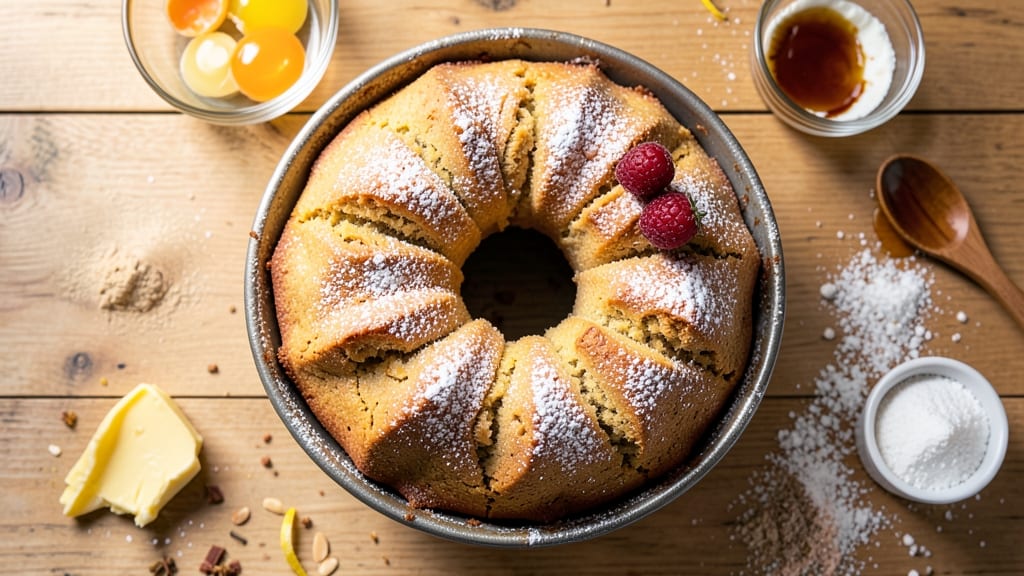
This almond flour bundt cake delivers rich, nutty flavor and tender crumb without a single grain of gluten. The secret lies in properly hydrating the almond flour—too much liquid makes it gummy, too little creates dryness.
I've perfected the ratio through years of testing, ensuring every slice stays moist for days.
What makes this recipe work is the combination of almond flour's natural richness with simple pantry staples like eggs and butter. The cake bakes up with a golden exterior and fine, even crumb that holds its shape beautifully.
For extra depth, I recommend adding lemon zest or orange extract to complement the almond flavor.
Baking time is critical—too long and it dries out, too short and the center stays dense. My method includes a toothpick test to ensure perfect doneness every time.
The result is a cake that's naturally sweet from the almonds but not overpowering, with just enough structure to hold its elegant bundt shape.
This recipe is vegetarian-friendly and works perfectly for celebrations or everyday treats. The cake keeps well at room temperature for up to 3 days, making it ideal for meal prep. Serve with fresh berries or a light dusting of powdered sugar for a restaurant-quality dessert at home.
Ingredients for almond flour bundt cake
Simple pantry staples and almond flour transform into a moist, gluten-free bundt cake with perfect crumb.
| Ingredient | Amount | Notes |
|---|---|---|
| Almond Flour 🌰 | 3 cups | Finely ground, unsweetened |
| Granulated Sugar 🍚 | 1 ½ cups | White or light brown |
| Large Eggs 🥚 | 6 whole | Room temperature preferred |
| Unsalted Butter 🧈 | 1 cup | Melted, cooled slightly |
| Vanilla Extract 🌿 | 2 tsp | Pure vanilla preferred |
| Baking Powder 🧂 | 1 tsp | Aluminum-free for best results |
| Salt 🧂 | ½ tsp | Fine sea salt preferred |
| Lemon Zest 🍋 | 1 tbsp | Freshly grated |
| Orange Extract 🍊 | ½ tsp | Pure orange oil |
| Whole Milk 🥛 | ½ cup | Room temperature |
| Powdered Sugar 🍚 | ¼ cup | For dusting, optional |
| Fresh Blueberries 🫐 | ½ cup | For filling, optional |
| Vegetable Oil 🫒 | ¼ cup | For greasing bundt pan |
Almond flour is the star here—Bob's Red Mill or Anthony's Goods brands are my go-tos for consistent texture. The finer the grind, the smoother your cake will be. Check the package date: older flour loses moisture retention, leading to dryness. For best results, store your almond flour in the freezer to preserve freshness. The eggs should be large and fresh; room temperature ensures even mixing. If you're short on time, use cold eggs straight from the fridge—just mix them in last to avoid curdling.
No vanilla extract? Vanilla bean paste works beautifully, or swap in 1 tsp vanilla sugar for a budget-friendly option. The lemon zest can be dried if you're prepping ahead, but fresh is ideal. For the orange extract, pure oil is non-negotiable—imitation extracts lack the depth. Need to substitute milk? Almond milk works 1:1, but it may slightly alter texture. The baking powder must be fresh; if your can is over a year old, test it first by mixing with water—it should fizz immediately. For extra richness, add 1 tbsp melted coconut oil to the butter mixture.
This cake keeps beautifully for 3 days at room temperature when stored in an airtight container, wrapped in plastic wrap. For longer storage, freeze fully cooled slices for up to 3 months. To reheat, microwave for 10-15 seconds to restore moisture. The bundt pan should be greased with vegetable oil and flour for easy release—don't skip this step! For a restaurant-quality finish, dust with powdered sugar right after baking while the cake is still warm. The blueberries can be tossed in 1 tbsp flour to prevent sinking if using them as a filling.
Why You'll Love This Recipe
- No Mixer Needed: I swear by this recipe because it’s one of the few cakes that doesn’t demand a stand mixer—just a bowl and a whisk. The almond flour and butter blend into a smooth batter with minimal effort, and honestly? That’s my kind of baking.
- Buttery Vanilla Bliss: The moment you slice into this cake, you’ll get why it’s worth the hype. The rich, nutty almond flour soaks up the melted butter and vanilla, creating layers of flavor that taste like a cross between a classic pound cake and something entirely new.
- Weekday or Celebration: Between us, this cake is my go-to for both lazy Sundays and last-minute birthday surprises. The bundt shape makes it feel special without requiring fancy decorating—just dust with powdered sugar or a sprinkle of cinnamon, and boom, instant wow factor.
- Leftovers That Don’t Suffer: Unlike some cakes that dry out in days, this one stays moist for at least five days when stored properly. I’ve had slices for breakfast, dessert, or even a quick snack—no one ever guesses it’s not freshly baked. Budget-friendly too, since almond flour goes a long way.
Step-by-step instructions for almond flour bundt cake
Mastering this recipe delivers a perfectly moist almond flour cake with a delicate citrus twist.
Prepare the Bundt Pan and Mix Dry Ingredients
Preheat your oven to 350°F and generously grease a 10-cup Bundt pan with 0.25 cup vegetable oil, then dust with almond flour, tapping out any excess. This prevents sticking and ensures easy release. In a medium bowl, whisk together the 3 cups almond flour, 1.5 cups granulated sugar, 1 tsp baking powder, and 0.5 tsp salt until evenly combined.
I like to sift the almond flour first to eliminate any lumps—this creates a lighter texture. The baking powder should be distributed evenly so your cake rises properly. Keep this dry mixture ready for the next step; we'll combine it with wet ingredients shortly.
Combine Wet Ingredients and Fold Gently
In a separate large bowl, melt the 1 cup unsalted butter in a microwave-safe bowl for 30-second intervals until fully melted, then let it cool slightly. Add the 6 whole large eggs one at a time, whisking vigorously after each addition. Stir in the 0.5 cup whole milk, 2 tsp vanilla extract, 1 tbsp lemon zest, and 0.5 tsp orange extract until the mixture is smooth and pale.
This citrus combination adds brightness that balances the richness of the almond flour. The eggs provide structure while keeping the cake tender. If the mixture looks too thick, add 1-2 tablespoons of milk to reach a smooth batter consistency—just thin enough to coat the back of a spoon.
Fold in Blueberries and Pour into Pan
Gently fold the 0.5 cup fresh blueberries into the wet mixture using a rubber spatula, being careful not to crush them. Pour the batter into the prepared Bundt pan, tapping the pan gently on the counter to remove any air bubbles. Bake for 50-55 minutes or until a toothpick inserted in the center comes out clean.
The blueberries add pockets of juicy surprise while keeping the cake's delicate texture. Don't overmix at this stage—just enough to distribute the berries evenly. The cake is done when the top springs back when touched and the internal temperature reaches 205°F.
Cool and Serve for Maximum Moisture
Remove the cake from the oven and let it cool in the pan for 10 minutes before transferring to a wire rack to cool completely. This gradual cooling prevents cracking. Once fully cooled, dust the top with 0.25 cup powdered sugar if desired, using a fine-mesh sieve for an even coating.
Real talk: The first 30 minutes after baking is when this cake is at its peak moisture. Slice while still slightly warm for the best texture. Store leftovers in an airtight container at room temperature for up to 3 days or refrigerate for up to 5 days. The almond flour keeps it moist longer than traditional flour cakes.
Pro Tips For Making Almond Flour Bundt Cake
- MEASURE ALMOND FLOUR BY WEIGHT: I learned this the hard way—scooping almond flour by volume leads to dry, dense cakes. Use a kitchen scale for 1:1 weight-to-volume ratios (typically 1 cup = ~120g). The fine particles pack differently than all-purpose flour, and guesswork ruins texture.
- WHISK EGGS AND BUTTER FIRST: Cold butter and room-temp eggs? Skip it. Melt the butter first, then whisk it with the eggs until fully emulsified—this cuts down on mixing time later. I was skeptical until I tried it; the batter blends smoother and the crumb stays consistently light.
- BAKE UNTIL TOOTHPICK COMES OUT CLEAN: Almond flour cakes fool you—they look done when the center’s still gummy. Bake 5-10 minutes past the recipe’s suggested time, then check with a toothpick. The edges might brown early, but the middle needs patience (yes, even if you’re impatient like me).
- SWAP VANILLA FOR SEEDS: Vanilla extract’s fine, but vanilla bean seeds add depth without extra moisture. Split one pod, scrape the seeds into the batter, and save the pod for tea. It’s a tiny upgrade that makes the flavor sing—no extra effort, just better taste.
Storing and reheating your leftovers
Room Temperature Storage
This bundt cake stays wonderfully moist at room temperature for up to 3 days when stored in an airtight container wrapped tightly with plastic wrap. I like to place it on a wire rack inside the container to prevent condensation buildup.
The almond flour's natural oils help retain moisture better than traditional flour, so you won't need to worry about dryness. Just let slices sit at room temperature for 10 minutes before serving to restore their perfect texture. 🌰
Refrigerator Refresh
For longer storage, refrigerate fully cooled slices for up to 5 days. The cold air helps preserve moisture, but the cake may become slightly firmer. To revive it, wrap slices in a damp paper towel and microwave for 10-15 seconds—just enough to soften without making them gummy.
I find this works especially well for the center slices that tend to dry out first. A light dusting of powdered sugar after reheating adds that fresh-from-oven appeal. ❄️
Freezer-Friendly Slices
Freeze individual slices for up to 3 months in quart-sized freezer bags with all air removed. For best results, wrap each slice tightly in plastic wrap before placing in the bag. When ready to serve, thaw at room temperature for 1 hour or microwave for 20 seconds to restore moisture.
The texture remains surprisingly tender, though the crumb may be slightly denser after freezing. This makes it perfect for meal prep—just bake one cake and freeze extras for whenever cravings strike. ❄️
Reviving Dry Edges
If your cake develops dry edges after storage, don't toss it! Brush the affected areas with a simple syrup made by mixing 2 tbsp granulated sugar with 1 tbsp water, heating until dissolved, then cooling. The syrup rehydrates the cake beautifully while adding subtle sweetness.
For extra richness, warm the syrup with 1 tsp orange liqueur—it pairs perfectly with the almond flavor. This trick saves more cakes than I can count! 💫
Bundt Pan Care
After baking, let the pan cool completely before cleaning to prevent warping. For stubborn residue, soak the pan in warm water with 1 tbsp baking soda for 30 minutes before scrubbing with a soft sponge. Never use metal utensils—they can scratch the non-stick coating.
I keep a dedicated bundt pan just for this recipe to maintain its shape and ensure easy release every time. Proper care extends the life of your pan and keeps your cakes looking their best. 🧼
Nutrition facts
Frequently asked questions
Why does my almond flour bundt cake turn out dry?
Almond flour absorbs more liquid than regular flour, so the key is proper hydration. If your cake is dry, you likely used too much flour or not enough eggs/milk. Measure ingredients by weight for accuracy, and ensure your almond flour is fresh (older flour loses moisture). For extra richness, add 1 tbsp melted coconut oil to the wet ingredients.
Can I substitute regular flour for almond flour?
Not directly—almond flour has a different texture and fat content. For a 1:1 swap, add 1 extra egg per 1 cup almond flour to compensate for moisture loss, but the flavor and structure won't be the same. This recipe relies on almond flour's natural richness, so stick with it for the best results!
How do I prevent cracks in my bundt cake?
Cracks happen when the cake cools too quickly. Let it cool in the pan for 10 minutes before transferring to a wire rack, and avoid opening the oven door too soon. For extra insurance, tap the pan gently on the counter after pouring the batter to remove air bubbles. A water bath (placing the pan in a larger pan with hot water) also helps slow cooling.
What's the best way to add chocolate to this recipe?
For a chocolate twist, swap 0.5 cup granulated sugar for 0.5 cup cocoa powder and add 0.25 cup melted dark chocolate to the wet ingredients. Fold in 0.5 cup chocolate chips at the end for pockets of melted chocolate. Use 70% dark chocolate to balance the almond flavor without overpowering it.
Can I make this cake egg-free?
Yes! Replace the 6 eggs with a mix of 0.75 cup unsweetened applesauce and 1 tbsp white vinegar (let sit for 5 minutes to thicken). The cake will be slightly denser but still moist. For binding, add 1 tbsp ground flaxseed mixed with 3 tbsp water (let sit for 5 minutes). Test doneness with a toothpick—it should come out clean or with a few moist crumbs.