
Desserts
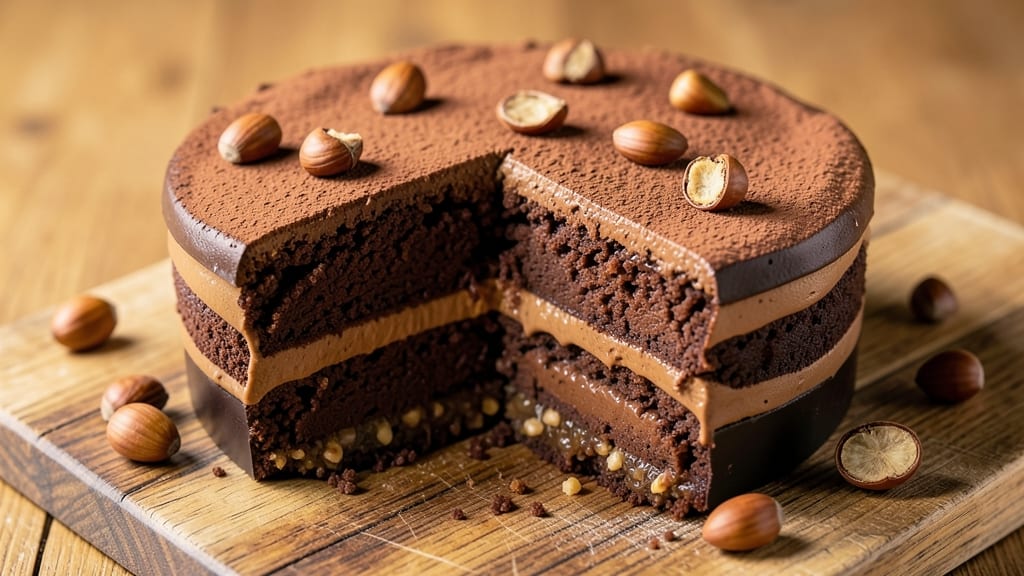
This Austrian chocolate cake recipe delivers the decadence of Sachertorte with its signature dark chocolate layers and crunchy hazelnut topping—a dessert that feels like a Viennese café treat. The secret lies in a rich, velvety chocolate ganache that binds layers of moist sponge, while toasted hazelnuts add texture and depth.
I've perfected this recipe after years of baking, ensuring every slice delivers that perfect balance of bittersweet chocolate and nutty crunch.
The cake starts with a simple yet precise sponge base—eggs whipped to ribbon stage, folded into flour and cocoa for a tender crumb. Between layers, we spread a dark chocolate ganache that's thick enough to hold its shape but still silky smooth.
The real magic happens with the hazelnut topping: toasted nuts blended into butter and sugar, then baked until golden and crisp. This isn't just dessert; it's an experience that transports you to Vienna with every bite.
What makes this recipe truly special is the technique: baking in a springform pan ensures even layers, while chilling between steps prevents sogginess. The result is a cake that's rich yet not overly heavy, with a glossy chocolate glaze that adds that final touch of elegance.
Perfect for celebrations or when you want to impress, this Austrian classic is worth every minute of effort.
Serve with a dusting of cocoa powder or a dollop of whipped cream for the full Sachertorte experience. The combination of dark chocolate, toasted hazelnuts, and the cake's tender layers creates a dessert that's both comforting and sophisticated. Let's get baking!
Ingredients for austrian chocolate cake
Twelve ingredients, Viennese elegance. The foundation for a cake that tastes like café Sachertorte.
| Ingredient | Amount | Notes |
|---|---|---|
| Unsalted Butter 🧈 | 1 ½ cups | Cold, cubed for sponge |
| Dark Chocolate Chips 🍫 | 12 oz | 70% cocoa or higher |
| Large Eggs 🥚 | 6 whole | Room temperature |
| Granulated Sugar 🍚 | 2 ½ cups | Superfine preferred |
| All-Purpose Flour 🌾 | 2 ½ cups | Sifted, spooned lightly |
| Unsweetened Cocoa Powder 🍫 | ¾ cup | Dutch-processed preferred |
| Vanilla Extract 🌿 | 2 tsp | Pure Madagascar |
| Hazelnuts 🥜 | 2 cups | Whole, skin-on |
| Powdered Sugar 🍚 | 1 ½ cups | For glaze |
| Heavy Cream 🥛 | 1 ½ cups | Cold for ganache |
| Salt 🧂 | ½ tsp | Fine sea salt |
| Cocoa Powder 🍫 | ¼ cup | For dusting |
| Dark Chocolate 🍫 | 12 oz | 70% for ganache |
The chocolate and hazelnuts are non-negotiable for authentic flavor. Ghirardelli or Valrhona chocolate delivers that deep, bittersweet profile—don't skimp on quality here. For hazelnuts, Trader Joe's or specialty stores carry the best, but any whole, skin-on nuts work if toasted properly. The butter should be European-style if possible (like Plugrá)—it has higher fat content for a richer cake. Sift your flour and cocoa together to avoid lumps in the batter, and measure your sugar precisely; this isn't a recipe to eyeball.
No Dutch-process cocoa powder? Natural cocoa works at the same amount, but the cake will be slightly darker. Running out of hazelnuts? Pecans or walnuts toasted with cinnamon can substitute, though the flavor won't be identical. The ganache requires both heavy cream and chocolate—don't use milk, as it won't set properly. For the glaze, powdered sugar and heavy cream should combine smoothly; if it's too thick, add 1 tsp warm water. The cake layers need to be completely cooled before assembling, or the ganache will melt and create a soggy bottom.
Assembled cake keeps 3 days at room temperature covered with plastic wrap, or 1 week refrigerated. For best texture, serve at room temperature—30 minutes out of the fridge is ideal. The hazelnut topping stays crisp for about 2 days before softening slightly. Freeze the fully assembled cake (without glaze) for up to 3 months—thaw overnight in the fridge before serving. The glaze can be made a day ahead and reheated gently if it thickens.
Why You'll Love This Recipe
- No Mixer Needed: I swear by this recipe because it’s one bowl, one whisk—no stand mixer, no fuss. The butter and sugar get creamed by hand (or a fork in a pinch), and the eggs fold right in. Honestly, I’ve made it in a hotel room with just a spoon.
- Rich Without Bitter Notes: That dark chocolate isn’t overpowering—it’s balanced. The melted butter rounds out the bitterness, while the eggs add a velvety richness. Between us, my kids ask for seconds, and they’re not chocolate purists.
- Weeknight or Celebration: Same batter, endless uses. Bake it for a quick dessert after dinner, or double the recipe for a birthday cake. I’ve even sliced it cold for breakfast with whipped cream—no judgment.
- Budget-Friendly Luxury: Five ingredients, zero shortcuts. Dark chocolate chips stretch further than bars, and the butter makes it feel indulgent. Leftovers? They last days in the fridge, and I’ve reheated slices in the oven for instant café vibes.
Step-by-step instructions for Austrian chocolate cake
Here's the precise method for creating a decadent Austrian chocolate cake with silky ganache and crunchy hazelnut topping.
Prepare the Hazelnut Topping
Preheat your oven to 350°F. Spread the 2 cups hazelnuts in a single layer on a baking sheet. Toast for 10-12 minutes until fragrant and golden brown, stirring halfway through. Let cool completely before processing.
Transfer the toasted hazelnuts to a food processor fitted with a metal blade. Pulse until finely chopped but not powdered—you want visible nut pieces. Set aside for the topping. This texture provides the perfect crunch contrast to the rich cake layers.
Create the Chocolate Sponge
In a stand mixer fitted with the paddle attachment, beat the 1.5 cups unsalted butter (cold, cubed) and 2.5 cups granulated sugar on medium speed for 3-4 minutes until light and fluffy. This creaming process incorporates air for a tender crumb.
Add the 6 whole large eggs one at a time, mixing well after each addition. Scrape down the sides of the bowl, then mix in the 2 tsp vanilla extract and 0.5 tsp salt. In a separate bowl, whisk together the 2.5 cups all-purpose flour and 0.75 cup unsweetened cocoa powder. With the mixer on low speed, gradually add the dry ingredients to the wet mixture.
Layer and Bake the Cake
In a 9-inch springform pan, combine the 12 oz dark chocolate chips with 1 cup of the batter. Fold gently to distribute the chocolate evenly. Spread half of the remaining batter over the chocolate mixture, then sprinkle with half of the prepared hazelnut topping. Repeat with another layer of batter and remaining hazelnuts.
Bake in the preheated oven for 50-55 minutes until a toothpick inserted in the center comes out clean. The cake should be set but still slightly springy to the touch. Let cool in the pan for 15 minutes before removing to a wire rack to cool completely.
Prepare the Dark Chocolate Ganache
Chop the 12 oz dark chocolate into small pieces and place in a heatproof bowl. In a small saucepan, heat the 1.5 cups heavy cream until it just begins to simmer. Pour the hot cream over the chocolate and let sit for 5 minutes to soften.
Stir gently until the chocolate melts completely and the mixture reaches a smooth, glossy consistency. Let the ganache cool slightly to 85-90°F before pouring it over the cooled cake layer. This temperature ensures the ganache sets properly without melting the cake layers.
Assemble and Finish
Spread the cooled ganache evenly over the cake, covering all surfaces. Dust with the remaining 0.25 cup cocoa powder for an elegant finish. Chill in the refrigerator for at least 2 hours before slicing to allow the ganache to set completely.
The cake should have moist, fudgy layers with a glossy chocolate ganache and satisfying crunch from the toasted hazelnuts. Serve at room temperature for the best texture and flavor experience.
Pro Tips For Making Austrian Chocolate Cake
- Melt Butter Slowly: I learned this the hard way—dumping cold butter into a hot pan for the chocolate mixture causes lumps that never fully dissolve. Instead, melt the butter over low heat (or in the microwave in 20-second bursts) until it’s just warm enough to coat your finger but not hot. This ensures the chocolate chips melt smoothly into a glossy, lump-free batter.
- Separate Eggs First: Crack your eggs into a bowl before turning on the oven or heating anything. If you wait until the last minute, you’ll scramble them in the pan or end up with a runny mess when the cake’s supposed to be set. Beat the yolks and whites separately—the whites will fold in later for a lighter texture, and you won’t risk overmixing the batter.
- Skip Overbaking: This cake dries out fast if you don’t pull it at the right moment. The edges should look set, but the center should still jiggle slightly when you tap the pan. If you’re unsure, check 5 minutes early—it’ll keep cooking off the heat. Overbaking turns a rich chocolate cake into a sad, crumbly brick.
- Use Room-Temp Ingredients: Cold butter and eggs make for a dense, heavy cake. Take the butter out of the fridge 30 minutes before starting, and let the eggs sit in warm water for 5 minutes to bring them to room temperature. This ensures the batter mixes evenly and the cake rises properly—no one wants a cake that tastes like it’s still chilled in the middle.
Common mistakes when making this dish
Overmixing the Batter
This is my biggest rookie mistake when baking chocolate cakes—the urge to mix until everything looks perfectly smooth. But overmixing develops gluten in the flour, creating a dense, chewy texture instead of the light, airy crumb we want.
Mix your dry ingredients with the wet just until combined, about 10-12 strokes with a spatula. Stop when no dry spots remain. I learned this the hard way when my first attempt turned out like a dense brownie. 🍫
Skipping the Cooling Steps
Rushing to assemble the cake before it's fully cooled is a recipe for disaster. The ganache will melt into the warm layers, creating a soggy mess. Let each cake layer cool completely on a wire rack before spreading the ganache.
I once assembled my cake after just 30 minutes of cooling—big mistake! The ganache pooled at the bottom, and the texture was ruined. Patience here ensures clean layers and proper ganache setting. ⏰
Using Low-Quality Chocolate
The chocolate is the soul of this cake, so don't cut corners here. Using anything less than 70% cocoa dark chocolate (like Ghirardelli or Valrhona) will result in a cake that tastes flat and overly sweet.
I remember my first attempt with store-brand chocolate—it lacked depth and bitterness, which are essential for that authentic Austrian flavor. Invest in quality chocolate; your taste buds will thank you. 💫
Incorrect Ganache Temperature
Pouring ganache that's too hot will melt the cake layers, while ganache that's too cool won't set properly. Aim for a temperature between 85-90°F before spreading it over the cake. I use a candy thermometer to check the temperature after melting the chocolate and cream.
If it's too hot, let it cool slightly; if too cool, gently reheat it. This balance ensures the ganache sets smoothly without ruining the cake's structure. 🌡️
Uneven Layer Distribution
When layering the cake, make sure each layer is evenly spread and the ganache is distributed uniformly. Uneven layers can lead to a cake that's lopsided or has pockets of ganache. I use an offset spatula to smooth out each layer and ensure the ganache is spread evenly.
This attention to detail makes all the difference in the final presentation and texture. ✨
Not Chilling Long Enough
Chilling the cake for at least 2 hours is crucial for the ganache to set properly. I've seen many bakers rush this step, thinking the cake will be fine after just an hour. But this leads to a cake that's too soft and may even slide off the plate.
The longer you chill it, the firmer the ganache becomes, giving you clean slices with perfect texture. Trust the process! ❄️
Nutrition facts
Frequently asked questions
What makes this Austrian chocolate cake different from other chocolate cakes?
This recipe captures the essence of Viennese baking with its signature dark chocolate ganache and crunchy hazelnut topping. Unlike traditional American chocolate cakes, it features a delicate sponge layer infused with high-quality dark chocolate and a velvety ganache that sets between layers. The toasted hazelnuts add a satisfying texture contrast that's a hallmark of Austrian desserts like Sachertorte.
Can I make this cake without a springform pan?
Yes, but you'll need to adapt the method. Use two 9-inch round cake pans instead, greasing them thoroughly. Bake each layer separately for 25-30 minutes at 350°F, then let cool completely before assembling with the ganache. The texture will be slightly different but still delicious. For the best results, invest in a springform pan for future attempts—it's worth it for that perfect Viennese presentation!
How do I store leftovers to maintain freshness?
Keep your cake airtight in the refrigerator for up to 5 days—cover it with plastic wrap and a towel to prevent drying. For short-term storage (24 hours), leave it at room temperature in an airtight container. The hazelnut topping stays crisp best when refrigerated, though it may soften slightly after 2 days. Always bring to room temperature before serving for optimal texture.
What's the best way to serve this cake?
Serve slices at room temperature with a dusting of cocoa powder or a dollop of whipped cream for the full Sachertorte experience. For an elegant touch, garnish with fresh raspberries or a sprinkle of crushed hazelnuts. This cake pairs beautifully with a glass of Riesling or Cabernet Sauvignon—the wine's acidity cuts through the richness perfectly.
Can I substitute hazelnuts with another nut?
While hazelnuts are traditional, you can use pecans or walnuts as substitutes. Toast them first with a pinch of cinnamon for similar flavor depth. For a nut-free option, try crushed amaretti cookies or gingersnaps> for crunch. Just remember that the texture and flavor will differ slightly from the authentic Austrian version.