
Desserts
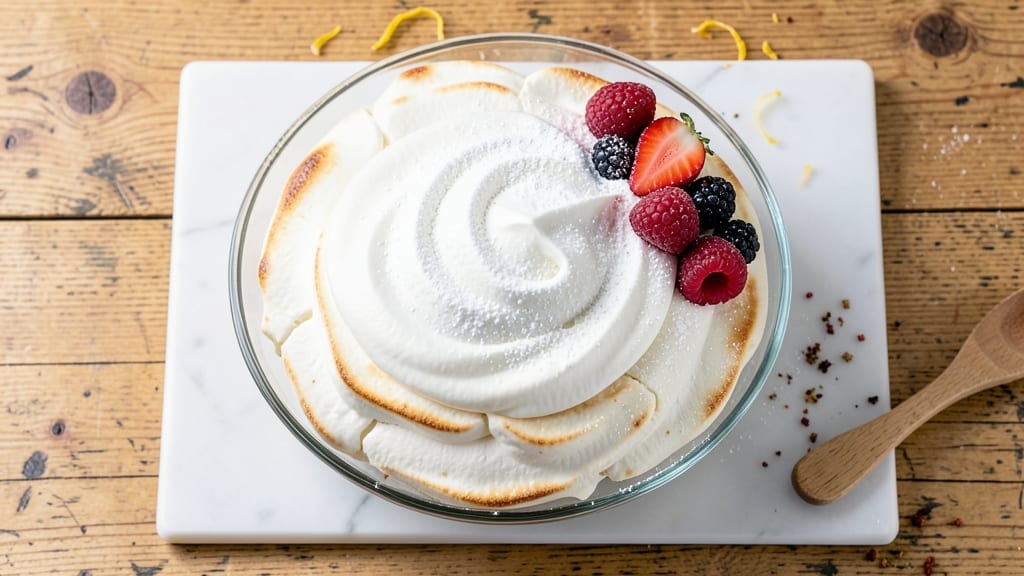
This Australian pavlova cake delivers the perfect balance of crispy meringue rings and light citrus cream—an iconic dessert that's both elegant and surprisingly simple to make at home.
The secret lies in carefully whipped egg whites that create a delicate yet sturdy structure, baked until golden with a crackly exterior and tender center. I've perfected this recipe over years of testing, ensuring every slice delivers that signature contrast of textures and flavors.
The foundation of great pavlova starts with properly whipped egg whites—no yolk traces allowed—and gradual baking at low heat to prevent browning while building that signature crispness.
Once cooled, the meringue rings are filled with whipped cream infused with zesty citrus, creating a light yet substantial filling that complements the meringue's structure. This recipe maintains the traditional Australian technique while making it accessible for home bakers.
What makes this version special is the citrus cream filling that's tangy enough to cut through the meringue's sweetness while remaining light and airy. The meringue rings hold their shape beautifully when sliced, revealing that perfect crispy crust and marshmallow-like center in every bite.
The combination of textures—crunchy, creamy, and tender—makes each forkful unforgettable.
Perfect for summer gatherings or special occasions, this pavlova cake serves 8-10 and can be prepared ahead. The meringue base keeps well for up to 2 days, while the cream filling can be added just before serving.
Garnish with fresh berries for added color and freshness. Let's create this classic Australian dessert that's sure to impress!
Ingredients for australian pavlova cake
These carefully chosen ingredients create the perfect crispy meringue rings and light citrus cream filling.
| Ingredient | Amount | Notes |
|---|---|---|
| Large Egg Whites 🥚 | 5 whole | Room temperature, no yolk traces |
| Granulated Sugar 🍚 | 1 ½ cups | Superfine preferred for smooth texture |
| Cornstarch 🌾 | 1 tbsp | Lightly cornstarch for crispiness |
| White Vinegar 🍶 | ½ tsp | For meringue stability |
| Heavy Whipping Cream 🥛 | 2 cups | Full-fat for best stability |
| Powdered Sugar 🍚 | 1 cup | Sifted for smooth filling |
| Lemon Juice 🍋 | ¼ cup | Freshly squeezed, strained |
| Lemon Zest 🍋 | 1 tbsp | Finely grated, vibrant |
| Vanilla Extract 🌿 | 1 tsp | Pure Madagascar preferred |
| Fresh Raspberries 🍓 | 1 ½ cups | For garnish, hulled |
| Unsalted Butter 🧈 | ¼ cup | Room temperature, cubed |
| Salt 🧂 | ¼ tsp | Fine sea salt, for cream |
The egg whites are non-negotiable here—room temperature and completely free of yolk traces is essential for that signature crispness. I always use room-temperature eggs from the fridge 30 minutes before starting. For the sugar, superfine granulated makes all the difference—it dissolves instantly and creates a smoother meringue. If you only have regular granulated, pulse it in a food processor for 20 seconds. The cornstarch is your secret weapon for that crackly exterior—don't skip it. I grab mine from Bob's Red Mill in the baking aisle, but any light cornstarch works.
No superfine sugar? Pulse regular granulated sugar in a blender until it's as fine as powdered sugar. Running out of white vinegar? Lemon juice at half the amount works in a pinch, though the meringue might be slightly less stable. For the citrus cream, freshly squeezed lemon juice is a must—bottled juice lacks the bright acidity. Want to skip the zest? 1/4 tsp of lemon extract gives you that citrus punch without the texture. The butter should be room temperature but not melted—press it between parchment paper with a rolling pin if needed. And trust me, vanilla extract over imitation makes all the difference in flavor.
Once baked, let the meringue rings cool completely before adding filling—at least 2 hours. Store the meringue base in an airtight container with parchment between layers for up to 2 days at room temperature. The cream filling keeps for 1 day in the fridge, but it's best used immediately. For make-ahead prep, bake the meringue rings 1 day ahead and store the cream filling separately. Assemble just before serving to maintain that perfect texture contrast. The berries should go on last—add them within 1 hour of serving to keep them vibrant.
Why You'll Love This Recipe
- No Fuss Magic: Honestly, this pavlova comes together faster than you can take a deep breath. Whip the egg whites, fold in sugar, bake—no rolling, no fussing. The vinegar trick keeps it crispy without needing a food scale or fancy gadgets.
- Party in a Bowl: Between us, this is my go-to for birthdays, picnics, or just because. Top it with fresh berries or leftover whipped cream, and suddenly you’ve got a showstopper dessert that feels fancy but costs next to nothing.
- Leftovers? No Problem: Here’s what sold me—it actually tastes better the next day. Store it in the fridge, and the texture holds up perfectly. Perfect for when you bake once but want seconds (or thirds) over the week.
Step-by-step instructions for Australian pavlova cake
Here's how to craft that iconic crisp meringue shell with silky citrus cream filling.
Prepare the Meringue Rings
Preheat your oven to 250°F and line a baking sheet with parchment paper. In a spotless, grease-free bowl, combine the 5 whole large egg whites and 0.5 teaspoon white vinegar. Using an electric mixer on medium speed, whip until soft peaks form—about 2-3 minutes. This acidity stabilizes the meringue, preventing weepiness.
Gradually add the 1.5 cups granulated sugar and 1 tablespoon cornstarch, mixing on high speed until the meringue is glossy and holds stiff peaks that stand straight up. The mixture should be thick enough to hold its shape when dropped from a spoon. Transfer the meringue to a piping bag fitted with a large round tip.
Pipe 8 equal rings (about 3 inches in diameter) onto the prepared baking sheet, spacing them 2 inches apart. Bake for 1 hour 15 minutes until the meringues are crisp and dry to the touch. Turn off the oven and let them cool completely inside with the door slightly ajar—this prevents cracking from sudden temperature changes.
Make the Lemon Cream Filling
In a medium bowl, whisk together the 2 cups heavy whipping cream, 1 cup powdered sugar, 0.25 teaspoon salt, 0.25 cup lemon juice, 1 tablespoon lemon zest, and 1 teaspoon vanilla extract until smooth. Using a stand mixer fitted with the whisk attachment, beat on medium-high speed until the cream forms stiff peaks that hold their shape.
This citrus cream should be light and airy, with just enough body to hold its form when piped. For extra stability, chill the bowl in an ice bath for 5 minutes before whipping if your kitchen is warm. The cream should be cool but not cold—just enough to prevent melting when combined with the meringue.
Assemble the Pavlova Cake
Carefully transfer one meringue ring to a serving plate. Using a piping bag, pipe half of the lemon cream into the center of the meringue ring, spreading it evenly to the edges. Top with another meringue ring, pressing gently to create a seal. Repeat with the remaining meringue rings and cream, creating 4 two-layer stacks.
For a more dramatic presentation, you can create a single large cake by layering all 8 meringue rings with cream in a circular pattern. The key is to work quickly—once the cream is piped, it begins to soften. Chill the assembled cake in the refrigerator for at least 4 hours to allow the cream to set completely.
Garnish and Serve
Before serving, gently press the 1.5 cups fresh raspberries into the sides of the meringue rings and arrange them on top. The acidity of the raspberries will enhance the citrus flavors while adding a beautiful contrast. For extra elegance, melt the 0.25 cup unsalted butter and brush it over the meringue rings just before serving to add a subtle sheen.
Slice through the center of each stack to reveal the creamy lemon filling. The meringue should be crisp and dry, while the filling remains light and airy. Serve immediately for the perfect balance of texture and flavor—each bite should deliver that signature crisp shell with a burst of tangy citrus cream.
Pro Tips For Making Australian Pavlova Cake
- Whip Egg Whites Cold: Grab your egg whites straight from the fridge—room temperature makes them clingy and hard to fold. I learned this the hard way after struggling to get stiff peaks in summer heat; now I keep them chilled until the last minute. Use a stand mixer with the bowl in the freezer for 10 minutes before whipping if your kitchen’s warm.
- Sift That Sugar: Don’t just dump the sugar—sift it with the cornstarch over the egg whites. This prevents clumping and ensures even distribution, which keeps your meringue light and crisp. I used to spoon it in, and half the time, I’d end up with a lumpy mess that wouldn’t hold shape.
- Bake Low and Slow: Preheat to 250°F (120°C), not 300°F. High heat collapses meringue before the sugar caramelizes properly, leaving you with a sad, flat center. I was skeptical—who wants to wait?—but now my pavlovas have that perfect crack and crisp edges every time.
- Vinegar First, Then Cream: Whisk the white vinegar into the egg whites before folding in the cream. The acid stabilizes the meringue, so it holds together better when you add the whipped cream later. I skipped this once and ended up with a deflated, soupy disaster—don’t make my mistake.
Dietary considerations for this recipe
Gluten-Free Adaptation
This pavlova is naturally gluten-free since it relies on egg whites, sugar, and cornstarch—but always double-check your cornstarch brand. I use Bob's Red Mill gluten-free cornstarch, which works perfectly. The meringue rings stay crisp and sturdy without any gluten-containing ingredients.
For the citrus cream filling, ensure your powdered sugar is certified gluten-free (like Domino Gluten-Free). The texture remains light and airy, just like the original.
Dairy-Free Options
To make this dairy-free, replace the heavy whipping cream with full-fat coconut cream that's been chilled overnight. Use 2 cups of the thick coconut cream (not the watery part) and whip it with the same powdered sugar, lemon juice, zest, and vanilla.
The flavor will be subtly different but still delicious. For the butter brushing, use vegan butter like Miyoko's melted and cooled slightly. The meringue itself remains unchanged since it's egg-white based.
Vegan Considerations
Creating a vegan pavlova is tricky because traditional meringue requires egg whites. However, you can use aquafaba (chickpea brine) as a substitute. Whip 1 cup aquafaba with 1 tsp cream of tartar until stiff peaks form, then gradually add 1.5 cups superfine sugar and 1 tbsp cornstarch.
The texture won't be identical but will be crisp. For the filling, use the coconut cream suggestion above. Keep in mind the flavor profile will shift significantly from the classic version.
Nut-Free Version
This recipe is already nut-free, but if you're concerned about cross-contamination, bake your meringue rings on a clean baking sheet using fresh parchment paper. Avoid any shared equipment with nut products.
The citrus cream filling contains no nuts, so it's safe as-is. I recommend preparing this dessert in a dedicated nut-free kitchen area if you have severe allergies in your household.
Lower Sugar Options
For a lighter version, reduce the granulated sugar to 1 cup for the meringue and use ½ cup powdered sugar in the filling. You can also substitute ½ cup of the granulated sugar with erythritol or monk fruit sweetener for a sugar-free option.
The meringue will still crisp up nicely, though it may be slightly less stable. Balance the reduced sweetness by adding an extra 1 tbsp lemon zest to enhance the citrus flavor.
Allergen Safety
Always check ingredient labels for hidden allergens. For egg allergies, this recipe isn't suitable as a safe option. If you must accommodate egg allergies, consider making a separate meringue using aquafaba as mentioned earlier, but be aware of the texture differences.
For dairy allergies, the coconut cream substitution works well. When serving, use separate utensils and serving dishes to prevent cross-contamination with other desserts containing common allergens.
Nutrition facts
Frequently asked questions
Why does my meringue crack or collapse?
The most common causes are humidity or improper mixing. Use your meringue immediately after whipping—it loses stability when left standing. Also, check your egg whites for yolk traces (even tiny amounts prevent stiff peaks). For extra insurance, bake at 250°F with the oven door slightly open to control moisture.
Can I make pavlova ahead of time?
Bake the meringue rings 1-2 days ahead and store them in an airtight container with parchment between layers. The filling should be made fresh and added just before serving. This prevents sogginess—never refrigerate assembled pavlova longer than 4 hours.
What's the best fruit topping besides raspberries?
Fresh berries work beautifully, but you can also try passionfruit pulp, kiwi slices, or even mango purée. For tropical flavor, arrange thin citrus slices (orange or grapefruit) around the base. Just add fruit within 1 hour of serving to keep it vibrant.
How do I fix weepy meringue?
Weeping happens from trapped moisture during baking. To prevent it, ensure your egg whites are fully whipped to stiff peaks and your oven is fully preheated. If it happens, bake the meringue rings for 5 extra minutes at 275°F to dry them out completely. Never microwave—it creates a rubbery texture.
Can I use store-bought whipped cream instead?
While it's possible, homemade whipped cream gives better stability and flavor. If you must use store-bought, chill it thoroughly first and mix in 1 extra tablespoon powdered sugar to help it hold its shape. The citrus cream in this recipe is specifically designed to complement the meringue's crispness.