
Desserts
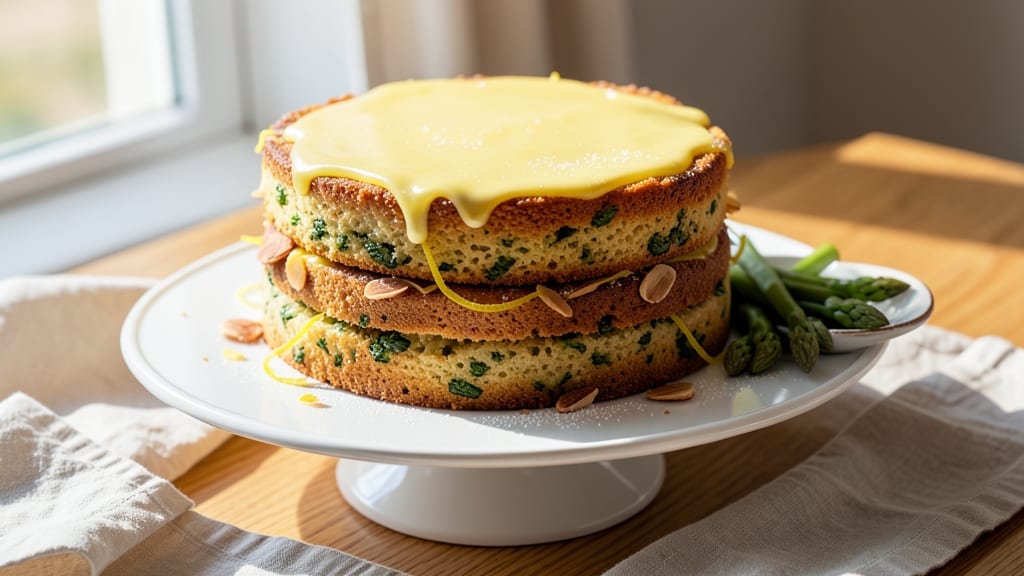
This asparagus cake recipe transforms humble spring asparagus into a stunning layered dessert with vibrant green layers and a golden, crunchy top. The technique of pre-cooking the asparagus preserves its earthy sweetness while creating delicate, tender layers that balance perfectly with a buttery crumb topping.
What sets this apart is how the asparagus's natural flavors shine through without overpowering the delicate vanilla and citrus notes in the batter.
The cake features three distinct layers: a moist asparagus-infused sponge, a light lemon custard filling, and a crunchy streusel topping that adds satisfying texture contrast.
Each component comes together with simple techniques—steaming the asparagus first, folding it gently into the batter, and baking at a precise 350°F to ensure even cooking.
The result is a dessert that looks as impressive as it tastes, making it perfect for spring gatherings or when you want to impress with something unexpected.
What makes this recipe particularly rewarding is how it elevates a seasonal vegetable into something extraordinary. The asparagus's natural sweetness pairs beautifully with the tang of lemon and the richness of butter, creating a flavor profile that's both sophisticated and comforting.
The crunchy topping adds an element of texture that keeps every bite interesting, while the layers ensure each component gets its moment to shine.
Whether you're serving this as a showstopper dessert or simply craving something different from traditional cakes, this recipe delivers restaurant-quality results with minimal fuss. The method is straightforward enough for beginners but refined enough to impress seasoned bakers. Let's get started on creating this unique spring centerpiece.
Ingredients for asparagus cake
Eighteen ingredients elevate humble asparagus into a sophisticated spring dessert masterpiece.
| Ingredient | Amount | Notes |
|---|---|---|
| Fresh Asparagus 🌱 | 1 ½ lb | Thin spears, trimmed ends |
| All-Purpose Flour 🌾 | 2 ½ cups | Sifted for light texture |
| Granulated Sugar 🍚 | 1 ½ cups | Organic preferred |
| Unsalted Butter 🧈 | 1 ¼ cups | Cold, cubed for streusel |
| Large Eggs 🥚 | 4 whole | Room temperature |
| Lemon Zest 🍋 | 1 tbsp | Freshly grated |
| Lemon Juice 🍋 | ½ cup | Freshly squeezed |
| Vanilla Extract 🌸 | 1 tbsp | Pure Madagascar |
| Baking Powder 🍞 | 1 ½ tsp | Aluminum-free |
| Salt 🧂 | ½ tsp | Fine sea salt |
| Heavy Cream 🥛 | 1 ½ cups | Cold for custard |
| Powdered Sugar 🍚 | 1 cup | Sifted for smooth filling |
| Old-Fashioned Oats 🌾 | 1 cup | Blended into crumbs |
| Brown Sugar 🍚 | ½ cup | Packed for moisture |
| Ground Cinnamon 🌿 | 1 tsp | Freshly toasted |
The asparagus selection is critical—thin spears with tender tips yield the best texture. Local farmers markets often carry the freshest spring varieties, but any grocery store's produce section will suffice if you choose firm, bright green stalks. Trim the woody ends precisely—this prevents bitterness in the cake. For the butter, Plugrá or Land O'Lakes unsalted are reliable choices, but European-style butter like President adds extra richness. The vanilla extract should be pure Madagascar; imitation lacks the depth needed to complement the asparagus's earthy notes. Pre-measure all dry ingredients together to streamline the process, especially since this recipe requires precise layering.
No fresh asparagus? Frozen asparagus works in a pinch, but thaw and pat thoroughly dry before processing to prevent excess moisture in the batter. Substituting the lemon zest with bottled lemon juice concentrate is possible, though it lacks the aromatic complexity—use double the amount if you do. For the streusel topping, quick oats can replace old-fashioned oats, though the texture will be slightly less crunchy. The brown sugar can be swapped for white sugar if needed, but the molasses notes enhance the caramelization. If you're avoiding gluten, Bob's Red Mill 1:1 baking flour works well as a direct substitute for the all-purpose flour, though texture may vary slightly. Always room-temperature eggs prevent lumps in the batter—simply place them in warm water for 5 minutes if needed.
Store prepped asparagus in an airtight container with a damp paper towel for up to 3 days before using. The cake layers should be assembled and refrigerated for at least 1 hour before baking to ensure clean separation. Once fully baked, cover tightly with plastic wrap and store at room temperature for 2 days or refrigerate for up to 5 days. The streusel topping can be pre-made and stored separately in the fridge for 3 days—simply bake it alongside the cake layers for 10 minutes at the end. For serving, dust with powdered sugar and garnish with fresh lemon zest to maintain that vibrant spring presentation. Freeze fully assembled layers (unbaked) for up to 2 months by wrapping tightly in plastic and aluminum foil.
Why You'll Love This Recipe
- No Chopping Hassle: I just trim the asparagus—no dicing, no mincing—then fold it right into the batter. The spears stay tender while the edges get that golden, cake-like crust. Honestly, it’s the kind of recipe where the hardest part is deciding when to pull it from the oven.
- Sweet-Savory Magic: That sugar-butter combo with the asparagus? It’s like a hug for your taste buds—earthy, slightly sweet, with a buttery richness that makes it feel indulgent. (Yes, even on a Tuesday night.) The eggs bind it just enough to keep it moist without being heavy.
- Weeknight or Weekend Star: Make it for a quick dinner or double the batch for brunch the next day. It reheats beautifully—just a few minutes in the oven—and the leftovers actually taste better cold, sliced and served with a sprinkle of flaky salt.
- Budget-Friendly Luxury: Fresh asparagus might seem fancy, but a single bunch stretches far here. The rest—flour, sugar, butter, eggs—are pantry staples you already have. I’ve made this for 4 people for under $10, and no one ever guesses it’s not a special occasion dish.
Step-by-step instructions for earthy asparagus cake
Here's the precise method for creating layers of tender asparagus cake with a signature crunchy topping.
Prep and Blanch the Asparagus
Trim the tough ends from the 1.5 lb fresh asparagus spears, leaving only the tender portions. Cut the spears into 1-inch pieces and set aside. In a large pot of boiling salted water, blanch the asparagus for exactly 2 minutes—this preserves color and texture while softening the fibers. Immediately drain and plunge into ice water to stop cooking. Drain again thoroughly and pat completely dry with paper towels. The asparagus should be cool and dry before proceeding.
I find this blanching step critical—it prevents the cake from becoming waterlogged while infusing subtle asparagus flavor. If any moisture remains, the cake will be dense rather than light. Spread the dried asparagus on a baking sheet to cool completely before mixing into the batter.
Make the Cake Batter
In a large mixing bowl, combine the 2.5 cups all-purpose flour, 1.5 cups granulated sugar, 1.5 tsp baking powder, and 0.5 tsp salt. Whisk until evenly distributed—this ensures even leavening throughout the cake. In a separate bowl, beat the 4 whole large eggs until frothy but not fully emulsified. Add the 1.5 cups heavy cream, 0.5 cup lemon juice, 1 tbsp lemon zest, and 1 tbsp vanilla extract, mixing until smooth.
Gradually fold the dry ingredients into the wet mixture, alternating between adding flour mixture and the prepared asparagus pieces. Mix just until combined—overmixing develops gluten, which makes the cake tough. The batter should be thick but pourable. Let it rest for 10 minutes at room temperature before baking, which allows the flour to fully hydrate.
Prepare the Crunchy Topping
In a food processor, pulse the 1 cup old-fashioned oats until they resemble fine crumbs. Transfer to a medium bowl and mix with the 1.25 cups unsalted butter (cold and cubed), 0.5 cup brown sugar, and 1 tsp ground cinnamon using a fork or your fingers until the mixture resembles coarse sand. This texture is key for creating that signature crunchy top.
I press the butter into the oat mixture until it forms clumps—this ensures the topping stays in place during baking rather than melting away. The butter should be cold but not rock-hard when you begin, as this creates the perfect balance of crispiness and tenderness in the finished cake.
Assemble and Bake the Cake
Preheat your oven to 350°F and grease a 9x13-inch baking pan thoroughly with butter or nonstick spray. Spread half of the cake batter evenly into the prepared pan. Sprinkle half of the oat topping mixture over the batter, pressing down gently to ensure even distribution. Add the remaining batter, then top with the remaining oat mixture, pressing down firmly to create a continuous layer.
Bake for 45-50 minutes until a toothpick inserted in the center comes out clean and the top is golden brown. The cake should spring back slightly when pressed gently. I recommend checking at the 40-minute mark—ovens vary, and you want to avoid overbaking, which can make the cake dry.
Cool and Serve
Allow the cake to cool in the pan for 15 minutes, then transfer to a wire rack to cool completely. The internal temperature should drop to 100°F before slicing, which ensures clean cuts and prevents crumbling. Serve at room temperature for the best texture contrast between the tender cake layers and the crunchy topping.
For the perfect presentation, dust the top with 1 cup powdered sugar just before serving. The combination of earthy asparagus flavor, bright lemon notes, and the satisfying crunch of the topping makes this cake truly unique. Store leftovers covered at room temperature for up to 3 days, though I doubt any will remain!
Pro Tips For Making Asparagus Cake
- BLEND ASPARAGUS RAW: Chop the asparagus into ¼-inch pieces—no need to peel or trim the tough ends first. Toss them in the food processor with the flour and sugar before adding wet ingredients; this keeps the texture fine and prevents clumping. (Yes, even the woody bits break down, but they’ll soften into the cake.)
- WHISK EGGS COLD: Beat the eggs at room temperature, but don’t let them warm up while mixing—keep the bowl in an ice bath if your kitchen is warm. Cold eggs emulsify better with butter, giving you a smoother batter. I learned this the hard way when my cake turned out greasy and separated.
- STOP WHEN IT SPRINGS: The cake’s done when a toothpick comes out clean and the top springs back when pressed—not when it’s golden. Overbaking dries out the asparagus flavor, and you’ll end up with a sad, crumbly mess. Pull it out early and let it rest; it’ll keep cooking off the heat.
- USE BUTTER, NOT MELTED: Cut the butter into small cubes and fold them into the batter last—don’t melt it first. Cold butter creates pockets of richness that make the cake tender, not dense. (I know, it’s extra steps, but the texture is worth it.)
Perfect pairings for asparagus cake
Spring Beverage Pairings
Start with a refreshing sparkling lemonade made with fresh-squeezed lemon juice, sparkling water, and a touch of honey—this mirrors the cake's citrus notes while cutting through its earthy asparagus flavor.
I like adding edible lemon slices and mint sprigs for garnish, which elevates the presentation and keeps the drink light and crisp. 🍋
Creamy Dessert Pairings
Serve alongside vanilla bean ice cream or lemon curd to complement the cake's vibrant flavors. The cool, creamy texture contrasts beautifully with the cake's crunchy topping. For a lighter option, try coconut sorbet—its tropical notes balance the asparagus's earthiness while keeping the pairing fresh and spring-inspired.
Wine Pairings
A dry Riesling from Germany or Austria is my go-to choice—its bright acidity and subtle mineral notes harmonize perfectly with the cake's lemon and asparagus flavors. If you prefer red, a light Pinot Noir with earthy undertones enhances the asparagus's natural sweetness without overpowering the dessert.
Avoid heavy, oaky whites or bold reds that could clash with the delicate balance of this cake. 🍷
Coffee and Tea Pairings
For an after-dinner option, serve with espresso or a light roast coffee—the bitterness of the coffee cleanses the palate and highlights the cake's sweetness.
If you prefer tea, a green tea latte with a hint of honey adds a soothing, slightly floral note that pairs beautifully with the cake's citrus and asparagus flavors.
Seasonal Garnishes
Enhance the presentation with fresh berries like raspberries or strawberries, which add a pop of color and a tart contrast to the cake's sweetness. A sprinkle of toasted almonds or pistachios on top adds a nutty crunch that complements the streusel topping.
For a floral touch, garnish with edible violets or lavender buds—they add a subtle aroma that ties into the cake's spring theme. 🌸
Nutrition facts
Frequently asked questions
Can I make this asparagus cake without blanching the asparagus first?
Blanching is essential for the best texture—it removes excess moisture while preserving the asparagus's vibrant color and subtle sweetness. If you skip it, the cake may become dense or watery. For a quick alternative, steam the asparagus for 3-4 minutes instead, then cool and dry it thoroughly before mixing into the batter.
How do I adapt this recipe for a vegan version?
Replace the eggs with 4 tablespoons ground flaxseed mixed with 10 tablespoons water (let sit for 5 minutes to thicken). Use vegan butter and coconut cream instead of heavy cream, and ensure your vanilla extract is vegan-certified. The streusel topping can stay the same, but check your oats for dairy traces if needed.
Why did my cake turn out dense instead of light?
Overmixing the batter or skipping the 10-minute rest before baking are common causes. Also, ensure your asparagus is completely dry after blanching—any moisture makes the cake heavy. For extra lightness, fold in the asparagus pieces last and avoid pressing the batter too firmly into the pan.
Can I make this cake in a different pan size?
Yes! For a 9-inch round cake, divide the batter into three layers (bake each for 20-25 minutes at 350°F) and assemble with the streusel between layers. For a 9x9-inch pan, reduce baking time to 35-40 minutes. Always adjust for your oven—check doneness with a toothpick.
How can I make this cake gluten-free?
Use a 1:1 gluten-free baking flour blend (like Bob's Red Mill) and add 1 teaspoon xanthan gum to the dry ingredients. Replace the oats in the streusel with gluten-free rolled oats or crushed gluten-free crackers. Test your flour blend first—some require extra liquid or leavening adjustments for optimal texture.