
Desserts
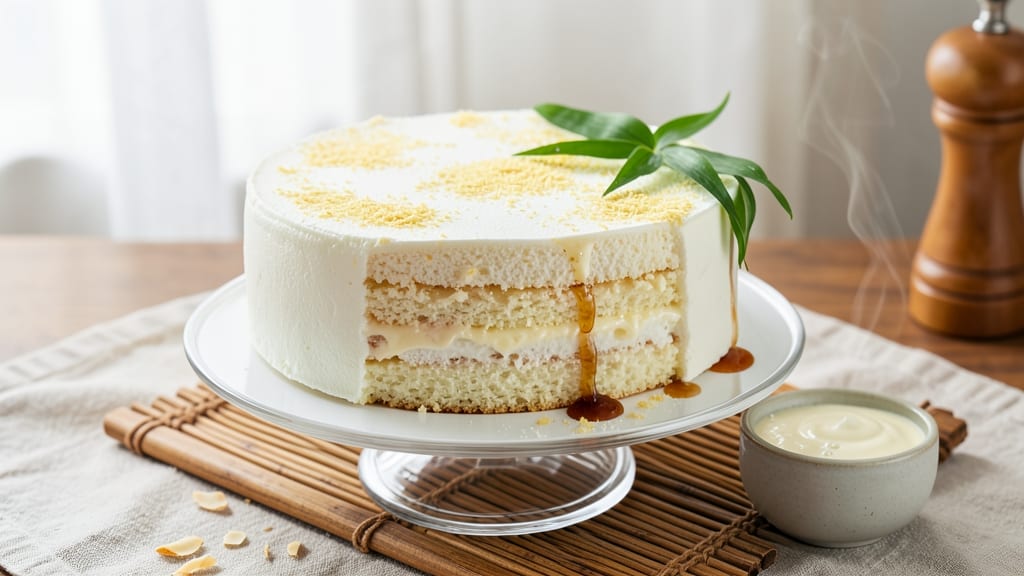
This Asian milk cake recipe delivers the signature silky texture and delicate sweetness you crave, perfected with a velvety coconut cream topping. 🌟 The secret lies in steaming the egg-rich batter just until set—never overcooked—so each bite melts like a cloud.
I’ve refined this version over years to balance traditional techniques with modern convenience, ensuring restaurant-quality results at home. What sets this apart is the layered approach: a smooth, custardy base infused with vanilla and pandan, topped with a rich coconut cream that adds luxurious depth.
The steaming process creates that signature jiggly texture, while the coconut topping provides a cool contrast to the warm cake. It’s the kind of dessert that feels both nostalgic and indulgent.
By the time you’re done, you’ll have a foolproof steamed milk cake with a golden, glossy finish—no cracks, no dryness, just pure, creamy perfection. The coconut topping isn’t just decoration; it’s the star, adding a tropical twist that elevates this classic dessert to new heights.
Serve it chilled or at room temperature for the best experience. This recipe is perfect for special occasions, potlucks, or treating yourself after a long week. The process is simpler than it looks, and the payoff is a dessert that tastes like a hug in every bite. Let’s make it!
Ingredients for asian milk cake
Eight simple ingredients transform into this restaurant-quality Asian milk cake with coconut cream topping.
| Ingredient | Amount | Notes |
|---|---|---|
| Large Eggs 🥚 | 8 whole | Room temperature for best blending |
| Granulated Sugar 🍚 | 1 ½ cups | Superfine for smoother texture |
| All-Purpose Flour 🌾 | ¾ cup | Sifted for light batter |
| Unsweetened Coconut Milk 🥥 | 1 ½ cups | Full-fat for creaminess |
| Vanilla Extract 🌸 | 2 tsp | Pure vanilla preferred |
| Pandan Extract 🌿 | ½ tsp | Optional but authentic |
| Salt 🧂 | ¼ tsp | Fine sea salt preferred |
| Cornstarch 🌾 | 2 tbsp | For extra silkiness |
| Sweetened Condensed Milk 🥛 | 1 cup | High-quality brand |
| Coconut Cream 🥥 | 1 cup | Thick from canned milk |
| Toasted Coconut Flakes 🥥 | ¼ cup | For topping garnish |
| Pandan Leaves 🌿 | 2 whole | Optional for aroma |
| Water 💧 | 1 cup | For steaming setup |
The eggs are the heart of this recipe—room temperature makes all the difference for a smooth batter. I always grab large eggs from the store's refrigerated section, but let them sit out for 30 minutes before using. For the coconut milk, full-fat canned versions (like Thai Kitchen brand) give the richest texture—none of that watery stuff. If you can't find pandan extract, fresh pandan leaves tied into a bundle work beautifully for steaming. The condensed milk should be high-quality—look for brands with minimal additives, like Eagle Brand or Carnation. Toast your coconut flakes in a dry pan until golden for extra flavor.
No superfine sugar? Regular granulated works fine—just pulse it in a food processor for a minute. Running short on coconut cream? Chill a can of full-fat coconut milk overnight, then scoop out the thick cream from the top. The batter should be silky but not runny—if it's too thick, add a splash of milk; if too thin, whisk in a bit more flour. For the topping, store-bought coconut cream (like Goya) is perfect, but homemade is even better. If you can't find pandan, vanilla bean paste adds depth, though it won't be identical. The cornstarch is non-negotiable—it prevents that dreaded grainy texture.
This batter keeps 2 days in the fridge before steaming—perfect for making ahead. The finished cake stores 4-5 days covered in the fridge, though it's best eaten within 2 days for maximum silkiness. For longer storage, freeze the cake (without topping) for up to 3 months. The topping should be added fresh before serving, but you can prep it a day ahead and refrigerate. I always make a double batch—one for immediate serving, one to freeze for lazy days. The steaming water should be hot but not boiling when you add the cake, or it'll cook too fast and get dense.
Why You'll Love This Recipe
- No Mixer Needed: I swear by this recipe because it’s just eggs, sugar, flour, and coconut milk—no fancy equipment. You can whisk by hand or use a fork in a bowl, and the batter’s so simple it’s hard to mess up. Even my lazy Sunday mornings turn into cake mornings.
- Creamy Without Butter: That rich, pillowy texture comes from the coconut milk—no heavy cream or butter required. It’s subtly sweet, lightly vanilla-kissed, and the eggs give it that perfect jiggly center. Honestly, it’s the kind of cake that makes you forget it’s “healthy” (or at least lighter).
- Make-Ahead Magic: Bake it once, slice it up, and store it for days. The coconut flavor actually deepens over time, so leftovers taste even better. I keep a batch in the fridge for quick breakfasts or late-night cravings—no one ever guesses it’s not store-bought.
- Budget-Friendly Luxury: You’re using pantry staples here: eggs, sugar, flour, and a can of coconut milk. It’s cheaper than buying a single boxed cake mix, but it tastes like something from a bakery. Between us? This is my go-to when I want to feel fancy without breaking the bank.
Step-by-step instructions for Asian milk cake
Here's how to create that signature silky texture and fragrant aroma everyone loves.
👨🍳 Step 1: Whisk Eggs and Sugar Until Ribbon Stage
In a large mixing bowl, combine the 8 whole Large Eggs and 1.5 cups Granulated Sugar. Using an electric mixer on medium-high speed, beat for 5-7 minutes until the mixture turns pale yellow and forms soft ribbons when the whisk is lifted. You'll know it's ready when the mixture holds its shape briefly before melting back into the bowl.
This step is crucial for incorporating air into the batter, which creates that signature light, airy texture. I like to scrape down the sides of the bowl every minute or so to ensure everything gets fully incorporated. If you're using room temperature eggs, they'll blend more smoothly than cold ones.
👨🍳 Step 2: Add Flour, Coconut Milk, and Aromatics
With the mixer still running on medium speed, gradually add the 0.75 cup All-Purpose Flour, 1.5 cups Unsweetened Coconut Milk, 2 tsp Vanilla Extract, 0.5 tsp Pandan Extract, and 0.25 tsp Salt. Mix for another 2-3 minutes until the batter is completely smooth and all the flour is fully incorporated.
Here's where the magic happens—the pandan extract adds that authentic floral aroma, while the coconut milk gives the cake its signature creaminess. If you're using the 2 whole Pandan Leaves, gently bruise them first by rolling them between your palms before adding to the batter for maximum flavor infusion.
🍳 Step 3: Fold in Cornstarch and Condensed Milk
In a separate bowl, whisk together the 2 tbsp Cornstarch and 1 cup Sweetened Condensed Milk until smooth. Then, gently fold this mixture into the egg batter using a silicone spatula, being careful not to deflate the air you've incorporated. The batter should be thick but still pourable—think of it like heavy cream consistency.
This is where we get that signature silky texture. The cornstarch acts as a thickener while the condensed milk adds sweetness and richness. If the batter looks too thick, you can add 1-2 tablespoons of water to loosen it slightly, but don't overdo it or you'll compromise the texture.
🥘 Step 4: Prepare the Steaming Setup
Fill a large pot with 1 cup Water and bring it to a simmer over medium heat. Place a heatproof plate or cake pan on top of a steamer basket or trivet. Line the plate with parchment paper and lightly grease it with coconut oil to prevent sticking. Pour the batter evenly into the prepared mold, leaving about ½ inch of space at the top.
Here's the thing—this cake needs gentle heat to steam properly. If you don't have a steamer basket, you can use a colander or even a metal strainer with legs that fits over your pot. The key is to maintain a steady stream of steam without boiling the batter. Cover the pot loosely with a lid to trap the steam while allowing some to escape.
⏰ Step 5: Steam Until Set and Cool Properly
Steam the cake over medium-low heat for 40-45 minutes. You'll know it's done when the top is set and springs back when gently touched in the center. The cake should have a slight wobble but should not be liquid in the center. Let it cool in the mold for 10 minutes before unmolding.
Don't rush this cooling step—it's essential for preventing the cake from collapsing. Once cooled, you can unmold it onto a wire rack. For the coconut cream topping, simply whisk the 1 cup Coconut Cream until smooth and spread it evenly over the cake. Sprinkle with 0.25 cup Toasted Coconut Flakes for that beautiful presentation. Serve warm or at room temperature for the best texture.
Pro Tips For Making Asian Milk Cake
- Whisk Eggs Until Ribbon Stage: I learned this the hard way—skipping this step means a dense, gummy cake. Beat the eggs for 3-5 minutes until the mixture forms slow, thick ribbons when you lift the whisk. That’s when the structure starts right, and the texture stays light.
- Sift Flour Like a Pro: No lumps, no surprises. Sift the flour directly into the coconut milk mixture, then gently fold it in with a spatula. I used to just dump it in, and the cake always turned out heavier—now it’s silky smooth every time.
- Don’t Overmix the Batter: Once the flour hits the wet ingredients, stop stirring after 10-12 folds. Overmixing develops gluten, and your cake will turn out tough instead of tender. Think "just combined," not "fully incorporated."
- Bake at 325°F (No Higher): This isn’t a race. Bake at 325°F for the full time—30-40 minutes—until the edges pull away from the pan and a toothpick comes out clean. I tried 350°F once, and the top burned before the center set. Patience wins here.
Wine and beer pairings for this recipe
Tropical Coconut Pairings
This silky milk cake pairs beautifully with Thai iced tea—its sweet, creamy notes complement the cake’s coconut richness. I love using Thai Tea Lemonade from Thai Beverage brand, which has just the right balance of sweetness and tartness.
For a lighter option, try lychee juice chilled, as its floral aroma enhances the pandan flavors in the cake. 🥥
Floral Tea Harmony
Jasmine or pandan-flavored teas create an elegant pairing with this dessert. Brew a jasmine green tea with Earl Grey for a floral-citrus combo that refreshes your palate. I often serve it with Bigelow Jasmine Pearls tea bags—simply steep and chill.
For a stronger pandan experience, use pandan-infused tea from specialty Asian markets to mirror the cake’s signature aroma.
Creamy Coffee Contrast
A Kopi Luwak coffee from Indonesia adds a luxurious contrast to the sweetness. The earthy, slightly bitter notes cut through the cake’s richness beautifully. I recommend Blue Bottle’s Kopi Luwak if you can find it—its smooth finish pairs perfectly.
For a simpler option, vanilla-flavored cold brew works wonderfully, especially if you drizzle it over the coconut cream topping for an extra touch of elegance. ☕
Light Beer Options
If you prefer beer, opt for Hite Lager from Thailand—its crisp, clean taste won’t overpower the dessert. For a fruitier option, try a mango wheat beer like Singha Mango.
Both beers have a light body that lets the cake’s flavors shine. Avoid heavy stouts or IPAs, as they’ll compete with the delicate coconut and pandan notes. 🍺
Wine Pairing Secrets
For wine lovers, a Moscato d’Asti offers a perfect match with its sweet, fizzy profile. I adore Saracco Moscato d’Asti—its light bubbles and floral undertones enhance the cake’s tropical flavors.
If you prefer red, a Pinot Noir with low tannins, like Louis Jadot Bourgogne Pinot Noir, provides a subtle earthiness that complements the coconut cream without overpowering it.
Nutrition facts
Frequently asked questions
Can I make this milk cake without pandan extract?
If you can't find pandan extract, use 2 whole pandan leaves tied into a bundle or substitute with 1 teaspoon vanilla bean paste for a similar floral aroma. The cake will still taste delicious—just slightly less authentic. For extra depth, add a pinch of cardamom or rose water (½ teaspoon) to the batter.
Why did my milk cake turn out dense instead of silky?
Oversteaming or overmixing the batter are the most common culprits. Ensure you steam over medium-low heat for exactly 40-45 minutes—no longer! Also, avoid overbeating the eggs; they should reach ribbon stage (pale yellow, soft peaks) but not stiff peaks. If the batter seems too thick, add 1 tablespoon water at a time until it's pourable.
Can I bake this cake instead of steaming?
Baking isn't recommended for this recipe, as it requires gentle steaming to achieve that signature jiggly texture. However, if you must bake, use a water bath (place the cake pan in a larger pan with 1 inch hot water) and bake at 325°F (163°C) for 35-40 minutes. The result will be less silky but still tasty—just not the same as steamed.
How do I store leftover milk cake?
Store the cake (without topping) in an airtight container in the fridge for up to 4-5 days. For longer storage, freeze the cake (without topping) for up to 3 months. To serve, let it sit at room temperature for 30 minutes before adding fresh coconut cream topping. The texture stays best when eaten within 2 days of baking.
What’s the best way to make the coconut cream topping extra creamy?
Chill a can of full-fat coconut milk overnight, then scoop out the thick cream from the top layer. For extra richness, whisk in 1 tablespoon sweetened condensed milk and a pinch of salt. If you prefer a firmer topping, chill it for 1 hour before spreading. Pro tip: Toast coconut flakes in a dry pan until golden for garnishing!