
Desserts
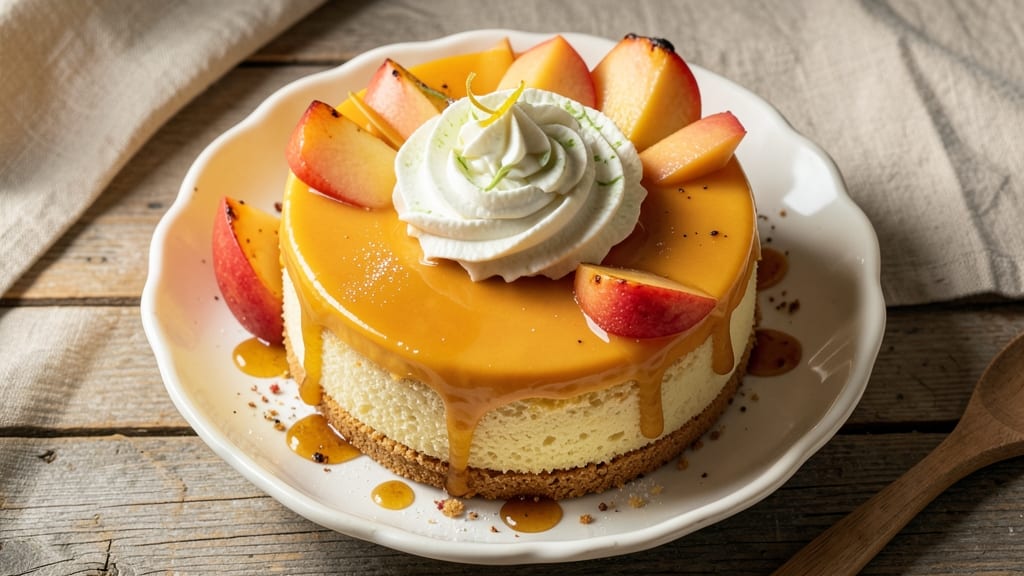
This Asian fruit cream cake recipe delivers layers of tropical bliss—silky mango filling sandwiched between delicate sponge cake, all crowned with vibrant fruit garnishes. The secret lies in balancing a light, airy base with a rich, velvety mango custard that stays perfectly set.
I developed this recipe after years of perfecting the texture contrast between crisp sponge and luscious fruit layers, ensuring every bite delivers both structure and indulgence.
The cake begins with a simple yet foolproof chiffon base, infused with subtle pandan or coconut essence for that signature Asian touch. What sets this apart is the silky mango filling—made from blended ripe mangoes, coconut cream, and a touch of gelatin for that signature wobble.
The assembly is where the magic happens: alternating layers of cake, mango filling, and whipped cream create a harmonious balance of textures and flavors.
By the time you slice into this cake, you'll uncover a golden sponge with just the right bite, followed by a cool, velvety mango layer that melts in your mouth. The finishing touches—fresh mango slices, toasted coconut flakes, or a drizzle of caramel—elevate it from homemade to restaurant-worthy.
This cake keeps well for 3-4 days in the fridge, making it perfect for celebrations or impromptu dessert cravings.
Whether you're baking for a special occasion or treating yourself to a tropical escape, this recipe delivers professional-quality results with minimal fuss. The key is patience—letting the mango filling set properly and chilling the cake thoroughly ensures clean slices every time. Let's get baking!
Ingredients for asian fruit cream cake
Tropical flavors and delicate textures—just 13 ingredients for restaurant-quality cake layers.
| Ingredient | Amount | Notes |
|---|---|---|
| All-Purpose Flour 🌾 | 2 cups | Sifted for light texture |
| Granulated Sugar 🍚 | 1 ½ cups | Superfine preferred |
| Unsalted Butter 🧈 | 1 cup | Room temperature, full-fat |
| Large Eggs 🥚 | 6 whole | Room temperature |
| Pandan Extract 🌿 | ½ tsp | Or coconut extract substitute |
| Ripe Mangoes 🥭 | 4 whole | Peach or yellow variety |
| Coconut Cream 🥥 | 13 ½ oz | Full-fat, chilled overnight |
| Powdered Gelatin 🍫 | 1 ½ tsp | Bloomed in cold water |
| Heavy Whipping Cream 🥛 | 1 ½ cups | Cold for whipping |
| Vanilla Extract 🌸 | 1 tsp | Pure Madagascar preferred |
| Toasted Coconut Flakes 🥥 | ½ cup | For garnish |
| Salt 🧂 | ½ tsp | Fine sea salt |
| Baking Powder 🍞 | 1 ½ tsp | Double-acting preferred |
The mangoes are non-negotiable—ripe but firm is key. Asian markets often have the best selection, but grocery store varieties work too if they're vibrant and give slightly to pressure. For coconut cream, Thai Kitchen or Goya brands are reliable, but check the fat content—full-fat (40% or higher) makes all the difference. The gelatin needs to bloom properly, so don't skip the cold water soak. I always buy powdered gelatin from Penzeys—it dissolves perfectly every time.
No pandan extract? Coconut extract at double the amount works in a pinch, though it's not identical. Short on coconut cream? Heavy whipping cream plus a splash of coconut milk mimics the richness. For the gelatin, agar-agar at half the weight gives a firmer set. The butter must be room temperature—microwave it 40 seconds if it's cold. And whatever you do, don't overmix the batter—just fold until combined. The cake's lightness depends on it.
Store the assembled cake in the fridge for up to 4 days, covered tightly with plastic wrap. The mango filling stays set perfectly cold, but let it sit at room temperature for 10 minutes before slicing. For make-ahead prep, bake the cake layers and assemble the filling 24 hours ahead—the flavors meld beautifully. Toast the coconut flakes fresh before garnishing, or they'll lose their crunch. Freezing isn't recommended, as the texture suffers.
Why You'll Love This Recipe
- Pandan Magic Shortcut: Honestly, the pandan extract does all the heavy lifting—just a teaspoon in the batter gives that fragrant, tropical vibe without fuss. No need to hunt for fresh leaves or worry about measuring; it’s the secret weapon that makes this cake taste like a bakery’s but with half the effort.
- Creamy-Light Texture: That butter-to-egg ratio? Chef’s kiss. The cake stays tender and airy, never dry, while the fruit cream layer melts in your mouth like a cloud. It’s the kind of dessert that disappears faster than my willpower on a Sunday afternoon.
- Weeknight Hero: Between us, this is my go-to when I need something impressive but don’t have hours to bake. Whip up the batter, toss in store-bought fruit cream (or make it ahead), and boom—dinner guests get a showstopper while I clean one bowl. (Yes, even on a Tuesday night.)
- Budget-Friendly Luxury: All-purpose flour, butter, and sugar? Pantry staples. The pandan extract is the only splurge, and a little goes a long way. I’ve made this for birthdays, potlucks, and just-because treats—no one ever guesses it wasn’t homemade from scratch.
Step-by-step instructions for Asian fruit cream cake
Here's how to build this tropical masterpiece with layers of silky mango filling and airy coconut-infused cake.
Prepare the Mango Filling
Start by puréeing the 4 whole ripe mangoes until completely smooth—no chunks should remain. I like to use a food mill or fine-mesh sieve for ultra-silky results. In a separate bowl, bloom the 1.5 teaspoons powdered gelatin in 2 tablespoons cold water for 5 minutes until fully dissolved. This creates the perfect setting agent for our filling.
In a saucepan over low heat, gently warm the mango purée with the bloomed gelatin mixture, stirring constantly until the gelatin melts completely and the filling reaches 160°F. Remove from heat and let it cool to room temperature. Here's the thing—this filling needs to be completely smooth to avoid graininess in your cake layers. If you notice any separation, whisk vigorously to re-emulsify.
Whip the Coconut Cream and Cream Layers
Chill the 13.5 ounces coconut cream overnight in the refrigerator so it separates properly. Scoop out just the thick cream portion (discard the watery part) and whip it with 1 teaspoon vanilla extract until it forms soft peaks. This will become our luscious coconut cream layer between cake tiers.
In another bowl, whip the 1.5 cups heavy whipping cream cold until stiff peaks form. Fold this into the coconut cream mixture gently to combine—this creates the perfect balance of textures. The key here is patience; don't overwhip or you'll break down the delicate coconut fat. Work quickly once you start folding to maintain volume.
Bake the Cake Layers
Preheat your oven to 350°F and grease two 8-inch round cake pans with butter. Sift together the 2 cups all-purpose flour, 1.5 teaspoons baking powder, and 0.5 teaspoon salt in a bowl. In another bowl, cream the 1 cup unsalted butter and 1.5 cups granulated sugar until light and fluffy—this should take about 5 minutes with an electric mixer.
Add the 6 whole large eggs one at a time, mixing well after each addition. Stir in the 0.5 teaspoon pandan extract and the dry ingredients alternately, beginning and ending with flour. Divide the batter evenly between the prepared pans and bake for 25-30 minutes or until a toothpick inserted comes out clean. Let the cakes cool in the pans for 10 minutes, then transfer to a wire rack to cool completely.
Assemble the Cake
Once completely cool, level the tops of the cake layers if needed. Place one layer on a cake stand and spread ½ cup of the mango filling evenly over the surface. Top with ½ of the coconut cream mixture, then the second cake layer. Repeat with remaining filling and cream, finishing with the top layer.
Gently press the 0.5 cup toasted coconut flakes onto the sides of the cake for decoration. Chill the assembled cake in the refrigerator for at least 4 hours (or overnight) to allow all layers to set properly. This chilling time is crucial—it lets the gelatin in the mango filling fully set while keeping the cake moist. The contrast between the warm tropical filling and cool coconut cream layers is what makes this cake truly special.
Pro Tips For Making Asian Fruit Cream Cake
- Whisk Eggs Like Butter: Beat the eggs and sugar together until the mixture is pale, thick, and ribbon-like—like cold honey stretching slowly off the whisk. I learned this the hard way: under-whisked eggs lead to dense cake, and over-whisked ones turn it gummy. Aim for 3-5 minutes on medium-high speed, then stop when the batter clings to the whisk in glossy strands.
- Butter at Room Temp: Unsalted butter straight from the fridge? No way. Let it sit out for 1-2 hours until it’s soft enough to press with a finger but not greasy—about 65°F (18°C). Cold butter creates tunnels in the cake, and melted butter makes the texture greasy. My grandmother swore by this, and she was right: the crumb stays light and fluffy.
- Don’t Overmix the Dry Ingredients: Fold the flour into the egg mixture just until combined—lumps are fine, but don’t stir like you’re making pancakes. Overmixing develops gluten, which turns your delicate fruit cream cake into a dense brick. Use a spatula and cut through the batter a few times; it’s okay if it looks slightly uneven.
- Add Pandan Last: Mix the pandan extract into the cream layer (if separating) or the wet ingredients after the eggs and sugar are fully combined. Adding it early can mute the aroma, and you’ll end up with a cake that smells like vanilla. A little goes a long way—start with ½ teaspoon and adjust. I was skeptical until I tried it.
Pro cooking tips for asian fruit cream cake
Mango Filling Secrets
For that signature wobble in your mango filling, bloom the powdered gelatin in 2 tablespoons cold water for 5 minutes—this ensures a smooth, even set. I use Penzeys brand because it dissolves completely without graininess.
Warm the mango purée to 160°F on low heat to avoid curdling, then cool to room temperature before assembling. If the filling separates, whisk vigorously to re-emulsify—this happens if you don’t let it cool gradually. 🌿
Coconut Cream Tricks
Chill the coconut cream overnight so it separates properly—only use the thick cream portion (discard the watery part). Whip it with vanilla extract until soft peaks form, then fold in the heavy whipping cream gently.
Overwhipping breaks down the coconut fat, making the filling too runny. Work quickly after folding to maintain volume—this is where patience pays off for that luxurious texture.
Cake Baking Precision
Cream the butter and sugar for 5 minutes until light and fluffy—this incorporates air for a tender crumb. Add the eggs one at a time, mixing well after each, to avoid curdling.
When folding in the dry ingredients, stop mixing as soon as they’re combined—overmixing develops gluten, making the cake dense. Bake at 350°F until a toothpick comes out clean, then cool completely before assembling to prevent crumbling. 🔥
Layering Like a Pro
Spread the mango filling evenly between cake layers—uneven distribution leads to messy slices. Use a serrated knife to level the cake tops if needed, and press toasted coconut flakes onto the sides for decoration.
Chill the cake for at least 4 hours (overnight is best) to let the gelatin set properly. This step is non-negotiable—rushing results in a runny filling and a soggy cake.
Equipment Must-Haves
Invest in a food mill or fine-mesh sieve for ultra-smooth mango purée—this eliminates any texture issues in your filling. A stand mixer with a whisk attachment makes whipping the coconut cream effortless, but a hand mixer works if you’re patient.
For precise temperature control, use an instant-read thermometer to monitor the mango filling’s heat. And don’t skip the cake stand—it keeps your layers stable during assembly. ✨
Troubleshooting Tips
If your cake layers crumble during assembly, they weren’t cool enough—let them sit at room temperature for 10 minutes after baking, then cool completely on a wire rack. For a firmer mango filling, increase the gelatin to 2 teaspoons (but don’t exceed this, or it’ll turn rubbery).
If the coconut cream doesn’t whip, ensure it’s bone-chilling cold before starting. And if the cake sinks in the center? Your oven runs hot—reduce the temperature to 325°F next time.
Nutrition facts
Frequently asked questions
Can I substitute mango with another fruit?
For a similar texture, try ripe peaches, passionfruit, or lychee. Passionfruit adds a tangy twist, while lychee creates a floral flavor profile. Just ensure your fruit is fully ripe and blend it until completely smooth. Avoid chunky fruits like strawberries—they won't create the same velvety consistency.
How do I make this cake gluten-free?
Replace the 2 cups all-purpose flour with a 1:1 gluten-free baking flour blend (like Bob's Red Mill). Add ½ teaspoon xanthan gum to improve structure. For the mango filling, use agar-agar instead of gelatin (½ teaspoon agar-agar bloomed in 2 tablespoons water = 1.5 teaspoons gelatin). Test the cake immediately after baking—gluten-free versions can dry out faster.
Why did my coconut cream not whip?
Coconut cream must be bone-chilling cold (below 40°F) and properly separated. If it's too warm or hasn't separated overnight, it won't whip. Try this fix: Chill the can in the freezer for 30 minutes first, then scoop out only the thick cream portion. If it still doesn't whip, add 1 teaspoon lemon juice to stabilize it.
Can I make this cake ahead of time?
Yes! Bake the cake layers and prepare the mango filling 24 hours ahead, then assemble the cake 4 hours before serving. Store all components separately in the fridge. The flavors actually improve with time—the mango filling develops deeper sweetness, and the cake stays moist. Just let the assembled cake sit at room temperature for 10 minutes before slicing.
What's the best way to store leftovers?
Keep the cake wrapped tightly in plastic wrap at room temperature for 1 day, or refrigerate for up to 4 days. For longer storage, freeze individual slices wrapped in plastic for 1 month. Thaw in the fridge overnight—the gelatin in the filling will re-set properly. Avoid freezing the whole cake, as the texture suffers from repeated thawing.