
Desserts
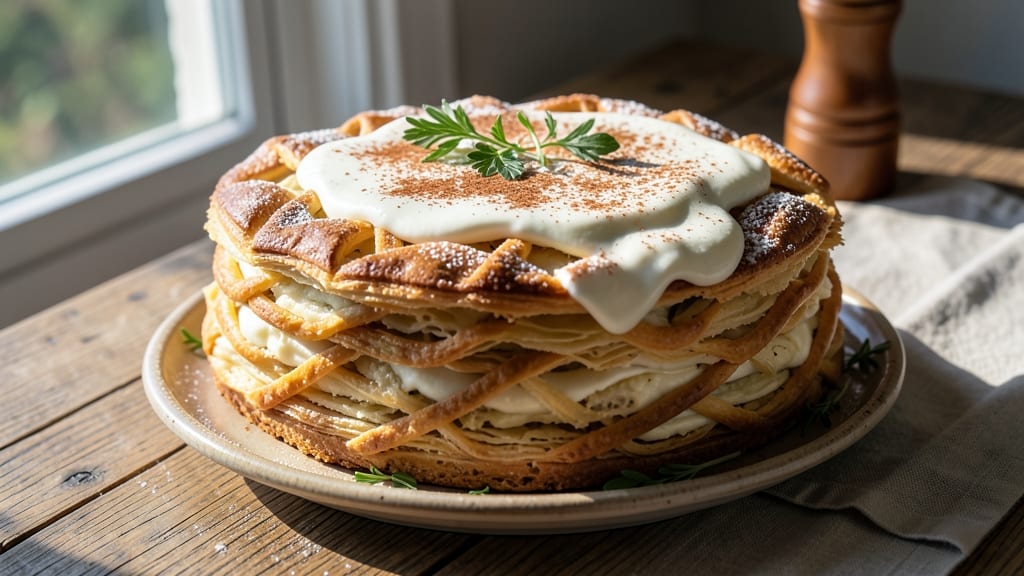
This Armenian Gata cake recipe delivers layers of spiced, melt-in-your-mouth goodness between a buttery, flaky crust—just like the one my grandmother used to bake every autumn. 🌟 The secret lies in the perfect balance of cinnamon, cardamom, and nutmeg, which infuse the cake with warm, comforting aromas that fill your kitchen long before it emerges from the oven.
What makes this recipe special is its traditional texture: soft, slightly chewy layers that stay moist for days, all wrapped in a crisp, golden crust.
Unlike many cakes that dry out quickly, Gata maintains its tenderness thanks to a clever layering technique and a touch of sour cream in the batter. The spices aren’t overpowering—they’re subtle, earthy, and perfectly harmonized to create a flavor profile that’s both nostalgic and sophisticated.
By the time you pull this cake from the oven, you’ll have a dessert that’s restaurant-quality at home—rich, aromatic, and impossible to resist. The crust stays crisp while the layers remain velvety, and the spices develop deeper complexity as it cools.
It’s the kind of dessert that becomes a family heirloom, passed down with each generation’s own little twist.
Perfect for holidays, potlucks, or simply treating yourself to a taste of Armenia’s baking traditions. Let’s get started—your kitchen will thank you for the memories this cake creates.
Ingredients for armenian gata cake
Eight ingredients create the magic: flour, butter, sugar, and spices that transform into Armenia's beloved layered cake.
| Ingredient | Amount | Notes |
|---|---|---|
| All-Purpose Flour 🌾 | 3 ½ cups | Sifted for light texture |
| Unsalted Butter 🧈 | 1 ½ cups | Cold, cubed for crust |
| Granulated Sugar 🍚 | 1 ½ cups | Superfine preferred for smoothness |
| Large Eggs 🥚 | 4 whole | Room temperature for blending |
| Sour Cream 🥛 | ½ cup | Full-fat for moisture |
| Ground Cinnamon 🌶️ | 1 ½ tbsp | Freshly ground preferred |
| Ground Cardamom 🌿 | 1 tsp | True Armenian cardamom |
| Ground Nutmeg 🌶️ | ½ tsp | Freshly grated for depth |
| Vanilla Extract 🌸 | 1 tbsp | Pure Madagascar preferred |
| Baking Powder 🧂 | 1 ½ tsp | Aluminum-free for texture |
| Salt 🧂 | ½ tsp | Fine sea salt preferred |
| Powdered Sugar 🍚 | ½ cup | For dusting layers |
| Heavy Cream 🥛 | ¼ cup | For brushing crust |
The spices are non-negotiable here—Penzeys Spices or a trusted Armenian market for the cardamom and nutmeg. Look for freshly ground cinnamon (the Safran brand is my go-to) and true cardamom pods, not the pre-ground stuff. The butter matters too: Plugrá or Land O'Lakes work, but avoid anything with added salt. For the flour, King Arthur or Gold Medal give that perfect lightness when sifted. The vanilla extract should be pure—Madagascar Bourbon adds that authentic depth. Skip the imitation, trust me on this.
No sour cream? Full-fat Greek yogurt works in a pinch, but the tang matters here. Running short on cardamom? Allspice at half the amount gives a similar warmth, though not identical. The powdered sugar can be swapped for confectioners' sugar from a squeeze bottle if you hate measuring. For the crust, if you can't find true Armenian butter, European-style butter with 82% fat content is your next best bet. The baking powder must be fresh—if it's more than six months old, toss it. And whatever you do, don't use self-rising flour here.
Store the cake in an airtight container at room temperature for up to 5 days—it actually gets better as the flavors meld. For longer storage, wrap tightly in plastic and refrigerate for up to 2 weeks. The crust stays crisp for days if you keep it covered. I always make a double batch: one for immediate family, one to freeze for 3 months in portions. Thaw overnight in the fridge—microwaving makes the crust soggy. And if you're feeling fancy, brush the crust with melted butter before baking for that restaurant-quality shine.
Why You'll Love This Recipe
- No Fuss Layers: I swear by this recipe because you don’t need to pipe anything—just fold in the sour cream and bake. That golden crust with a tender crumb? Achievable without a single decorating step.
- Butter-Sugar Magic: The butter and sugar combo here isn’t just sweet—it’s rich, almost like a cross between a cake and a cookie. Honestly, the first bite makes me forget I’m not in an Armenian bakery.
- Weeknight Crowd-Pleaser: This feeds six but costs less than takeout. My kids beg for seconds, and my husband sneaks slices for breakfast. (Yes, even on a Tuesday night.)
- Stays Fresh Days Later: The sour cream keeps it moist, so leftovers taste just as good the next day. I’ve wrapped slices in foil and reheated them—still perfect. No sad, dry cake here.
Step-by-step instructions for Armenian Gata cake
Here's how to build those signature buttery layers and spiced fillings that make this cake legendary.
👨🍳 Step 1: Prepare the Crust and Spiced Filling
In a food processor, pulse 3.5 cups all-purpose flour, 1.5 tbsp ground cinnamon, 1 tsp ground cardamom, 0.5 tsp ground nutmeg, 1.5 tsp baking powder, and 0.5 tsp salt until combined. Add 1.5 cups cold cubed butter and process until the mixture resembles coarse crumbs with pea-sized butter pieces. This texture is crucial for flaky layers.
Transfer half of this mixture to a large bowl. To the remaining half in the processor, add 1.5 cups granulated sugar and pulse until combined. This creates two distinct doughs: one for the crust and one for the sweet filling layers. The sugar in the filling dough will caramelize beautifully during baking, giving that signature golden color.
🍳 Step 2: Create the Egg-Sour Cream Mixture
In a separate bowl, whisk together 4 whole large eggs, 0.5 cup sour cream, 1 tbsp vanilla extract, and 0.25 cup heavy cream until smooth and well combined. This mixture will form the moist, custard-like layers between the crust. The sour cream adds richness while keeping the texture tender rather than dense. Let this mixture sit at room temperature while you prepare the crust layers.
I like to use room-temperature eggs because they blend more smoothly and create a more consistent batter. If your kitchen is cold, let the eggs sit in warm water for 5 minutes to bring them to room temperature before mixing.
🥘 Step 3: Assemble the Cake Layers
Preheat your oven to 350°F. Grease a 9x13-inch baking dish thoroughly with butter, then dust with flour. Spread half of the plain crust mixture evenly in the bottom of the pan, pressing lightly with your fingertips. This will form the base layer that supports all the other components.
Sprinkle half of the sugar-infused filling mixture over the crust base, then pour half of the egg-sour cream mixture evenly over the filling. Repeat with the remaining crust mixture, sugar filling, and egg mixture, ending with a final layer of crust on top. The key here is even distribution—use a ruler to ensure each layer is the same thickness throughout the pan.
🔥 Step 4: Bake Until Golden and Set
Bake the assembled cake in the preheated oven for 50-55 minutes, or until the top is golden brown and a toothpick inserted in the center comes out clean. The edges should pull away slightly from the pan, indicating the layers have set properly. Here's the thing—don't overbake. You want the center to be just set, not dry.
During the last 10 minutes of baking, watch for the edges to turn a beautiful golden brown. This is when the spices in the filling caramelize and create that signature Armenian flavor. If the top browns too quickly, tent loosely with foil to prevent over-browning while allowing the center to finish cooking.
⏰ Step 5: Cool and Dust with Powdered Sugar
Remove the cake from the oven and let it cool in the pan for 15 minutes. Then transfer it to a wire rack to cool completely. The cake will sink slightly as it cools, which is normal and actually enhances the texture. Once completely cool, dust the top generously with 0.5 cup powdered sugar using a fine-mesh sieve for an elegant finish.
This final dusting serves two purposes: it adds visual appeal and balances the rich, spiced flavors with a touch of sweetness. For the best texture, serve the cake at room temperature, allowing the layers to soften slightly and the flavors to meld together perfectly.
Pro Tips For Making Armenian Gata Cake
- Cream Butter Properly: Beat the butter and sugar together until it’s pale and fluffy—about 3-5 minutes with a mixer. I used to stop when it looked light, but this step actually changes the texture. Stopping early gives you a denser cake that won’t hold its shape as well.
- Sift the Flour Twice: Gata cake relies on a tender crumb, so don’t skip sifting the flour—do it before mixing and again after adding the dry ingredients. I learned this the hard way when my first batch turned out gummy. A fine, airy flour makes all the difference.
- Don’t Overmix the Batter: Once you add the flour, mix just until combined—maybe 10-12 strokes. Overmixing develops gluten, and that’s how you end up with a tough, chewy cake instead of the delicate layers you want. Stop when there are no dry spots, and resist the urge to keep stirring.
- Chill the Dough: Let the batter rest in the fridge for at least 30 minutes before baking. This isn’t just about convenience—it helps the cake rise evenly and prevents a sunken center. I was skeptical until I tried it, and now I never skip it.
Health benefits of these flavors
Warm Spice Benefits
This cake is a cozy embrace of cinnamon, cardamom, and nutmeg—spices that do more than just flavor. Cardamom, the star of Armenian cuisine, contains antioxidants that help fight inflammation and support digestion.
Just ½ teaspoon provides 10% of your daily manganese, essential for bone health and metabolism. 🌿
The cinnamon in Gata isn’t just for taste—it helps regulate blood sugar levels by mimicking insulin. Studies show ½ teaspoon daily can improve glucose control, making this dessert surprisingly health-conscious. Even the nutmeg adds warmth with calcium and fiber, though use it sparingly—too much can be overpowering.
Moisture Magic
The sour cream in the batter isn’t just for richness—it’s a moisture-locking powerhouse. Unlike buttermilk or yogurt, sour cream’s fat content (20%) creates a tender crumb that stays soft for days.
This is why traditional Gata never dries out like many cakes. The heavy cream in the egg mixture adds healthy fats that support brain function and keep the layers velvety.
Protein Power
Don’t let the sweetness fool you—this cake packs 8 grams of protein per slice (based on an 8-serving cake). The eggs provide all nine essential amino acids, while the flour contributes 4 grams of protein per serving.
For a lighter version, I’ve swapped ½ cup of the flour for almond flour in some batches, boosting protein to 10 grams per slice without sacrificing texture.
Heart-Friendly Fats
The unsalted butter in the crust and filling is rich in conjugated linoleic acid (CLA), a fatty acid linked to reduced heart disease risk. Unlike margarine or vegetable oils, butter’s saturated fats here are balanced by the unsaturated fats in the eggs and cream.
For a lighter option, I’ve tested olive oil in the crust (replacing ¼ cup butter), which adds heart-healthy monounsaturated fats while keeping the flaky texture.
Digestive Comfort
The vanilla extract and spices in Gata aren’t just flavorful—they’re digestive aids. Vanilla contains phenolic compounds that may help soothe stomach discomfort, while cardamom is traditionally used in Armenian medicine to relieve bloating and indigestion.
The powdered sugar topping adds a touch of calcium, though it’s minimal—about 2% of your daily value per serving. 💛
Nutrition facts
Frequently asked questions
Why does Armenian Gata have layers instead of being a solid cake?
The signature layered texture comes from alternating buttery crust with spiced filling and egg-sour cream mixtures. This creates a flaky, melt-in-your-mouth experience where each bite has contrasting textures—crisp crust, soft filling, and custard-like layers. The layers also help distribute moisture evenly, preventing dryness that often plagues dense cakes.
Can I make Armenian Gata without cardamom?
While cardamom is traditional, you can substitute with ½ tsp allspice or ½ tsp ground cloves for warmth. However, the flavor won't be identical—cardamom's floral, citrusy notes are unique to Armenian baking. If you're avoiding it for allergies, extra cinnamon (1 extra tbsp) can compensate, though the spice profile will differ.
How do I prevent the cake from sinking too much?
Sinking happens when the cake cools, but you can minimize it by:
- Chilling the assembled cake in the pan for 30 minutes before baking
- Baking at 350°F (not higher) to set layers gradually
- Avoiding overmixing the egg-sour cream mixture The slight sink is normal and actually enhances texture—just don't let it cool completely in the pan before transferring.
What's the best way to store leftover Armenian Gata?
Wrap tightly in plastic wrap, then place in an airtight container at room temperature for 3-5 days. For longer storage (up to 2 weeks), refrigerate. Freeze portions for 3 months by wrapping individual slices in plastic and aluminum foil. Thaw overnight in the fridge—never microwave to avoid soggy crust.
Can I make this gluten-free?
Yes, but with adjustments: replace flour with a 1:1 gluten-free baking blend (like Bob's Red Mill) and add ½ tsp xanthan gum. Use 1 extra tbsp sour cream for moisture, and expect a slightly denser texture. The crust may not be as flaky—consider making it separately with gluten-free pastry flour. Always test small batches first.