
Desserts
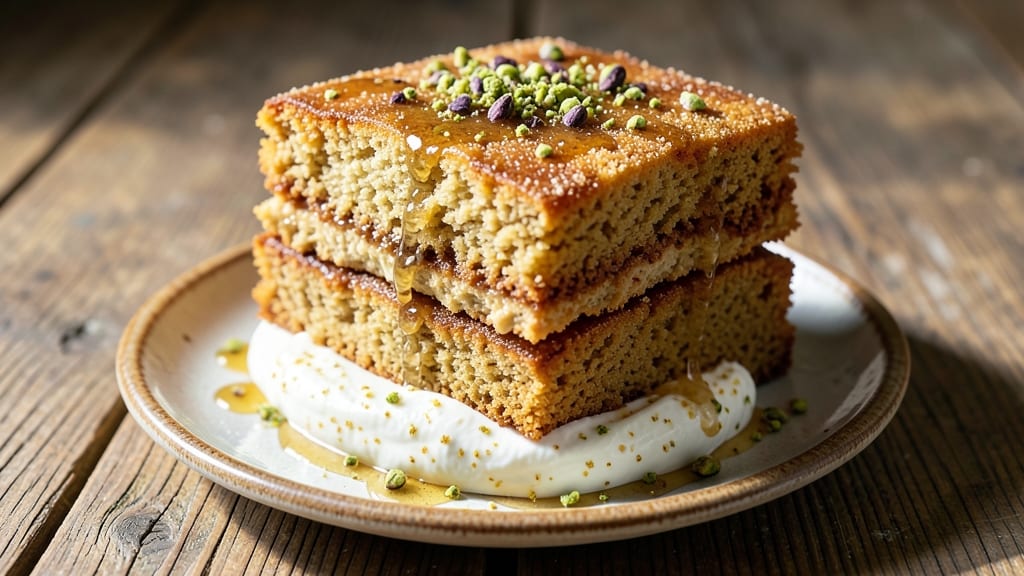
This Arabic semolina cake delivers the nutty, fragrant spice perfection that makes it a beloved Middle Eastern classic. 🌟 The secret lies in its signature crumbly texture—achieved through toasted semolina and warm spices like cardamom and cinnamon—paired with a moist, tender crumb that crumbles just right between your fingers.
What sets this cake apart is its aromatic depth, where toasted semolina meets citrus zest and a touch of rosewater for that signature floral note. Unlike dense cakes, this one stays light yet substantial, with a delicate balance of sweetness that lets the spices truly shine.
The recipe is straightforward but requires patience—letting the batter rest ensures a perfectly textured result.
Once baked, you’ll have a cake that’s perfect for celebrations or quiet afternoons, served warm with a dusting of powdered sugar and a cup of mint tea. The nutty crumb and fragrant spices make it unforgettable, whether you’re sharing it at a gathering or enjoying a slice by yourself.
Ready to bake? The key steps—properly toasting the semolina and balancing the spices—will transform your kitchen into a taste of tradition. Let’s get started!
Ingredients for arabic semolina cake
Toasted semolina, warm spices, and floral notes—this cake is pure Middle Eastern magic.
| Ingredient | Amount | Notes |
|---|---|---|
| All-Purpose Flour 🌾 | 2 cups | Sifted for light texture |
| Fine Semolina 🌾 | 1 ½ cups | Toasted until nutty |
| Granulated Sugar 🍚 | 1 ½ cups | White or light brown |
| Unsalted Butter 🧈 | 1 cup | Room temperature, full-fat |
| Large Eggs 🥚 | 3 whole | Room temperature |
| Plain Yogurt 🥛 | ½ cup | Full-fat preferred |
| Ground Cardamom 🌿 | 1 ½ tsp | Freshly ground preferred |
| Ground Cinnamon 🌶️ | 1 tsp | Sweet variety |
| Rosewater 🌹 | 1 tbsp | Pure, food-grade |
| Orange Zest 🍊 | 1 tbsp | Freshly grated |
| Vanilla Extract 🌸 | 1 tsp | Pure vanilla |
| Baking Powder 🧂 | 1 ½ tsp | Diamond Crystal preferred |
| Salt 🧂 | ½ tsp | Fine sea salt |
| Powdered Sugar 🍚 | ¼ cup | For dusting |
The semolina is non-negotiable here. Toast it in a dry pan for 5-7 minutes until it smells nutty and golden—this step makes all the difference. I grab mine from the international aisle at Whole Foods or Middle Eastern markets, but any fine semolina will work. The cardamom and cinnamon? Buy whole pods if you can—grinding them fresh gives a deeper flavor. Rosewater can be tricky to find, but Trader Joe's usually carries it, or check the Middle Eastern section at Kroger. For the butter, Plugrá or Land O'Lakes are solid choices—just make sure it's full-fat.
No cardamom? Allspice at half the amount works in a pinch, but you'll lose that signature floral note. Fresh orange zest is ideal, but bottled zest from the baking aisle is fine if you're in a hurry. No rosewater? Orange blossom water is the next best thing, but skip it if you can't find it—this cake still shines without it. The yogurt should be full-fat for richness, but Greek yogurt works too. And if you're feeling fancy, swap the powdered sugar for icing sugar—it dissolves more smoothly.
This batter needs time to rest—at least 30 minutes, up to 2 hours. Store leftovers in an airtight container for 3 days at room temperature, or freeze for 1 month. The cake reheats beautifully—just wrap it in foil and warm in the oven for 10 minutes. I always make a double batch because it disappears fast—perfect for gift boxes or impromptu gatherings.
Why You'll Love This Recipe
- No Fuss Mixing: This cake comes together with just a whisk and a bowl—no stand mixer, no fancy techniques. The semolina and flour blend effortlessly with melted butter and sugar, while the eggs bind it all in minutes. Honestly, I’ve made it while chatting on the phone.
- Buttery Nutty Magic: That toasted semolina? It’s where the real charm lives—nutty, slightly crisp, and rich from the butter. The sugar caramelizes just enough to give it a subtle depth, like a hug from a bakery shelf. (Yes, even on a Tuesday night.)
- Crowd-Pleaser Any Day: Slice it warm for breakfast, pack it for lunches, or serve it at a potluck—this cake disappears fast. Between us, my in-laws request it at holidays, and my kids sneak bites when I’m not looking.
- Budget Bakery Win: Uses pantry staples (flour, sugar, butter) and stretches far—one batch feeds six, with leftovers that stay fresh for days. I’ll be real: it’s my go-to when I need something impressive without breaking the bank.
Step-by-step instructions for Arabic semolina cake
Here's how to bake this fragrant, nutty cake with a tender crumb and aromatic spices.
👨🍳 Step 1: Toast the Semolina for Maximum Flavor
First, toast the 1.5 cups fine semolina in a dry skillet over medium heat for 3-4 minutes, stirring constantly. You'll smell that wonderful nutty aroma develop—this is what gives the cake its signature depth. Watch carefully so it doesn't burn; it's ready when it's golden and smells toasty. Transfer immediately to a bowl to cool slightly while you prepare the rest.
Here's the thing—skipping this step means missing the cake's authentic flavor. The toasted semolina adds that toasty, almost caramelized note that balances the sweetness perfectly. Let it cool just enough to handle, but don't let it sit too long or it'll absorb moisture from the air.
🍳 Step 2: Cream Butter and Sugar Until Light
In a stand mixer fitted with the paddle attachment, beat the 1 cup unsalted butter (at room temperature) with the 1.5 cups granulated sugar on medium speed for 3-4 minutes. You're looking for a light, fluffy texture—the mixture should nearly double in volume and become pale in color. This creaming process incorporates air, which creates that tender crumb we want.
I like to scrape down the sides of the bowl every minute or so to ensure everything gets evenly incorporated. If the butter starts to look grainy, let it sit at room temperature for another 5 minutes before continuing. The butter needs to be soft but not melted—it should leave a slight indent when pressed with your finger.
🥘 Step 3: Combine Wet Ingredients and Spices
Add the 3 whole large eggs one at a time, mixing on low speed after each addition until fully incorporated. Then add the 0.5 cup plain yogurt, 1 tbsp rosewater, 1 tbsp orange zest, and 1 tsp vanilla extract. Mix just until combined—don't overmix or the cake will be dense. In a separate bowl, whisk together the 2 cups all-purpose flour, 1.5 tsp ground cardamom, 1 tsp ground cinnamon, 1.5 tsp baking powder, and 0.5 tsp salt. Sift this dry mixture directly into the wet ingredients.
This is where the magic happens—the spices and rosewater infuse the batter with their aromatic qualities. The yogurt adds moisture and tenderness, while the citrus zest brightens the whole cake. Don't be tempted to skip the sifting—it ensures a light, airy texture rather than a heavy one.
🍳 Step 4: Fold in Toasted Semolina Gently
Using a silicone spatula, gently fold in the toasted semolina until just combined. Be careful not to overmix—the batter should be thick but still pourable. The toasted semolina will add texture and that nutty flavor we're after. Pour the batter into a 9-inch round cake pan lined with parchment paper and lightly greased with butter.
Here's a pro tip: don't press the batter down. Just pour it in and smooth the top with a spatula. The cake should rise beautifully on its own. Tap the pan gently on the counter a few times to release any air bubbles that might have formed during mixing.
🔥 Step 5: Bake to Golden Perfection
Preheat your oven to 350°F. Place the cake pan in the center rack and bake for 45-50 minutes, until a toothpick inserted in the center comes out clean. The cake should be golden brown on top and spring back slightly when pressed gently in the center.
I know it seems like a long time, but patience is key here. The cake needs time to set properly in the middle. If you take it out too early, it might collapse as it cools. Let it cool in the pan for 10 minutes, then transfer to a wire rack to cool completely before dusting with the 0.25 cup powdered sugar. This final step adds that beautiful, snowy finish that makes the cake look extra special.
Pro Tips For Making Arabic Semolina Cake
- Sift the Semolina: Don’t just dump that fine semolina—sift it with the flour first. I learned this after my first cake turned out dense and gritty; the semolina clumps like crazy if you skip this. A quick sift with the flour ensures even distribution, so every bite has that signature crumbly texture.
- Melt Butter Slowly: Warm the butter just until it’s liquid—no faster, no hotter. I used to rush it, and the cake would taste greasy or even split in the middle. A double boiler or microwave in 20-second bursts keeps it at 110°F (43°C) without cooking the eggs or burning the sugar.
- Skip Overmixing the Batter: Once you add the eggs, mix just until combined—maybe 10 strokes max. I’ve seen people beat this batter like cake batter, and it turns out tough. The semolina needs to stay intact for that shatter-like crumb, not a dense sponge.
- Let It Rest Before Baking: Give the batter a 15-minute chill in the pan—covered—before baking. Sounds weird, but it works: the semolina absorbs moisture better, and the cake rises more evenly. I was skeptical until I tried it; now I never skip it.
Troubleshooting this recipe
Cake Too Dense
If your cake turns out dense instead of light and crumbly, you likely overmixed the batter or didn’t toast the semolina properly. The key is to fold the toasted semolina gently—just until combined. Also, ensure your butter is at room temperature and creamed properly to incorporate air.
Overmixing develops gluten, which makes the cake tough. Let the batter rest for at least 30 minutes before baking to help the ingredients meld. 💡
Underbaked Center
An underbaked center happens when the cake isn’t fully cooked before cooling. Always use a toothpick to check—it should come out clean with just a few moist crumbs.
If your cake feels gummy or sinks in the middle, increase the baking time by 5-10 minutes or cover it loosely with foil for the last 10 minutes to trap steam. Avoid opening the oven door early, as this can cause the cake to collapse. 🔥
Dry or Crumbly Texture
A dry or overly crumbly cake usually means the semolina was over-toasted or the butter wasn’t creamed enough. Toast the semolina just until golden and nutty—don’t let it burn. For extra moisture, add 1-2 tablespoons of yogurt or a splash of milk to the batter.
If the cake still feels dry, try brushing the top with a simple syrup (equal parts sugar and water) while it’s warm. 💧
Spices Too Overpowering
If the cardamom or cinnamon flavors dominate and taste bitter, you may have used too much. Stick to the 1.5 tsp cardamom and 1 tsp cinnamon measurements, and always use freshly ground spices for the best flavor.
For a milder taste, reduce the cardamom to 1 tsp and add a pinch of nutmeg instead. Balance the spices with a touch more sugar or a splash of rosewater to soften the intensity. 🌿
Batter Too Thin
A runny batter can happen if the butter melts during creaming or if you add too much yogurt. If the batter feels too thin, fold in an extra ¼ cup of toasted semolina to thicken it.
For a stiffer batter, chill it for 15-20 minutes before baking. If the cake spreads too much in the pan, try baking it at 325°F instead of 350°F for a thicker rise. 🍳
Uneven Rise or Sinking
An uneven rise often means the oven wasn’t preheated properly or the batter was overmixed. Preheat your oven for at least 15 minutes before baking, and place the cake pan in the center rack.
To prevent sinking, avoid opening the oven door during the first 30 minutes of baking. If the cake starts to sink, tent it loosely with foil to help it set. 🏋️
Nutrition facts
Frequently asked questions
Can I substitute semolina with another flour?
The toasted semolina is key for that signature nutty flavor and crumbly texture. For a similar result, try cornmeal or fine polenta—toast them first in a dry pan until golden. If using all-purpose flour, the cake will be lighter but lose that distinctive toasty depth. For a gluten-free option, almond flour works but may make the texture denser.
How do I store leftover Arabic semolina cake?
Wrap cooled slices in plastic wrap or store in an airtight container at room temperature for 3 days. For longer storage, freeze for up to 1 month. To serve, thaw at room temperature or warm in the oven at 300°F for 10 minutes wrapped in foil. The cake reheats beautifully while maintaining its crumbly texture.
What's the best way to serve this cake?
This cake shines when served warm with a dusting of powdered sugar and a cup of mint tea or Arabic coffee. For a festive touch, drizzle with honey or arrange with fresh berries. It's also perfect as a dessert after meals or as a breakfast treat with a sprinkle of pistachios.
Why does my cake smell amazing but taste bland?
This usually happens when the spices aren't fresh or the semolina isn't toasted enough. Always use freshly ground cardamom and cinnamon—pre-ground spices lose potency quickly. For extra flavor, add 1 tsp orange blossom water (if available) or a pinch of saffron threads steeped in warm milk. Toast the semolina until it's deeply nutty-smelling, not just lightly golden.
Can I make this cake without rosewater?
Yes! While rosewater adds that signature floral note, you can omit it or substitute with 1 tsp orange blossom water (if available) or even ½ tsp vanilla extract. For a citrus twist, add an extra 1 tbsp lemon zest. The cake will still be delicious—just slightly less aromatic. The spices and toasted semolina will carry the flavor beautifully.