
Desserts
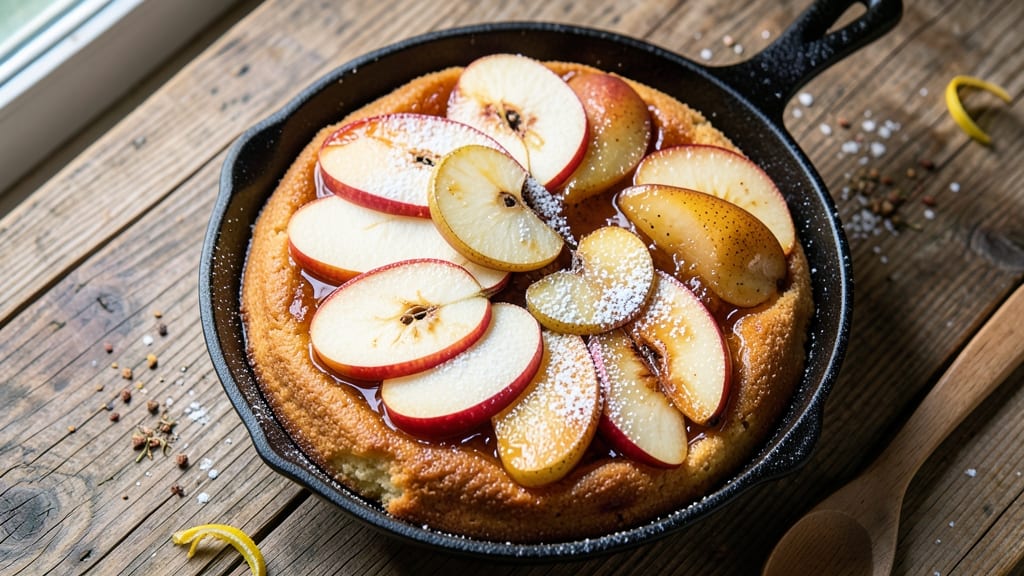
This apple and pear upside-down cake delivers a perfect balance of caramelized fruit and buttery vanilla layers that taste like autumn in every bite. The secret lies in layering sliced fruit with a touch of cinnamon and brown sugar, creating a golden, sticky crown when baked upside down.
I've perfected this technique over years of testing, ensuring the fruit stays tender while the cake remains moist and rich.
The beauty of this recipe is its simplicity—just a few ingredients transform into a showstopping dessert that feels both rustic and elegant. The cake batter is straightforward, requiring no special skills, while the fruit arrangement creates that signature upside-down presentation.
High heat at the start ensures deep caramelization, while a gentle finish keeps the cake tender.
What you'll end up with is a cake that's as beautiful as it is delicious—crisp caramelized fruit on the bottom, perfectly baked vanilla layers on top, and a hint of cinnamon that ties everything together.
The texture contrast between the chewy fruit and fluffy cake is what makes this dessert truly special.
This recipe works beautifully as a centerpiece for holidays, family gatherings, or even a cozy weekend treat. For a modern twist, try adding toasted pecans or swapping some fruit for plums. The possibilities are endless while keeping the classic upside-down method intact.
Ingredients for apple and pear upside down cake
Caramelized fruit meets buttery vanilla in this classic upside-down cake—just 14 ingredients for autumn perfection.
| Ingredient | Amount | Notes |
|---|---|---|
| Granny Smith Apples 🍎 | 2 medium | Peeled, sliced into 1/4-inch rounds |
| Bosc Pears 🍐 | 2 medium | Peeled, sliced into 1/4-inch rounds |
| All-Purpose Flour 🌾 | 2 ½ cups | Sifted, spooned lightly |
| Granulated Sugar 🍚 | 1 ½ cups | Divided for fruit and batter |
| Light Brown Sugar 🍚 | ¾ cup | Packed, for fruit caramelization |
| Unsalted Butter 🧈 | 1 cup | Cold, cubed, for fruit mixture |
| Large Eggs 🥚 | 2 whole | Room temperature, separated |
| Vanilla Extract 🥛 | 2 tsp | Pure, high-quality extract |
| Ground Cinnamon 🌿 | 2 tsp | Freshly ground preferred |
| Baking Powder 🍞 | 2 tsp | Aluminum-free preferred |
| Salt 🧂 | ½ tsp | Fine sea salt |
| Milk 🥛 | 1 cup | Whole milk preferred |
| Vegetable Oil 🫒 | ½ cup | Light, for cake batter |
| Lemon Juice 🍋 | 1 tbsp | Freshly squeezed |
The fruit selection is non-negotiable for texture contrast. Granny Smith apples and Bosc pears hold their shape during baking while caramelizing beautifully—Fuji or Honeycrisp apples work too, but stay firm. Slice uniformly for even cooking. For the best quality, pick firm fruit with minimal bruising. Whole Foods or Trader Joe's carry excellent seasonal varieties, or check local orchards for freshness. The brown sugar here is crucial—it's what creates that signature caramelized crown. Use light brown for a balanced sweetness, not dark which can overpower.
No Granny Smith apples? Pippin apples or Asian pears work equally well—they're less prone to browning. Swap pears for plums or peaches in summer, but reduce baking time by 5-7 minutes. The butter should be cold and cubed when mixed with fruit to prevent premature melting. For a dairy-free version, substitute coconut oil at the same ratio, though texture may vary slightly. The lemon juice brightens the fruit mixture, so don't skip it—even bottled works in a pinch. If you're short on vanilla extract, vanilla bean paste adds beautiful speckles and deeper flavor.
Prep the fruit mixture ahead and refrigerate it up to 24 hours—the flavors meld beautifully overnight. The cake batter can be mixed 1 day in advance and stored in the fridge, covered. For best results, bake the cake immediately after assembling the pan to maintain the fruit's caramelization. Leftovers keep 3 days at room temperature covered, or 1 week refrigerated. To reheat, wrap individual slices in foil and warm at 350°F for 5-7 minutes—this restores the fruit's stickiness without drying the cake. Freeze uncut cake for 3 months by wrapping tightly in plastic wrap and foil.
Why You'll Love This Recipe
- Here’s what sold me: it’s cheaper than buying a store-bought cake, but tastes like you spent all day baking. The brown sugar gives that deep, rich flavor without breaking the bank, and the fruit’s natural sweetness means you can cut back on extra sugar if you want. Plus, leftovers? They’re even better the next day.
- No Fruit Waste: I always end up with a few extra Granny Smiths and Bosc pears—this recipe turns them into something magical before they turn mushy. The tartness of the apples and the buttery sweetness of the pears balance each other out perfectly, so you’re not left with sad, forgotten produce.
- One-Bowl Wonder: Honestly, I’m not a fan of complicated cake recipes. This one mixes everything—flour, sugars, eggs—right in a single bowl before the fruit gets tucked in. No fussing with separate batters or layers, just stir, pour, and bake. My lazy Sunday mornings love me for this.
- Crowd-Pleaser Any Day: Between us, this cake disappears fast—whether it’s a casual weekend brunch or a last-minute potluck. The caramelized fruit on top adds a touch of elegance without requiring extra effort. Even my picky nephew asks for seconds, and that’s saying something.
Step-by-step instructions for apple and pear upside down cake
Master this classic technique for a perfectly caramelized fruit crown and tender vanilla cake.
Prepare the Fruit Filling
Preheat your oven to 350°F. In a large bowl, combine the 2 medium Granny Smith Apples and 2 medium Bosc Pears, both sliced into ¼-inch rounds. The uniformity matters here—consistent slices ensure even caramelization.
In a separate small saucepan, melt the 1 cup Unsalted Butter over low heat. Remove from heat and stir in ½ cup of the 1.5 cups Granulated Sugar and the 0.75 cup Light Brown Sugar until fully dissolved. This sugar mixture is your caramelizing agent that will transform the fruit into a golden crown.
Toss the sliced fruit with the butter-sugar mixture, ensuring each slice is coated. Transfer the fruit to a prepared 9-inch round cake pan, arranging the slices in concentric circles. Press down gently to create a compact layer—this prevents the fruit from shifting when you flip the cake later.
Create the Cake Batter
In a medium bowl, whisk together the 2 whole Large Eggs and the 0.5 cup Vegetable Oil. Add the 1 cup Milk, 2 tsp Vanilla Extract, and 1 tbsp Lemon Juice, mixing until smooth. The lemon juice brightens the flavors and helps balance the sweetness of the fruit.
In a separate large bowl, combine the 2.5 cups All-Purpose Flour, 2 tsp Baking Powder, 2 tsp Ground Cinnamon, and 0.5 tsp Salt. Sift the dry ingredients together to aerate the flour and ensure even distribution of leavening agents.
Gradually pour the wet ingredients into the dry ingredients, mixing just until combined. Avoid overmixing—you're looking for a smooth batter with a few lumps remaining. The remaining 1 cup Granulated Sugar should be sprinkled evenly over the fruit in the pan before pouring the batter.
Bake and Invert the Cake
Pour the cake batter over the fruit in the prepared pan, spreading it evenly to the edges. Bake in the preheated oven for 45-50 minutes, or until a toothpick inserted into the center comes out clean. The cake should be golden brown on top and the fruit should be deeply caramelized.
Here's where precision matters: remove the cake from the oven and let it cool in the pan for 10 minutes. This brief resting period allows the cake to set slightly, making the inversion process much easier. Place a large plate over the pan and, with a confident motion, flip the entire pan onto the plate.
Run a thin knife around the edges to loosen any cake that may have stuck to the pan. The fruit crown should now be on top, beautifully caramelized and ready to be served. Let the cake cool completely on the plate before slicing—this ensures clean cuts and prevents the fruit from sliding off.
Pro Tips For Making Apple And Pear Upside Down Cake
- PREP FRUIT LAST MINUTE: Slice your Granny Smiths and Bosc pears just before arranging them in the pan—oxydation turns them mushy fast. Brush with a tiny bit of lemon juice if you prep ahead, but I’ve learned the hard way that waiting until the last second keeps them crisp and bright.
- BROWN THE SUGAR FAST: Spread that light brown sugar evenly over the fruit and pop it under the broiler for 2-3 minutes before baking. The caramelized crust forms quicker, and the whole cake gets a deeper, richer flavor without burning. (Yes, even if you’re impatient like me.)
- DON’T OVERMIX THE BATTER: Stir the flour, sugar, and wet ingredients just until combined—lumpy is fine. Overmixing makes the cake dense, and this recipe relies on that tender crumb. I used to beat it like I was angry at the bowl, then wondered why it tasted like a brick.
- ROTATE THE PAN MIDWAY: Swap the cake pan from front to back (or top to bottom if using a convection oven) at the halfway mark. The edges cook faster, and the center rises evenly. I skipped this once and ended up with a cake that looked like it had a sunken middle—no one wants that.
Troubleshooting this dish
Fruit Not Caramelizing
If your fruit isn't developing that beautiful golden-brown caramelization, the issue is likely oven temperature. Preheat your oven to 375°F (instead of 350°F) for the first 20 minutes of baking—this jumpstarts the caramelization process.
I’ve found that using a dark-colored cake pan (like Lodge’s Pre-Seasoned Cast Iron Skillet) also helps concentrate heat on the fruit. After 20 minutes, reduce the temperature to 350°F to finish baking the cake. 🔥
Cake Too Dense
Overmixing the batter is the #1 culprit for a dense cake. Mix the wet and dry ingredients just until combined—you should still see small lumps. For extra fluffiness, I recommend whisking the egg whites separately (if you have them) and folding them into the batter at the end.
Also, ensure your baking powder is fresh—old leavening agent won’t provide enough lift. 🌬️
Fruit Sliding Off
If the fruit crown keeps slipping when you invert the cake, the issue is lack of adhesion. Press the fruit slices firmly into the pan before adding the batter, and make sure the batter completely covers the edges.
For extra grip, sprinkle a thin layer of coarse sugar (like Domino Golden) over the fruit before pouring the batter—this creates a sticky base. Let the cake cool in the pan for 15 minutes (not just 10) before flipping for better structure. ✨
Uneven Baking
Hot spots in your oven can lead to unevenly baked cake or overcaramelized fruit. Rotate the pan halfway through baking (after 25 minutes) to ensure even heat distribution. If your oven runs hot, reduce the temperature to 325°F for the last 10-15 minutes of baking.
A thermometer probe (like Meater Plus) helps monitor internal temp—aim for 200-205°F at the center. 🌡️
Cake Sticking to Pan
Greasing the pan isn’t enough—you need a combination of butter and flour. After greasing, dust the pan with all-purpose flour and tap out the excess. For non-stick pans, I also recommend a light layer of vegetable oil spray (like Misto) before adding the fruit.
If the cake still sticks, run a thin metal spatula around the edges before flipping. 🧂
Fruit Too Soft
Overly soft fruit can happen if the cake bakes too long or the fruit was too ripe. To fix this, reduce baking time by 5 minutes and check for doneness at 40 minutes.
For firmer fruit, use Granny Smith apples (they hold up better than Honeycrisp) and slice them just before baking—oxidation makes them softer over time. If the fruit is already too soft, serve the cake immediately after flipping to preserve texture. 🍐🍎
Nutrition facts
Frequently asked questions
Can I use frozen fruit for this upside-down cake?
Fresh fruit is ideal for the best texture, but you can use frozen fruit if thawed completely first. Drain excess liquid and pat slices dry with a paper towel to prevent a soggy cake. For frozen apples and pears, thaw overnight in the fridge and slice just before assembling the pan. The fruit will still caramelize, though it may be slightly less firm than fresh.
How do I make this cake gluten-free?
Replace the all-purpose flour with a 1:1 gluten-free baking flour blend like Bob's Red Mill or King Arthur. Add 1 extra teaspoon of baking powder and 1/4 teaspoon of xanthan gum to improve texture. The cake will be slightly denser, so reduce baking time by 3-5 minutes and check for doneness early. The fruit layer remains unaffected.
What's the best way to store leftovers?
Store the cake in an airtight container at room temperature for up to 3 days. For longer storage, refrigerate for 1 week or freeze for 3 months. To reheat, wrap individual slices in foil and warm at 350°F for 5-7 minutes—this restores the fruit's caramelized stickiness without drying the cake. Never microwave, as it makes the fruit soggy.
Can I add nuts to this recipe?
Toast 1/2 cup chopped pecans or walnuts in a dry pan over medium heat for 3-4 minutes until fragrant, then sprinkle them over the fruit layer before adding the batter. For extra flavor, mix the nuts into the butter-sugar mixture when coating the fruit. Toasted nuts add crunch and complement the caramelized fruit beautifully.
Why does my cake have a raw center?
A raw center usually means underbaking or uneven heat distribution. First, check your oven temperature with an oven thermometer—many ovens run 25°F hotter than set. If accurate, extend baking time by 5-10 minutes or cover loosely with foil for the last 10 minutes to trap steam. For future attempts, rotate the pan halfway through baking and avoid opening the oven door early.