
Desserts
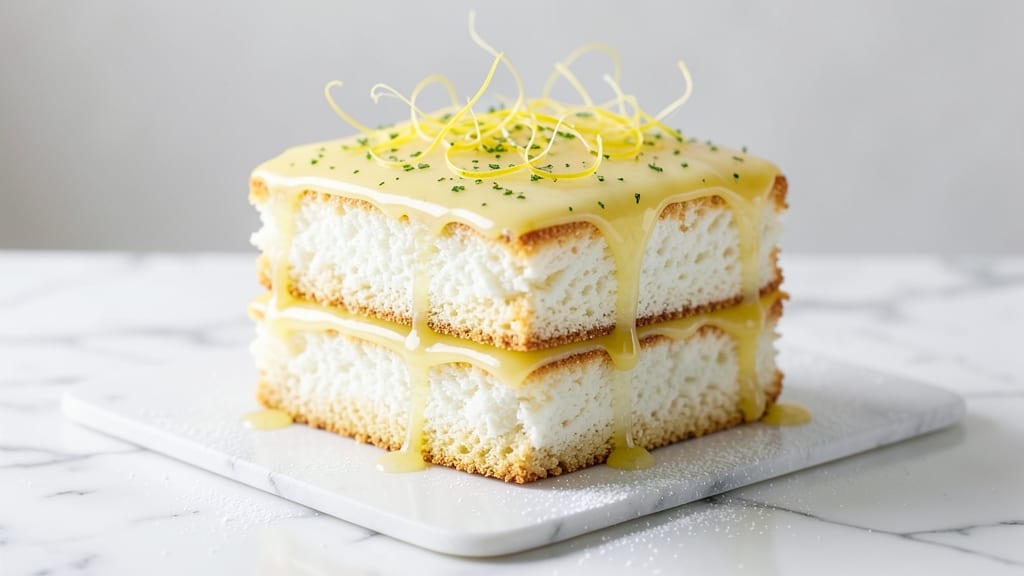
This angel food cake with lemon glaze delivers the perfect balance of airy texture and bright citrus—no butter, no oil, just pure egg-white magic. 💛 The secret lies in folding whipped egg whites into delicate clouds of flour, creating a cake so light it practically dissolves on your tongue.
What makes this version special is the homemade lemon glaze, which adds a tangy contrast that cuts through the sweetness without overpowering it.
The traditional method ensures a foolproof result: no oil, no butter, just egg whites and sugar whipped to perfection. Baking at high heat creates that signature domed shape, while the lemon glaze—made with powdered sugar, fresh lemon juice, and a touch of zest—transforms the cake into a showstopper.
The glaze isn’t just sweet; it’s zesty, adding layers of flavor that make every bite feel like a little burst of sunshine.
Once baked and cooled, the cake becomes a blank canvas for the glaze, which soaks in just enough to create a tender, moist crumb. The result is a dessert that’s elegant enough for special occasions but simple enough for a weeknight treat.
Serve it with fresh berries or a sprinkle of mint for a finishing touch that elevates it to restaurant-quality.
This recipe is designed to impress without the fuss—no fancy equipment, no complicated steps, just a cake that’s light as air and a glaze that’s bright and refreshing. Let’s get started on creating your perfect slice of citrusy heaven.
Ingredients for angel food cake lemon glaze
Twelve egg whites, two cups sugar, and citrus magic—this angel food cake is pure lightness with zesty contrast.
| Ingredient | Amount | Notes |
|---|---|---|
| Large Egg Whites 🥚 | 12 whole | Room temperature, no yolks |
| Granulated Sugar 🍚 | 1 ½ cups | Superfine preferred for smoothness |
| All-Purpose Flour 🌾 | 1 ½ cups | Sifted, no substitutions |
| Fresh Lemon Juice 🍋 | ½ cup | Strain seeds for clarity |
| Lemon Zest 🍋 | 1 tbsp | Finely grated, bright yellow |
| Powdered Sugar 🍚 | 2 cups | For glaze, sifted |
| Vanilla Extract 🌿 | 1 tsp | Pure, not imitation |
| Cream of Tartar 🧂 | 1 ½ tsp | Stabilizes egg whites |
| Salt 🧂 | ½ tsp | Fine sea salt |
| Unflavored Gelatin 🍬 | 1 ½ tsp | Bloomed in 3 tbsp cold water |
The egg whites are non-negotiable here. Room temperature whites whip faster and hold volume better—pop them in a warm water bath for 10 minutes if they're straight from the fridge. Cream of tartar is your secret weapon for stability, and superfine sugar dissolves faster for silky peaks. I grab mine from King Arthur Flour—their sifter makes quick work of flour prep. For the lemons, organic Meyer lemons have that perfect balance of sweet and tart, but regular lemons work too if you want more zing. Always zest first, then juice—you'll get more flavor that way.
No cream of tartar? White vinegar at half the amount works in a pinch, but it can add a slight tang. Substituting powdered sugar for granulated in the cake? Sift it extra well—clumps will ruin your meringue. Fresh lemon juice too sour? Mix equal parts with water to mellow it out. The gelatin might sound odd, but it's what gives the glaze that glossy finish—unflavored, powdered gelatin is key. If you can't find it, agar-agar at double the amount is a vegan alternative, though it'll be slightly firmer. The vanilla extract should be pure, not imitation—the difference is noticeable in every bite.
Angel food cake is a delicate beast—store it in an airtight container with parchment between layers to keep it moist. The glaze? Use within 2 days for best texture, though the cake itself stays fresh for 3 days if wrapped properly. For make-ahead magic, bake the cake a day ahead, then glaze right before serving. The flavors actually improve overnight as the citrus brightens. Freezing isn't recommended—the texture suffers, but you can freeze the glaze separately for up to 3 months if you're prepping ahead.
Why You'll Love This Recipe
- No Whisk Required: I swear, the only tools I need are a bowl and a hand mixer—no fancy gadgets, no stress. Those egg whites whip up light as air in minutes, and the flour folds in smoother than you’d think.
- Zesty Magic: That bright lemon glaze? It’s the secret weapon—tangy, sweet, and just the right amount of citrusy punch. The zest adds a tiny, invisible spark that makes every bite feel like a little vacation.
- Budget Bright Spot: Egg whites and sugar are cheap staples, and a single lemon stretches for glaze and garnish. Plus, slices keep beautifully for days, so I’m not scrambling to bake last-minute.
Step-by-step instructions for angel food cake with lemon glaze
Here's the precise method for baking a perfectly light angel food cake with a tangy lemon glaze.
🍳 Step 1: Whip Egg Whites to Stiff Peaks
In a spotlessly clean, grease-free mixing bowl, combine the 12 whole large egg whites, 1.5 teaspoons cream of tartar, and 0.5 teaspoon salt. Beat with an electric mixer on medium speed until soft peaks form—about 2 minutes. This step is critical for volume and stability.
Gradually add the 1.5 cups granulated sugar (superfine preferred) while beating on high speed. Increase to high speed and continue beating for 5-7 minutes until the meringue is glossy, thick, and forms stiff peaks that stand straight when the beaters are lifted. The mixture should hold its shape when you turn the bowl upside down.
I like to check for doneness by lifting the beaters—if the peaks hold their shape and the bowl can be inverted without collapse, you're ready. If the meringue still feels slightly soft, beat for another 30 seconds. Overbeating can cause graininess, so stop just before you think it's done.
👨🍳 Step 2: Fold in Flour and Lemon Flavors
Gently fold in the 1.5 cups sifted all-purpose flour using a spatula, working from the bottom up to avoid deflating the meringue. The flour should be evenly distributed but not overmixed—just until no white streaks remain. This step should take no more than 15 strokes to maintain the cake's airy texture.
In a separate small bowl, whisk together the 0.5 cup fresh lemon juice, 1 tablespoon lemon zest, and 1 teaspoon vanilla extract. Gradually fold this lemon mixture into the batter, again working from the bottom to preserve the air bubbles. The batter should be smooth, pale, and hold its shape when spooned—this confirms proper folding technique.
Real talk: Don't rush this step. Each fold should lift the batter gently without collapsing the structure. If the batter looks too thick, it's okay—it will spread naturally in the oven.
🔥 Step 3: Bake at High Heat
Preheat your oven to 375°F and prepare an ungreased 10-inch tube pan by lightly dusting it with flour. Pour the batter into the pan, smoothing the top with a spatula. Tap the pan firmly on the counter 3-4 times to remove any air bubbles and ensure even distribution.
Bake for 30-35 minutes until the top is golden brown and the cake springs back when gently pressed in the center. The cake is done when it pulls away cleanly from the sides of the pan and a toothpick inserted comes out dry. Don't open the oven door during baking—this creates drafts that can cause the cake to collapse.
If the edges brown too quickly, tent the cake loosely with aluminum foil after 20 minutes to prevent overbrowning while allowing the center to cook through. The cake should be completely set before removing from the oven.
⏰ Step 4: Cool and Prepare Glaze
Immediately invert the hot cake onto a wire rack and let it cool completely for 1 hour. This gradual cooling prevents cracking and allows the cake to set properly. While the cake cools, prepare the lemon glaze by blooming the 1.5 teaspoons unflavored gelatin in 3 tablespoons cold water for 5 minutes until fully dissolved.
In a small saucepan, combine the bloomed gelatin with 2 cups sifted powdered sugar and 0.3 cup fresh lemon juice (reserve the remaining lemon juice for adjustments). Cook over low heat, stirring constantly, until the sugar dissolves completely and the mixture reaches 160°F—about 5-7 minutes. Remove from heat and stir in 1 tablespoon lemon zest. The glaze should be smooth and glossy.
If the glaze is too thick, add 1 teaspoon reserved lemon juice at a time until it reaches a pourable consistency—it should coat the back of a spoon but still flow freely. Let the glaze cool to room temperature before using to prevent melting.
🍽️ Step 5: Glaze and Serve
Once the cake is completely cool, carefully pour the glaze over the top, allowing it to drip down the sides. Use a spoon to spread any excess glaze evenly over the cake's surface. Let the glaze set for 10 minutes before slicing to ensure a clean finish.
The finished cake should have a light, airy crumb with a bright, tangy lemon flavor and a smooth, glossy glaze. Slice with a serrated knife and serve immediately for the best texture. Each slice should be fluffy, moist, and bursting with citrus brightness—the perfect balance of lightness and zesty sweetness.
Pro Tips For Making Angel Food Cake Lemon Glaze
- Whip Whites to Stiff Peaks: Use a stand mixer with the whisk attachment—beat egg whites on medium-high until they hold their shape when you lift the bowl. I learned this the hard way: soft peaks collapse when folded, leaving a dense cake. Stop just before they look too glossy; they’ll firm up as you fold in sugar.
- Sift Flour Like You Mean It: Sift that all-purpose flour twice—once into the bowl, once again before folding. Angel food cake relies on lightness, and unsifted flour packs like sand. If you’re lazy (like me), at least press it through a fine-mesh sieve with a spoon—it makes a real difference.
- Glaze While Cake Steams: Pour the warm lemon glaze over the cake immediately after removing it from the pan—while it’s still hot. The residual steam helps the glaze cling and soften the top layer. Skip this, and you’ll end up with a sticky mess that drips like a sad fondue.
- Zest Before Juicing: Grate the lemon zest first, then juice—it’s easier to handle and prevents bitter pith from sneaking into your glaze. Store-bought zest? Sift it to remove grit. Fresh is brighter, but even pre-grated works if you’re in a rush (just taste it first).
Troubleshooting your angel food cake lemon glaze
Cake Collapse Fix
If your cake collapses during baking, it’s usually due to overmixing the batter or opening the oven door too soon. The key is gentle folding—use a spatula to lift and turn the batter just until the flour disappears.
Also, never grease the pan—angel food cakes rely on the pan’s texture to hold their shape. If you suspect undercooked centers, return it to the oven for 5-10 minutes at 350°F until fully set. 💫
Dense Texture Prevention
A dense cake often means underwhipped egg whites or overmixed flour. For perfect peaks, whip the egg whites until they’re glossy and stiff—when you lift the beaters, the tips should stand straight.
When folding in flour, work quickly and avoid overmixing. If your cake still feels dense, try sifting the flour twice and using superfine sugar for smoother texture. 🥚
Glaze Too Thick?
If your lemon glaze isn’t pourable, it’s likely overcooked or needs more liquid. Warm the glaze gently over low heat while stirring, then add 1 teaspoon reserved lemon juice at a time until it reaches a syrup-like consistency.
For extra shine, brush the cake with 1 tablespoon warm water before glazing—this helps the sugar dissolve faster. Let it cool completely before pouring to avoid melting. 🍋
Glaze Too Thin?
A runny glaze usually means too much lemon juice or undercooked gelatin. Simmer the glaze longer until it reaches 160°F, then let it cool slightly. If it’s still too thin, sprinkle 1 tablespoon powdered sugar into the warm glaze and stir until dissolved.
For a thicker finish, chill the glaze for 10 minutes before applying—this helps it set faster on the cake. 💡
Cracked Cake Surface
Cracks happen when the cake cools too quickly or is overbaked. Always invert the hot cake onto a wire rack and let it cool completely (at least 1 hour) before glazing. If cracks appear, dust them lightly with powdered sugar before adding the glaze—this creates a smooth finish.
For next time, check doneness with a toothpick—it should come out clean but slightly moist. 🔥
Lemon Glaze Too Sour
If your glaze tastes too tart, it’s likely from overusing lemon juice or unripe lemons. Balance it by adding 1 teaspoon vanilla extract or 1 tablespoon honey to mellow the acidity.
For a brighter flavor, use Meyer lemons—they’re naturally sweeter. If the glaze is still too strong, dilute it with 1 teaspoon water and adjust the sugar to taste. 🌟
Nutrition facts
Frequently asked questions
Can I make this angel food cake without a tube pan?
Yes, but you'll need a 10-inch round cake pan instead. Line the bottom with parchment paper and dust it lightly with flour. Bake for 25-30 minutes at 375°F instead of 30-35 minutes, checking for doneness when the top springs back. The cake will be slightly flatter than the traditional dome shape but still delicious.
How do I store leftover lemon glaze?
Store unused glaze in an airtight container in the refrigerator for up to 5 days. Reheat gently in the microwave for 10-15 seconds before using—it should be warm but not hot. For longer storage, freeze the glaze in 1-tablespoon portions for up to 3 months. Thaw at room temperature before reheating.
Why does my cake taste eggy? An eggy flavor usually means the egg whites weren't whipped enough or the batter was overmixed.
Can I use this glaze on other cakes?
This lemon glaze works beautifully on pound cakes, sponge cakes, or even cupcakes. For denser cakes, you may need to add 1 extra tablespoon of lemon juice to help it penetrate. The glaze's bright citrus flavor pairs especially well with vanilla or berry-based cakes. Just adjust the amount based on the cake's size.
What's the secret to perfectly fluffy angel food cake?
The three key secrets are:
- Room-temperature egg whites (whip faster and hold volume better),
- Superfine sugar (dissolves instantly for smoother texture), and
- No grease in the pan (the cake needs texture to hold its shape). Also, never open the oven door during baking—drafts cause collapse!