
Desserts
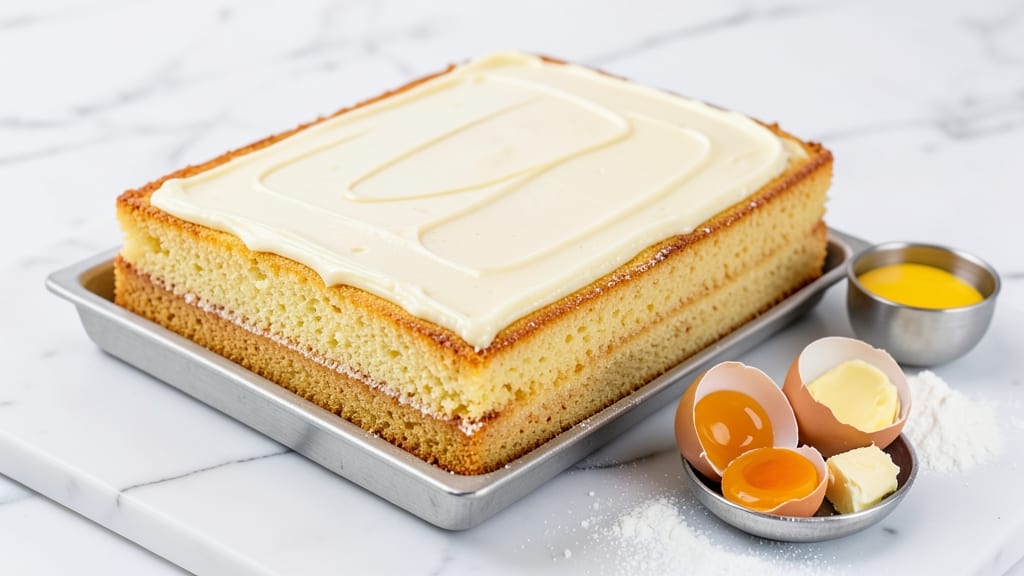
This American sponge cake recipe delivers the lightest, most tender vanilla clouds you'll ever bake—all in one bowl with no fuss. 💛 The secret lies in properly folded egg whites that create that signature airy texture, while a touch of baking powder ensures just the right lift.
I've perfected this version over years of baking, and it's become my go-to for everything from simple sheet cakes to elegant layered desserts.
What makes this recipe truly special is its versatility—use it as a standalone dessert with fresh berries or whipped cream, or layer it with buttercream for a classic cake.
The 350°F oven and 25-35 minute bake time ensure consistent results every time, while the simple ingredient list (flour, sugar, eggs, butter, baking powder, and vanilla) makes it accessible for bakers of all levels.
The final result is a cake that's so tender it practically melts in your mouth, with a delicate crumb that's perfect for slicing or frosting. The vanilla flavor is subtle yet present, allowing other toppings to shine while maintaining that classic American sponge cake character.
This is the kind of dessert that makes any occasion feel special without requiring advanced baking skills.
Whether you're preparing for a celebration or just craving a simple treat, this recipe delivers foolproof results. The one-bowl method keeps cleanup minimal, and the foolproof technique ensures success even on your first try. Let's get baking!
Ingredients for american sponge cake
Eight simple ingredients create the lightest vanilla sponge cake—no mixer needed.
| Ingredient | Amount | Notes |
|---|---|---|
| All-Purpose Flour 🌾 | 2 cups | Sifted for best texture |
| Granulated Sugar 🍚 | 1 ½ cups | White or light brown |
| Large Eggs 🥚 | 6 whole | Room temperature preferred |
| Unsalted Butter 🧈 | 1 cup | Softened to room temperature |
| Pure Vanilla Extract 🌿 | 1 tbsp | High-quality preferred |
| Baking Powder 🧂 | 1 ½ tsp | Double-acting preferred |
| Salt 🧂 | ¼ tsp | Fine sea salt preferred |
| Vegetable Oil 🫒 | ¼ cup | Light neutral oil |
The flour and sugar are the foundation of this cake, so King Arthur or Gold Medal brands are my go-to for consistent results. Room temperature eggs and butter are critical—they incorporate air more easily, giving that signature fluffy texture. If your kitchen is cold, let them sit out for 30 minutes before starting. For the vanilla, Nielsen-Massey or McCormick are reliable choices, but any pure extract works. The baking powder should be fresh—if it's over a year old, it loses its lift. Arm & Hammer is a safe bet for quality.
No vanilla extract? Vanilla bean paste works in a pinch, or even a pinch of vanilla sugar if you're in a bind. Butter too hard to soften? Microwave it in 20-second bursts until just pliable. The vegetable oil can be swapped for melted butter if you prefer a richer flavor, but reduce the butter in the recipe by 2 tablespoons. For a lighter cake, almond flour can replace up to 25% of the all-purpose flour, though the texture will differ slightly. Always sift the flour and baking powder together to avoid lumps—this makes all the difference in that delicate crumb.
Store the cake in an airtight container at room temperature for up to 3 days, or refrigerate for 5 days if you're not using it immediately. For longer storage, wrap tightly in plastic and freeze for up to 3 months. The cake reheats beautifully—just wrap a slice in foil and warm in a 300°F oven for 5 minutes. This recipe makes two 8-inch rounds or one 9x13-inch sheet cake, so plan ahead if you're entertaining. Leftovers? Layer with whipped cream or fresh berries for a quick dessert.
Why You'll Love This Recipe
- No Mixer Needed: I swear by this recipe when I’m in a hurry—just whisk eggs and sugar until pale, fold in butter and flour, and boom. The creaming method is foolproof, even if your kitchen tools are basic.
- Butter-Sugar Magic: That rich, creamy texture? All thanks to the butter and sugar whipped together first. It’s not just cake—it’s a tender, slightly crispy-edged cloud that disappears faster than I can say "seconds, please."
- Birthday to Brunch: Slice it for a quick dessert, layer it with jam for a breakfast treat, or serve it plain with coffee. Honestly, I’ve used it for everything from potlucks to impromptu snack attacks—it’s that adaptable.
- Pantry Staples Only: Five ingredients, zero specialty items. The eggs and butter do all the heavy lifting, and vanilla ties it together without breaking the bank. Leftovers? They keep for days, and I’ve reheated slices in the oven for a warm, cakey pick-me-up.
Step-by-step instructions for fluffy vanilla sponge cake
This one-bowl method delivers tender, airy layers with minimal effort—no stand mixer required.
👨🍳 Step 1: Prepare Your Ingredients for Perfect Texture
First, sift the 2 cups all-purpose flour with the 1.5 teaspoons baking powder and ¼ teaspoon salt into a large mixing bowl. I find sifting removes lumps and ensures even distribution of leavening. Set this mixture aside—it's your dry foundation.
In a separate bowl, whisk together the 6 whole large eggs until they're completely combined with no streaks. This step is crucial—room temperature eggs incorporate air better, which creates that signature sponge cake lightness. Add the 1.5 cups granulated sugar and whisk vigorously for 2-3 minutes until the mixture becomes pale and thickens noticeably. You're looking for a ribbon effect when the whisk is lifted—this means proper aeration.
🍳 Step 2: Incorporate Butter and Oil for Rich Moisture
Add the 1 cup softened unsalted butter and ¼ cup vegetable oil to the egg mixture. Using a spatula, gently fold these fats into the egg mixture until fully combined but still maintaining some air. The butter should be soft enough to press with your finger but not melted—this creates the perfect balance of moisture and structure. Be careful not to deflate the egg mixture during this process.
Now gradually add the sifted dry ingredients to the wet mixture. Fold gently with your spatula, cutting through the center and bringing the batter up from the bottom. Stop mixing as soon as all the flour is incorporated—overmixing develops gluten and makes the cake dense. The batter should be smooth and slightly thick, like heavy cream.
👨🍳 Step 3: Fold in Vanilla for Maximum Flavor
Add the 1 tablespoon pure vanilla extract to the batter and gently fold it in using your spatula. This step is simple but essential—the vanilla enhances the natural sweetness and adds depth of flavor. Give the batter one final fold to ensure even distribution. The batter should be smooth with no visible flour streaks.
Here's the thing—don't be tempted to add extra liquid if the batter looks too thick. This one-bowl method relies on proper aeration from the eggs and butter, not extra moisture. The batter should hold its shape when you lift the spatula, but still be pourable. If it's too thick, let it sit at room temperature for 5-10 minutes—the natural gluten relaxation will help.
🔥 Step 4: Bake in Two Layers for Perfect Rise
Preheat your oven to 350°F and grease two 8-inch round cake pans with vegetable oil or line them with parchment paper. Divide the batter evenly between the two pans—you should have about 1 cup batter per pan. Tap each pan firmly on the counter to remove any air bubbles that might have formed during pouring.
Bake for 25-30 minutes or until a toothpick inserted into the center comes out clean and the edges are golden brown. I like to check at the 20-minute mark—your oven might run hot, so start checking early. The cake should spring back when gently pressed in the center, not leave an indentation. Let the cakes cool in their pans for 10 minutes before transferring to a wire rack to cool completely.
Pro Tips For Making American Sponge Cake
- Whisk Eggs Room-Temp: Cold eggs from the fridge won’t incorporate properly—your cake will end up dense. Pop them in a bowl of warm water (not hot) for 10 minutes first. Trust me, the difference in texture is night and day.
- Melt Butter Slowly: I used to dump butter into the sugar at full blast, and the eggs would curdle like a science experiment gone wrong. Instead, melt the butter over low heat, then let it cool just until it’s warm to the touch before mixing. The eggs will thank you.
- Sift That Flour: Skipping the sifting? You’re fighting gravity. Aerate the flour before folding it in—it lightens the batter and prevents a brick-like cake. Use a fine-mesh sieve or just shake it in a bowl with a fork. Yes, it’s extra work, but the payoff is worth it.
- Test Doneness with a Toothpick: The cake will look done before it actually is. Stick a toothpick in the center—if it comes out clean (or with a few dry crumbs), you’re golden. If it’s wet or gummy, give it 5 more minutes. No guessing.
Pro cooking tips for american sponge cake
Egg Temperature Matters
Room temperature eggs are non-negotiable for this recipe—they incorporate air much better, creating that signature fluffy texture. I always let my eggs sit out for 30 minutes before starting. If your kitchen is cold, place them in warm water for 5 minutes to speed up the process.
Cold eggs can cause your batter to separate or become dense. 🥚
Butter Softness Test
Your butter should be soft but not melted—it should leave a slight indentation when pressed with your finger. If it's too hard, microwave it in 20-second bursts until just pliable.
Over-softened butter can cause the cake to sink in the center. I like to use Land O'Lakes unsalted butter because it's consistently reliable, but any good-quality brand works.
Gentle Folding Technique
When combining the wet and dry ingredients, use a spatula and fold gently from the bottom up. Cut through the center and bring the batter up from the bottom to maintain air pockets.
Overmixing develops gluten, which makes the cake dense. Stop folding as soon as all flour disappears—this is key for that tender crumb. 💛
Batter Consistency Check
The final batter should hold its shape when you lift the spatula but still be pourable. If it's too thick, let it rest for 5-10 minutes at room temperature.
Adding extra liquid ruins the delicate balance of air and moisture that makes this cake so light. Trust the process—the batter should be smooth and slightly glossy, not watery.
Oven Preheating Secret
Preheat your oven for at least 20 minutes before baking to ensure even heat distribution. I like to place an oven thermometer inside to verify it's at 350°F—many ovens run hot or cold.
If your oven runs hot, reduce the temperature to 325°F for the last 5 minutes of baking to prevent over-browning.
Baking Time Variations
Your oven might bake faster or slower, so always check for doneness at the 20-minute mark. The cake is done when a toothpick comes out clean and the edges are golden.
If the top browns too quickly, tent the pans with foil. For a 9x13-inch sheet cake, reduce baking time to 20-25 minutes—the wider surface area cooks faster. ✨
Nutrition facts
Frequently asked questions
Why does this American sponge cake turn out so light?
The secret lies in properly aerated egg whites and gentle folding. Whisking the eggs with sugar until pale creates air pockets, while folding in dry ingredients preserves that lightness. The butter and oil add moisture without heaviness, and baking powder provides just enough lift.
Can I make this cake without a mixer?
This recipe is designed for one-bowl mixing with just a whisk and spatula. The key is whisking eggs and sugar vigorously by hand for 2-3 minutes until thick and pale. Fold everything gently to maintain air pockets—no mixer needed!
How do I prevent a dense cake?
Overmixing is the #1 cause of density. Stop folding as soon as flour disappears, and avoid adding extra liquid if the batter looks thick. Also ensure eggs and butter are room temperature—they incorporate air better. Cold ingredients can cause dense texture.
What's the best way to store leftover cake?
Keep it in an airtight container at room temperature for 3 days, or refrigerate for 5 days. For longer storage, wrap tightly and freeze for up to 3 months. Thaw overnight in the fridge—never at room temperature.
Can I substitute butter with oil?
Yes, but reduce butter by 2 tablespoons and add 2 tablespoons more oil for the same total fat content. The cake will be slightly more tender but less rich. For best results, use a neutral oil like vegetable or canola.