
Desserts
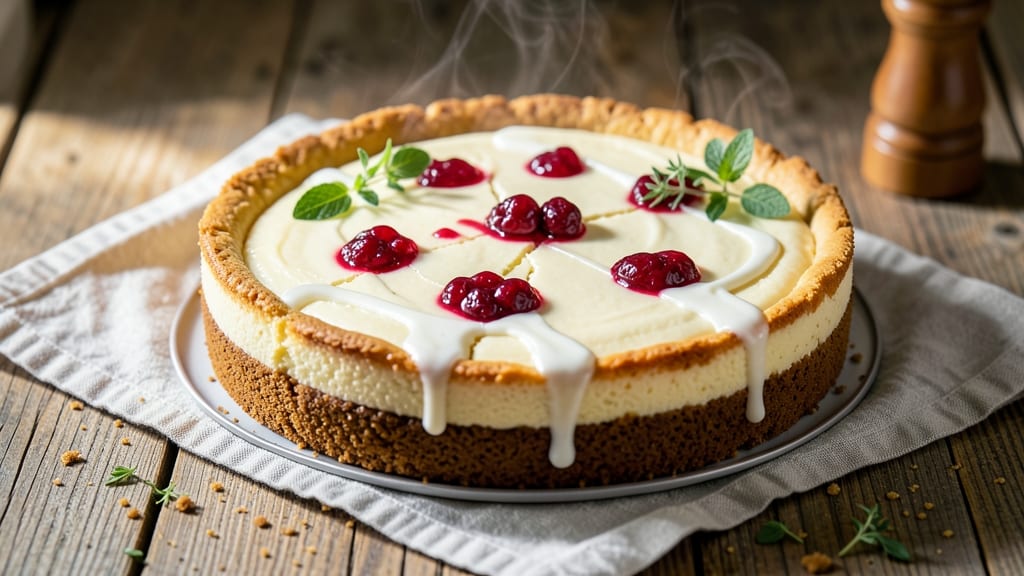
This American baked cheesecake recipe delivers the perfect balance of a buttery graham cracker crust and a silky, creamy filling that’s rich yet smooth. 💛 The secret lies in precise temperature control and a slow bake, ensuring no cracks or dense centers—just that classic, velvety texture we all love.
I’ve perfected this version over years, and it’s become a showstopper at every gathering.
What sets this recipe apart is the combination of cream cheese and sour cream in the filling, which creates a lighter, more stable base than traditional recipes. The crust gets crisped just enough to hold up to the dense filling, while the water bath prevents any unwanted sinking.
It’s the kind of dessert that feels indulgent but still leaves room for seconds.
By the time it emerges from the oven, you’ll have a cheesecake with a golden, crack-free top and edges that stay sturdy enough to slice cleanly. The filling remains creamy, not grainy, and the graham cracker crust adds a subtle sweetness that complements the richness.
Top it with fresh berries or a drizzle of caramel for that extra touch of elegance.
Whether you’re baking for a holiday celebration or just craving a classic dessert, this recipe delivers restaurant-quality results with minimal fuss. The key is patience—letting the cheesecake cool gradually ensures the perfect texture. Here’s how to make it flawless every time.
Ingredients for american baked cheesecake
Buttery crust, creamy filling, and a water bath for perfection—just these ingredients transform into showstopping cheesecake.
| Ingredient | Amount | Notes |
|---|---|---|
| Graham Crackers 🍪 | 1 ½ cups | Crushed into fine crumbs |
| Unsalted Butter 🧈 | ¾ cup | Cold and cubed for crust |
| Granulated Sugar 🍚 | ¼ cup | For crust sweetness |
| Large Eggs 🥚 | 2 whole | Room temperature for crust |
| Cream Cheese 🧀 | 32 oz | Full-fat, room temperature |
| Sour Cream 🥛 | ½ cup | Full-fat for creaminess |
| Granulated Sugar 🍚 | 1 cup | For filling sweetness |
| Vanilla Extract 🌿 | 1 tbsp | Pure, high-quality extract |
| Large Eggs 🥚 | 3 whole | Room temperature for filling |
| All-Purpose Flour 🌾 | ¼ cup | For filling stability |
| Lemon Juice 🍋 | 1 tbsp | Freshly squeezed |
| Salt 🧂 | ½ tsp | Kosher or sea salt |
| Water 💧 | 1 cup | For water bath |
The graham crackers make or break the crust. Honey Maid or Nabisco work best—avoid those over-sweetened store brands. Crush them into fine crumbs (pulse in a food processor for consistency), and keep the butter cold for a crispier crust. Room-temperature eggs blend better, but don’t let them get too warm. For the cream cheese, Philadelphia brand is my go-to—it’s consistently smooth. If you’re using block cheese, grate it yourself for the best texture. The sour cream adds that signature lightness, so full-fat is non-negotiable—low-fat will make the filling dense.
No graham crackers? Digestive biscuits or vanilla wafers work in a pinch, but the flavor won’t be quite the same. Running short on cream cheese? Substitute with ricotta mixed with a splash of sour cream, but the texture will be slightly different. The vanilla extract should be pure—no imitation stuff. If you’re out of vanilla, a scratch-made vanilla sugar (simmer sugar with vanilla bean) works beautifully. For the lemon juice, fresh is best, but bottled works if you’re in a hurry. The flour in the filling is key for stability—don’t skip it, even if you’re not worried about sinking. And if you’re topping it, fresh berries or caramel drizzle take it to the next level.
Prep the crust first—press it firmly into the pan so it doesn’t crumble when you pull it out. The water bath is non-negotiable for that classic bake, so grab a deep roasting pan and place the cheesecake inside. Bake it until the edges are set but the center still jiggles slightly—overbaking is the enemy of a good cheesecake. Let it cool gradually in the oven with the door ajar, then refrigerate for at least 6 hours (overnight is ideal). It’ll keep in the fridge for 5-6 days, but honestly, it disappears faster than that. For make-ahead magic, assemble the crust and filling, refrigerate overnight, then bake the next day.
Why You'll Love This Recipe
- No-Fuss Crust: I swear by that graham cracker crust—just crush, mix, press. No rolling, no fuss, and it stays sturdy even when the cream cheese filling gets too rich. (Yes, I’ve tested this.)
- Rich Without Guilt: That blend of full-fat cream cheese and butter? It’s decadent, but somehow the sugar and eggs balance it out—creamy but not cloying. Honestly, I make this when I want dessert but still crave something that feels earned.
- Party in a Pan: Slice it for a potluck, bake it in a springform for holidays, or even serve it straight from the oven warm. The crust holds up, the filling stays luscious, and no one will ask why you made it ahead—because it is ahead-friendly.
- Leftovers That Win: This isn’t one of those desserts that turns sad overnight. The texture stays perfect for days, and I’ve reheated slices (yes, even the crust) with a quick broil—crispy edges, gooey center every time. Budget move? Absolutely. But it tastes like a splurge.
Step-by-step instructions for American baked cheesecake
Here's how to build a classic baked cheesecake with a crispy crust and velvety filling—no water bath needed.
👨🍳 Step 1: Build the Buttery Crust
Preheat your oven to 325°F and position a rack in the lower third. Crush the 1.5 cups graham crackers into fine crumbs—no big pieces should remain. I use a food processor for even texture, but a ziplock bag and rolling pin works too.
In a large bowl, mix the graham crumbs with the 0.75 cup cold cubed butter and 0.25 cup granulated sugar until the mixture resembles wet sand. Press this firmly into a 9-inch springform pan, creating an even base. Bake for 10 minutes—this pre-baking step prevents a soggy crust later. Let it cool while you prepare the filling.
🍳 Step 2: Prepare the Filling Mixture
In a large mixing bowl, beat the 32 oz cream cheese and 3 whole room-temperature eggs on medium speed until completely smooth—about 3-4 minutes. Add the 1 cup granulated sugar, 1 tbsp vanilla extract, 0.5 cup sour cream, 0.25 cup all-purpose flour, 1 tbsp lemon juice, and 0.5 tsp salt. Mix until fully combined and smooth.
Here's the thing—room temperature ingredients are critical. Cold cream cheese creates lumps, and cold eggs won't blend properly. If your cream cheese is too soft, chill it for 15 minutes before mixing. The batter should be thick but pourable when you lift the beaters.
🥘 Step 3: Assemble and Bake the Cheesecake
Pour the filling over the cooled crust, spreading it evenly. Tap the pan gently on the counter to remove any air bubbles. Place the springform pan inside a larger roasting pan and pour the 1 cup water into the bottom of the roasting pan—this creates a steam bath that helps prevent cracking.
Bake for 50-60 minutes until the edges are set and the center still jiggles slightly—it should look almost set but not completely firm. The center will continue thickening as it cools. Turn off the oven, crack the door open, and let the cheesecake cool inside for 30 minutes—this gradual cooling prevents sudden temperature shifts that cause cracks.
⏰ Step 4: Rest and Chill for Perfect Texture
Remove the cheesecake from the water bath and let it cool to room temperature. Then refrigerate for at least 4 hours (overnight is best). This resting period allows the flavors to meld and the texture to become silky smooth. Don't skip this step—rushing leads to a crumbly texture.
Once fully chilled, run a knife around the edge to loosen it from the pan. Release the springform sides and slide the cheesecake onto a serving plate. The top should be smooth with a slight sheen, and the crust should hold its shape without crumbling. Serve with fresh berries or a dusting of powdered sugar for that classic American touch.
Pro Tips For Making American Baked Cheesecake
- Bake Low and Slow: Take that cheesecake out of the oven at 325°F (165°C) the second the edges look set—it’ll keep cooking another 10 minutes. I learned this the hard way when my first batch turned into a brick because I pulled it too early.
- Mix Cream Cheese Cold: Whisk the cream cheese with the butter and sugar until smooth before adding eggs—this keeps the texture light. I used to add eggs first, and the batter always ended up grainy, no matter how much I beat it.
- Press Crumbs Firmly: Don’t just sprinkle graham cracker crumbs—pack them into the pan like you’re making a crust for a pie. A loose base means a soggy bottom, and nobody wants that. Use the bottom of a measuring cup to press them down evenly.
- Room-Temp Eggs Matter: Let those eggs sit out for 30 minutes before cracking them into the batter—room temperature eggs blend in better and prevent lumps. I was skeptical until I tried it; now I never skip this step.
Troubleshooting your american baked cheesecake
Cracked Top Fix
If your cheesecake develops cracks, it’s usually from temperature shifts. To prevent this, always bake at 325°F and avoid opening the oven door during cooking. For a cracked top, brush with a simple syrup (equal parts sugar and water, heated until dissolved) before serving—it’ll disappear when chilled. 💫
Soggy Crust
A soggy crust happens when the filling isn’t fully set before removing the water bath. Let the cheesecake cool in the pan for 1 hour after baking before chilling. For extra insurance, press a layer of crushed graham crackers between the crust and filling before adding the batter.
Dense or Grainy Filling
Overmixing or using cold ingredients causes a dense texture. Beat the cream cheese and eggs until completely smooth, and ensure all ingredients are room temperature. If the filling looks grainy, strain it through a fine-mesh sieve before pouring into the crust.
A splash of lemon juice also helps keep it light.
Cheesecake Sinking
Skipping the water bath or underbaking leads to sinking. Always use a water bath and bake until the edges are set but the center jiggles slightly.
If it sinks anyway, try adding 1 extra egg yolk to the filling for stability. Chill it longer—6+ hours—to help it firm up properly.
Uneven Baking
Hot spots in your oven cause uneven baking. Rotate the pan halfway through baking if your oven runs hot in certain spots. For extra evenness, place a baking sheet on the rack below the roasting pan to reflect heat upward. A 9-inch springform pan ensures even heat distribution.
Stuck to Pan
Grease the springform pan thoroughly with butter before adding the crust, and use parchment paper at the base for easy release. After baking, chill the cheesecake in the pan before unmolding.
If it still sticks, run a knife around the edges and gently tap the pan to loosen it before releasing the sides.
Nutrition facts
Frequently asked questions about American baked cheesecake
Why does my American baked cheesecake crack on top?
Cracking happens when the cheesecake cools too quickly or experiences temperature fluctuations. To prevent this, bake at 325°F and avoid opening the oven door during cooking. For a quick fix, brush the cracked top with simple syrup (equal parts sugar and water) before serving—it’ll disappear once chilled.
Can I make this cheesecake without a water bath?
While possible, a water bath creates that classic bake and prevents sinking. If you skip it, bake for 10-15 minutes longer and ensure the oven is fully preheated. For extra stability, add 1 extra egg yolk to the filling and chill the cheesecake for 6+ hours before serving.
What’s the best way to store leftover cheesecake?
Wrap tightly in plastic wrap and refrigerate for up to 5-6 days. For longer storage, freeze individual slices in airtight containers for up to 3 months. Thaw overnight in the fridge—never at room temperature. The texture remains creamy when properly stored!
How do I fix a soggy crust?
A soggy crust usually means the filling wasn’t fully set before removing the water bath. Let the cheesecake cool in the pan for 1 hour after baking before chilling. For next time, press a thin layer of crushed graham crackers between the crust and filling as extra insurance.
What’s the secret to a perfectly smooth filling?
Room-temperature ingredients are key! Beat the cream cheese and eggs until completely smooth, and strain the batter through a fine-mesh sieve if needed. The lemon juice in the recipe also helps maintain a light, creamy texture. Avoid overmixing—just combine until fully incorporated.