
Desserts
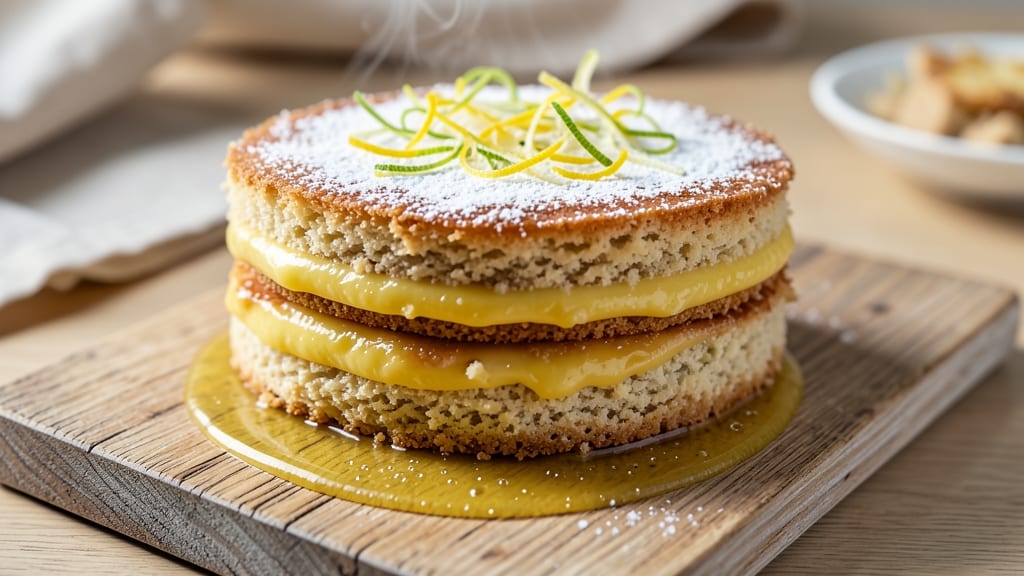
This Amalfi lemon cake recipe brings the sun-drenched shores of Italy to your kitchen with its bright citrus layers and delicate almond essence. The secret lies in the limoncello-infused syrup that keeps the sponge moist while delivering that signature zesty punch. I've perfected this version over years of baking, balancing tender crumb with just the right crunch from toasted almonds.
The cake features three layers of light, fluffy sponge cake separated by that signature limoncello syrup, creating a moist texture that stays fresh for days. Almond flour adds subtle nutty depth while keeping the cake gluten-free friendly.
The assembly process is where the magic happens—each layer gets soaked just enough to maintain structure while absorbing all that lemony goodness.
What you'll end up with is a showstopper dessert that looks as elegant as it tastes—golden layers with a whisper of almond flecks throughout. The limoncello syrup not only adds moisture but carries that authentic Italian flavor profile that makes this cake unforgettable.
It's the kind of dessert that disappears quickly at gatherings but leaves everyone asking for seconds.
Perfect for celebrations, holiday gatherings, or when you want to impress with a restaurant-quality dessert. The recipe scales beautifully, and leftovers keep well for up to 5 days. Let's create this Italian classic together!
Ingredients for amalfi cake
Sunshine in a box—these ingredients bring Amalfi's zing to your kitchen with bright lemon and nutty almond layers.
| Ingredient | Amount | Notes |
|---|---|---|
| All-Purpose Flour 🌾 | 2 ½ cups | Sifted for light texture |
| Almond Flour 🥜 | 1 cup | Finely ground for smooth batter |
| Granulated Sugar 🍚 | 2 cups | Superfine preferred for tenderness |
| Unsalted Butter 🧈 | 1 ½ cups | Room temperature, cubed |
| Large Eggs 🥚 | 6 whole | Room temperature for even mixing |
| Fresh Lemon Zest 🍋 | ½ cup | From 4-5 organic lemons |
| Fresh Lemon Juice 🍋 | ¾ cup | From 4-5 organic lemons |
| Limoncello 🍹 | 1 cup | High-quality, 30% alcohol |
| Vanilla Extract 🌿 | 2 tsp | Pure Madagascar preferred |
| Baking Powder 🧂 | 2 tsp | Aluminum-free for best results |
| Salt 🧂 | ½ tsp | Fine sea salt preferred |
| Toasted Sliced Almonds 🥜 | 1 cup | For garnish and texture |
| Powdered Sugar 🍚 | 1 cup | For dusting layers |
The lemons make or break this cake. Organic lemons from Whole Foods or your local farmers market have the most vibrant zest—look for lemons that smell intensely citrusy. If you can't find organic, conventional works fine, but scrub the skins well. The almond flour? Bob's Red Mill brand is my go-to—it's finely ground and consistent. For the limoncello, Gioia del Capitano is the gold standard, but any quality limoncello with 30% alcohol content will work. The butter needs to be room temperature—cold butter creates lumps that won't mix properly, and over-softened butter can make the cake dense. If your kitchen isn't warm enough, let the butter sit in a bowl of warm water for 10 minutes.
No limoncello? Substitute with equal parts lemon juice and vodka—it won't be authentic, but it'll still taste amazing. Fresh lemon zest is non-negotiable here—dried zest lacks the bright flavor. If you can't find superfine sugar, pulse regular granulated sugar in a food processor for 30 seconds. For the almond flour, almond meal works in a pinch, but it won't be as finely textured. The toasted almonds? Toast them yourself in a dry pan over medium heat for 3-4 minutes—they should be golden and fragrant. Pre-toasted almonds from the store lack that fresh-from-the-pan aroma. And if you're gluten-free, this recipe is already safe—just make sure your almond flour is certified gluten-free.
This cake keeps beautifully for up to 5 days at room temperature, wrapped tightly in plastic wrap. For longer storage, freeze the fully assembled cake (without powdered sugar) for up to 3 months. To serve, let it come to room temperature first—cold cake can be dense. The powdered sugar should be added just before serving to keep it from settling. I always make a double batch because it disappears fast—leftovers are even better the next day as the flavors meld. Store the extra layers separately in an airtight container, and reassemble with fresh powdered sugar when ready to serve.
Why You'll Love This Recipe
- Same recipe, two vibes: slice it warm for a lazy dinner with coffee, or bake it ahead and frost it for a birthday. The layers hold up beautifully, so it’s my go-to for when I need something impressive without the fuss.
- No Mixer Needed: I swear by this—just fold the almond flour and butter until it’s crumbly, then gently fold in the eggs. No standing over a mixer, no overmixed cake. The texture comes out tender but sturdy, like a hug from a dessert.
- Buttery-Almond Magic: That combo of almond flour and butter? It’s like a grown-up cookie cake. The almond flour adds a nutty richness, while the butter keeps it moist—no dry crumbs here. Honestly, the first bite makes me forget I’m not in Amalfi.
- Weeknight or Showstopper: Same recipe, two vibes: slice it warm for a lazy dinner with coffee, or bake it ahead and frost it for a birthday. The layers hold up beautifully, so it’s my go-to for when I need something impressive without the fuss.
Step-by-step instructions for Amalfi lemon cake
Layer by layer, we'll build this bright, citrusy masterpiece with tender crumb and almond-kissed magic.
Prepare the Lemon Curd Filling
In a medium saucepan, combine 0.5 cup fresh lemon zest, 0.75 cup fresh lemon juice, 1 cup limoncello, and 2 cups granulated sugar. Bring to a gentle boil over medium-high heat, stirring until the sugar fully dissolves. Reduce heat to medium-low and simmer for 5 minutes until slightly thickened.
Meanwhile, whisk together 6 whole large eggs and 2 tsp vanilla extract in a bowl. Slowly pour the hot lemon mixture into the eggs while whisking constantly to temper them. Return the mixture to the saucepan and cook over low heat, stirring continuously with a wooden spoon, until it thickens enough to coat the back of the spoon—about 8-10 minutes. The curd should be glossy and smooth, with a temperature of 160°F when checked with a thermometer. Immediately transfer to a bowl, press plastic wrap directly onto the surface to prevent a skin from forming, and let cool completely at room temperature.
Make the Almond-Flecked Cake Layers
Preheat your oven to 350°F and grease three 9-inch round cake pans with nonstick spray, then line the bottoms with parchment paper. In a stand mixer fitted with the paddle attachment, cream together 1.5 cups unsalted butter and 1 cup granulated sugar on medium speed until light and fluffy—about 3-4 minutes. Add 6 whole large eggs, one at a time, mixing well after each addition.
In a separate bowl, sift together 2.5 cups all-purpose flour, 1 cup almond flour, 2 tsp baking powder, and 0.5 tsp salt. With the mixer on low speed, gradually add the dry ingredients to the butter mixture, alternating with 1 cup limoncello (reserve 2 tbsp for later), beginning and ending with the flour. Mix just until combined—do not overmix. Fold in 0.5 cup fresh lemon zest and 1 cup toasted sliced almonds by hand using a spatula.
Bake the Layers to Perfect Tenderness
Divide the batter evenly among the prepared cake pans. Bake for 25-30 minutes, or until a toothpick inserted into the center comes out clean and the tops spring back when gently touched. Rotate the pans halfway through baking for even browning. Let the cakes cool in their pans for 10 minutes, then transfer to a wire rack to cool completely.
Once cooled, level the tops if necessary with a serrated knife. Place the first layer on a serving plate and spread a generous layer of the cooled lemon curd filling over the top. Dust with ¼ cup powdered sugar to create a barrier. Repeat with the remaining layers, spreading curd and dusting with powdered sugar between each. The final top layer should have curd spread evenly but not completely covered.
Assemble and Dust with Elegance
Use a long serrated knife to trim any uneven edges from the cake layers. For a polished finish, dust the top and sides of the cake with the remaining ¾ cup powdered sugar using a fine-mesh sieve, tapping gently to create an even, snowy coating. Chill the cake in the refrigerator for at least 2 hours before serving to allow the flavors to meld and the layers to set.
Slice with a hot knife (dip the knife in hot water and wipe dry between cuts) for clean, perfect portions. Serve each slice with a dollop of whipped cream or a sprinkle of toasted almonds for added texture. The contrast of the tender cake, tangy lemon curd, and nutty almonds creates a symphony of flavors that's pure Amalfi-inspired bliss.
Pro Tips For Making Amalfi Cake
- Whisk Butter Slowly: The Amalfi cake’s signature texture comes from properly emulsifying the butter and sugar—don’t just dump and mix. Beat them together on medium-high for 3–4 minutes until the mixture is pale, fluffy, and just starting to thicken. I used to rush this, and the cake turned dense. Trust me, the extra minute pays off.
- Sift Almond Flour Twice: Almond flour is sneaky—it clumps like a grumpy cat if you don’t handle it right. Sift it before measuring and again after mixing with the dry ingredients. This keeps the crumb light and prevents those annoying dense pockets. (Yes, even if the bag says “blended fine.”)
- Don’t Overmix the Batter: Once you fold in the dry ingredients, stop mixing the second everything’s just combined. Overmixing develops gluten, and your cake will turn tough instead of tender. Use a spatula to gently fold—think “marble swirls,” not “pancake batter.” I learned this after a cake that tasted more like bread.
- Bake at 325°F, Not Hotter: The Amalfi cake’s magic happens at a steady 325°F. Any hotter, and the almond flour burns before the center sets. Check for doneness at 30–35 minutes with a toothpick—it should come out with moist crumbs, not wet batter. (If it’s sticky, bake 5 more minutes.) Patience here = no sad, gummy middle.
Troubleshooting this recipe
Dense Cake Layers
If your cake layers turn out dense instead of light and airy, the issue is usually overmixing the batter or using cold ingredients. I always make sure my eggs and butter are at room temperature—cold butter creates lumps that won't dissolve properly.
Also, mix the dry ingredients and wet ingredients separately until just combined, then fold gently. Overmixing develops gluten, which makes the cake tough. If you've already baked it, try brushing the layers with 2 tbsp limoncello before assembling—this adds moisture and lightens the texture. 💫
Curd Too Thin
A runny lemon curd usually means it wasn't cooked long enough or the heat wasn't low enough. The curd should coat the back of a spoon and reach 160°F on an instant-read thermometer.
If yours is too thin, return it to low heat and stir constantly for another 3-5 minutes. For next time, use a candy thermometer to monitor temperature precisely.
If you're in a hurry, you can thicken it by mixing 1 tsp cornstarch with 1 tbsp cold water, then stirring it into the curd off the heat.
Limoncello Flavor Weak
If your cake lacks that signature limoncello kick, it might be because the alcohol evaporated too quickly during baking. To preserve the flavor, add the remaining 2 tbsp limoncello you reserved earlier to the cooled curd before assembling the cake.
For extra zing, brush each layer with 1 tsp limoncello after placing it on the plate. If you're using a substitute (like vodka and lemon juice), increase the amount by 20% to compensate for the lower alcohol content.
Cake Sticking to Pans
This happens when the pans aren't properly greased or the batter isn't fully mixed. I swear by using both nonstick spray and a thin layer of butter rubbed into the pans before adding parchment paper. Also, make sure your batter is smooth—any dry spots can cause sticking.
If your cake does stick, run a thin knife around the edges while still warm, then invert the cake onto a wire rack to cool. For next time, chill the pans in the freezer for 10 minutes before greasing to create an extra barrier.
Dry Top Layers
Dry tops often occur when the oven runs hot or the cake is overbaked. Always check for doneness with a toothpick—it should come out clean but with a few moist crumbs.
If your tops are dry, try brushing them with 1 tbsp limoncello mixed with 1 tbsp lemon juice** while still warm. For future bakes, tent the pans with foil if the tops are browning too quickly.
The key is to pull the cake out just as the toothpick test passes—it'll continue cooking slightly as it cools.
Uneven Layers After Assembly
If your cake layers collapse or shift during assembly, it's usually because the layers weren't level or the powdered sugar barrier wasn't thick enough. Use a serrated knife to trim any uneven edges from the cooled layers. For the powdered sugar barrier,
Nutrition facts
Frequently asked questions about Amalfi lemon cake
Can I make this cake without limoncello?
Yes! For a similar flavor, substitute with 1 cup lemon juice plus 2 tablespoons vodka (or brandy). The alcohol helps preserve moisture, but you'll lose that authentic Amalfi touch. For a non-alcoholic version, use 1 cup lemon juice plus 2 tablespoons extra lemon zest—just be aware the texture may be slightly drier.
How do I store leftovers to keep them fresh?
Wrap the cake tightly in plastic wrap and store at room temperature for up to 3 days. For longer storage, freeze the fully assembled cake (without powdered sugar) for up to 3 months. To serve, let it thaw in the fridge overnight, then dust with fresh powdered sugar. The flavors actually improve after 24 hours as the limoncello infuses deeper!
Why does the recipe call for both almond flour and sliced almonds?
The almond flour gives the cake its signature nutty depth and tender crumb, while the toasted sliced almonds add texture and visual appeal. You can substitute 1.5 cups regular flour if needed, but the almond flour keeps this cake naturally gluten-free and adds that authentic Amalfi flavor. For extra crunch, sprinkle additional toasted almonds between layers during assembly.
Can I make this cake in a different shape?
While the traditional Amalfi cake is round, you can adapt this recipe for square pans, bundt pans, or even individual 6-inch layers. For best results, reduce baking time by 5-10 minutes for smaller pans. The key is maintaining the same layer thickness (1-inch) for proper moisture distribution. A loaf pan version makes great individual servings!
What's the best way to serve this cake?
Serve at room temperature with a dollop of lightly sweetened whipped cream or a scoop of vanilla bean ice cream. For an authentic touch, garnish with fresh berries or candied lemon peel. The cake pairs beautifully with espresso or a glass of sparkling wine. For a festive presentation, dust with extra powdered sugar and toasted almonds right before serving.