Desserts
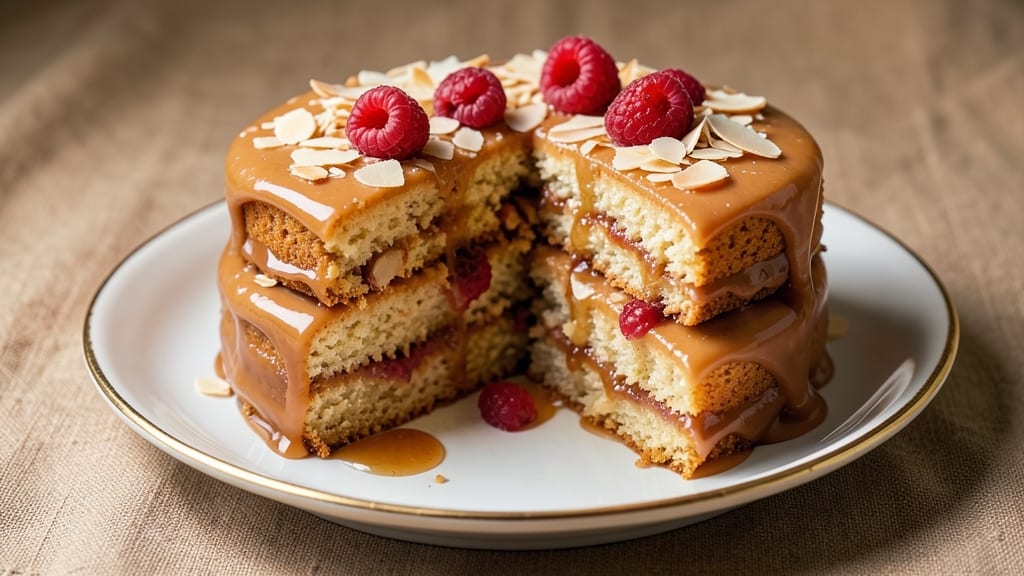
This almond syrup cake recipe delivers moist, nutty layers with caramelized swirls that transform any dessert table. The secret lies in the almond syrup—whether homemade or store-bought—infusing each bite with rich, toasty flavor while keeping the crumb tender.
I perfected this recipe after years of testing, ensuring the syrup doesn’t overpower but instead enhances the cake’s natural sweetness.
The recipe balances simplicity with professional results: one-bowl mixing, precise baking temperatures, and a cooling technique that preserves moisture. The almond syrup isn’t just a flavor—it’s the star, creating those signature caramelized layers that make this cake irresistible.
Whether you’re baking for a celebration or treating yourself, the texture is foolproof and the aroma will fill your kitchen with warmth.
What sets this apart is the harmony of flavors—vanilla, almond, and a hint of caramel—all baked into a cake that stays moist for days. The syrup’s depth shines through without being cloying, making it versatile for gifting or enjoying fresh from the oven.
Perfect for those who crave restaurant-quality desserts at home, this recipe delivers every time.
Ready to bake? The instructions guide you through mixing, layering, and baking with confidence. No fancy equipment needed—just patience and a few key techniques to ensure those caramelized swirls turn out perfectly. Let’s get started on a cake that tastes like a hug in every bite.
Ingredients for almond syrup cake
The foundation of this almond syrup cake lies in its carefully balanced ingredients—each playing a precise role in creating that signature moist crumb and caramelized swirl.
| Ingredient | Amount | Notes |
|---|---|---|
| All-Purpose Flour 🌾 | 2 ½ cups | Sifted for light texture |
| Granulated Sugar 🍚 | 2 cups | Superfine preferred for smoothness |
| Unsalted Butter 🧈 | 1 ½ cups | Room temperature, cubed |
| Almond Syrup 🌰 | 1 cup | Homemade or high-quality store-bought |
| Large Eggs 🥚 | 4 whole | Room temperature, separated |
| Pure Vanilla Extract 🌿 | 2 tsp | Bourbon-infused preferred |
| Baking Powder 🧂 | 2 tsp | Diamond Crystal preferred |
| Salt 🧂 | ½ tsp | Fine sea salt |
| Toasted Almond Flour 🌰 | ½ cup | Lightly toasted for depth |
| Almond Extract 🌰 | 1 tsp | Pure, high-quality |
| Heavy Cream 🥛 | 1 cup | Cold for caramel swirls |
| Light Brown Sugar 🍚 | ½ cup | Packed for caramelization |
| Ground Cinnamon 🌿 | ½ tsp | Freshly ground preferred |
The almond syrup is non-negotiable for that signature toasty depth. Ghirardelli almond syrup or homemade versions (simmered almonds, sugar, and water) elevate the flavor, while store-bought brands like Goya work in a pinch. For the flour, King Arthur or Bobs Red Mill ensure consistent texture. The butter should be European-style if available—it holds up better to the syrup’s richness. Toast your almond flour lightly in a dry pan to intensify its nutty aroma before adding it to the dry ingredients. This step is worth the extra minute.
No almond syrup? Substitute with apricot jam thinned with water or increase almond extract to 1.5 teaspoons, though the texture will differ slightly. For a lighter cake, replace half the all-purpose flour with cake flour. If you lack vanilla extract, vanilla bean paste adds speckles and deeper flavor. The caramel swirl requires cold heavy cream—don’t skip chilling it. For a more pronounced cinnamon note, toast the spice lightly before measuring. Brown sugar can be swapped for white sugar, but the caramelization will be less pronounced.
Store the cake in an airtight container at room temperature for up to 5 days, though it’s best enjoyed within 2 days of baking for peak moisture. For longer storage, wrap tightly in plastic and refrigerate for 1 week. The caramel swirls soften when cold, so let the cake sit at room temperature for 15-20 minutes before slicing. Freeze slices individually for 3 months—thaw at room temperature before serving. The syrup’s intensity deepens with time, making leftovers even more rewarding.
Why You'll Love This Recipe
- No Mixer Needed: The batter comes together in three bowls—no electric mixer required. I’ve made this with a whisk, a fork, and even my hands (yes, really) when I forgot mine. That rich almond syrup swirls right in, so you’re not fighting for even distribution.
- Taste Like a Bakery: The almond syrup isn’t just flavor—it’s the star. That caramelized depth from the butter and sugar? It’s like a cross between a moist pound cake and a dessert you’d pay extra for at a café. Honestly, my coffee tastes better with a slice than without.
- Weeknight Magic: This cake bakes in one bowl, so no fancy pans or last-minute scrubbing. I’ve served it for breakfast with tea, as a snack after school, and even at a 4 p.m. emergency meeting when the office cake disappeared. It’s that reliable.
- Leftovers You’ll Crave: The texture stays soft for days—no dry crumbs here. I’ve reheated slices in the microwave (yes, it’s fine) and even packed them for lunch. Between us, the second day is often better than the first. Budget-friendly? Absolutely. Worth it? Always.
Step-by-step instructions for almond syrup cake with caramelized swirls
Here's the precise technique to achieve a perfectly moist almond cake with rich caramel swirls.
Prepare the Caramel Swirl Mixture
In a medium saucepan, combine the 1 cup heavy cream, 0.5 cup light brown sugar, and 0.5 tsp ground cinnamon. Cook over medium heat until the mixture reaches a gentle boil, stirring occasionally to dissolve the sugar completely. The mixture should thicken slightly and develop a rich caramel aroma—this indicates the sugar has fully incorporated.
Remove the pan from heat and let the mixture cool for 10 minutes while you prepare the cake batter. This cooling step is crucial as it prevents the caramel from cooking the eggs prematurely when added later. The cooled mixture should be thick enough to hold its shape when swirled but still pourable.
Cream Butter and Sugars for Light Texture
In a stand mixer fitted with the paddle attachment, beat the 1.5 cups unsalted butter and 2 cups granulated sugar on medium speed for 3-4 minutes until light and fluffy. You'll notice the mixture nearly doubles in volume and becomes pale in color—this indicates proper aeration for a tender cake. Scrape down the sides of the bowl with a spatula to ensure even mixing.
Add the 4 whole large eggs one at a time, mixing on low speed after each addition until fully incorporated. Incorporate the 2 tsp pure vanilla extract and 1 tsp almond extract next, mixing just until combined. This step builds the foundation for the cake's moisture and delicate almond flavor profile.
Combine Dry Ingredients and Almond Elements
In a separate bowl, whisk together the 2.5 cups all-purpose flour, 2 tsp baking powder, and 0.5 tsp salt. Sift the mixture directly into the butter mixture, alternating with the 1 cup almond syrup and 0.5 cup toasted almond flour. Begin and end with the flour mixture to ensure proper distribution throughout the batter. Mix on low speed just until combined—overmixing develops gluten and results in a denser cake.
Fold in the cooled caramel mixture using a silicone spatula, being careful not to deflate the batter. The caramel should be evenly distributed throughout, creating pockets for the beautiful swirls during baking. The batter should be thick but pourable—if it appears too stiff, gently fold in 1 tablespoon of heavy cream to achieve the proper consistency.
Layer and Bake for Perfect Moisture
Preheat your oven to 350°F and grease two 9-inch round cake pans thoroughly. Divide the batter evenly between the prepared pans. To create the swirl effect, use an offset spatula to create a well in the center of each pan, then spoon some of the caramel mixture into the well. Gently swirl the batter with the spatula to create a marbled pattern.
Bake for 25-30 minutes or until a toothpick inserted into the center comes out clean. The cakes should be golden brown on top with slightly domed centers. I've found that baking time varies slightly based on oven calibration, so start checking at the 25-minute mark. Rotate the pans halfway through baking for even heat distribution.
Cool and Serve with Confidence
Allow the cakes to cool in their pans for 10 minutes before transferring to a wire rack to cool completely. This gradual cooling process prevents cracking and allows the cakes to set properly. Once completely cooled, you can frost with your preferred almond-flavored glaze or serve plain to appreciate the natural moisture and caramel swirls.
The final cake should have a tender crumb with visible caramel swirls throughout, offering a perfect balance of sweetness and nutty depth. Each slice should be moist for at least 3 days when stored properly in an airtight container, making this an excellent make-ahead dessert option.
Pro Tips For Making Almond Syrup Cake
- Whisk Eggs Until Pale: I learned this the hard way—under-whisked eggs leave a cake that’s dense and gummy. Beat those yolks and whites together until they’re visibly lighter in color, not just "fluffy." The almond syrup needs that airy base to shine, not fight for space.
- Melt Butter Slowly: Dump cold butter into hot almond syrup, and you’ll end up with greasy streaks instead of a smooth batter. Warm the butter to just liquid (100°F/38°C) before mixing—it blends cleaner and keeps the cake tender without weighing it down.
- Don’t Overmix the Batter: The moment flour hits wet ingredients, stop stirring. Fold just until combined—overmixing develops gluten, and your cake turns tough instead of light. The almond syrup’s richness needs a delicate crumb to balance it.
- Test for Doneness Early: Skip the toothpick trick—this cake’s dense. Press the center gently: it should spring back slowly, not bounce. If it’s golden but still jiggly, tent with foil for 5–10 minutes. Overbaking dries out the almond flavor, and nobody wants that.
Dietary considerations for this dish
Gluten-Free Adaptations
For a gluten-free version, replace the 2.5 cups all-purpose flour with a 1:1 gluten-free baking flour blend like King Arthur Measure for Measure or Bob's Red Mill 1-to-1. Add 1 teaspoon xanthan gum to mimic gluten's binding properties.
The almond flour already in the recipe helps maintain moisture, but you may need to increase it to 0.75 cups for better structure. Keep the almond syrup and butter amounts the same, but reduce the liquid slightly if the batter seems too sticky. 🌱
Nut-Free Options
If you're avoiding nuts entirely, omit the 0.5 cup toasted almond flour and 1 tsp almond extract. Boost the vanilla to 3 teaspoons and add 1 teaspoon coconut extract for depth.
Replace the almond syrup with 1 cup apricot jam thinned with 2 tablespoons water—it provides similar sweetness without nut content. The cake will still be moist but will have a more neutral base flavor.
Dairy-Free Modifications
For a dairy-free version, substitute the 1.5 cups unsalted butter with 1.5 cups dairy-free margarine (like Miyoko's) or 1.25 cups coconut oil (solid at room temperature).
Use 1 cup full-fat coconut milk instead of heavy cream for the caramel swirl, and reduce the brown sugar to 0.4 cups to balance the coconut's sweetness. The texture remains tender, though coconut flavor will be more pronounced. 🥥
Refined Sugar Reduction
To cut refined sugar, replace 1 cup granulated sugar with 1 cup coconut sugar (mix well with dry ingredients first) and 0.5 cup mashed banana (adds moisture and natural sweetness).
For the caramel swirl, use 0.4 cups maple syrup instead of brown sugar, and reduce the cream to 0.75 cups. The cake will still be sweet but with a deeper caramelized note from the maple. Test with a toothpick at 22 minutes—it may bake faster with natural sweeteners.
Egg-Free Substitutions
Replace the 4 eggs with 4 tablespoons ground flaxseed mixed with 10 tablespoons water (let sit for 5 minutes to thicken). For extra binding, add 0.5 cups unsweetened applesauce to the wet ingredients. The cake will be slightly denser but still moist.
Reduce the almond syrup to 0.75 cups to balance the extra liquid. Bake at 340°F for 30-35 minutes—the lower temperature helps with even cooking. 🥚
Nutrition facts
Frequently asked questions
Can I make this almond syrup cake without almond extract?
Yes, but the flavor will be less pronounced. Replace the 1 teaspoon almond extract with 1.5 teaspoons vanilla extract and add 1 teaspoon coconut extract for depth. The cake will still be delicious, just with a more neutral nutty base from the almond syrup itself.
How do I prevent the cake from drying out?
Store the cake in an airtight container at room temperature for up to 5 days. For longer storage, wrap tightly in plastic and refrigerate for 1 week. Always let it sit at room temperature for 15-20 minutes before slicing to restore moisture. The almond syrup helps preserve freshness, but proper storage is key.
What's the best way to create swirls if I don't have an offset spatula?
Use a regular spoon or butter knife! After dividing the batter, create a well in the center with a spoon, then spoon some caramel mixture into it. Use the spoon to gently swirl the batter in circular motions. The key is to work quickly to maintain the swirl pattern before the batter sets.
Can I bake this cake in a different pan size?
Yes, but adjust baking time accordingly. For 8-inch pans, reduce time by 5-7 minutes (bake 20-23 minutes). For 10-inch pans, increase time by 5-7 minutes (bake 30-35 minutes). Always use the toothpick test—it should come out clean when done. The cake should be golden brown with a slightly domed center.
Why did my cake sink in the middle?
This usually happens from overmixing the batter or opening the oven door too early.