
Desserts
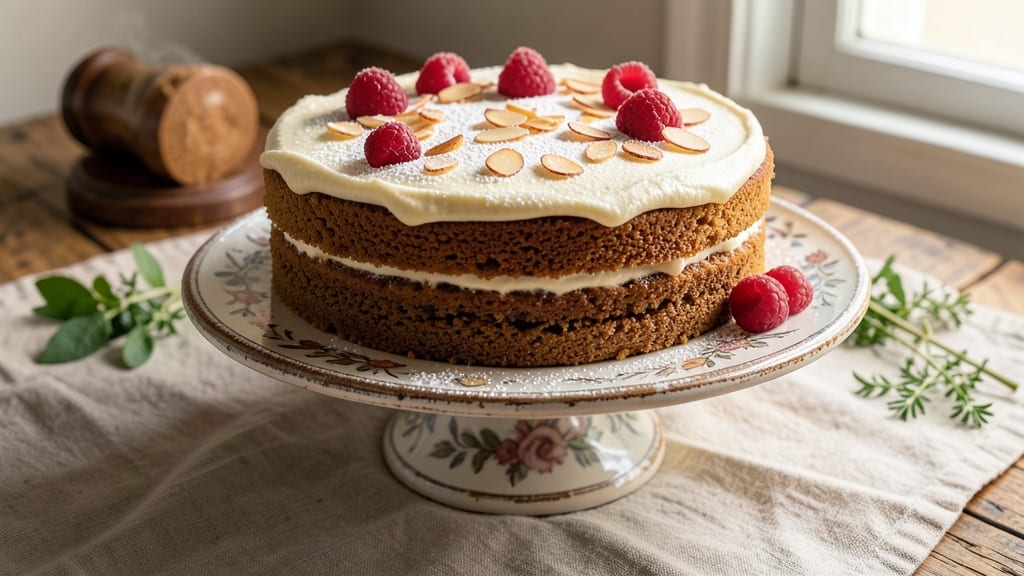
This almond flour tea cake delivers the perfect balance of nutty richness and delicate sweetness, with a moist crumb that stays tender for days. 💛 The secret lies in the almond flour base—naturally moist and lightly sweetened—paired with just enough sugar to enhance its buttery aroma without overpowering the natural almond flavor.
Unlike dense flour cakes, this version stays light and airy, making it ideal for afternoon tea or a simple dessert.
The recipe relies on a straightforward method that yields consistent results: combining almond flour with eggs, sugar, and a touch of vanilla for depth. A simple baking technique ensures the cake rises evenly, creating a tender yet sturdy texture that holds up to slicing.
The nutty aroma fills the kitchen as it bakes, promising a dessert that’s both elegant and comforting.
What makes this tea cake truly special is its versatility—it works equally well as a standalone dessert or paired with fresh berries and whipped cream. The almond flour base ensures a naturally gluten-free option, while the addition of eggs provides structure without heaviness.
For those avoiding dairy, a simple substitution keeps the recipe just as moist and delicious.
Perfect for special occasions or a quiet afternoon treat, this cake proves that almond flour can be just as satisfying as traditional flour-based desserts. The result is a lightly sweetened, nutty masterpiece that’s simple to prepare yet impresses every time. Let’s get baking!
Ingredients for almond flour tea cake
Eight simple ingredients transform into a moist, nutty tea cake that stays tender for days.
| Ingredient | Amount | Notes |
|---|---|---|
| Almond Flour 🌰 | 2 ½ cups | Finely ground, unsweetened preferred |
| Large Eggs 🥚 | 4 whole | Room temperature for even mixing |
| Granulated Sugar 🍚 | ¾ cup | Light brown sugar for deeper flavor |
| Unsalted Butter 🧈 | ½ cup | Softened, not melted |
| Pure Vanilla Extract 🌿 | 1 tbsp | High-quality, no alcohol needed |
| Baking Powder 🧂 | 1 tsp | Aluminum-free for best results |
| Salt 🧂 | ¼ tsp | Fine sea salt preferred |
| Unsweetened Almond Milk 🥛 | ½ cup | For extra moisture and nutty depth |
| All-Purpose Flour 🌾 | ¼ cup | For structure, optional for gluten-free |
| Powdered Sugar 🍚 | ½ cup | For dusting, optional garnish |
The almond flour is the star—Bob's Red Mill or Anthony's Goods are my go-tos, but any finely ground, unsweetened version works. The texture difference is night and day if you use pre-sweetened. For the eggs, room temperature is key—they mix more smoothly and create a lighter crumb. If you're avoiding dairy entirely, the almond milk adds just the right moisture without altering the flavor. The vanilla extract should be pure, not imitation—the difference is noticeable in every bite.
No almond milk? Coconut milk or oat milk work just as well, though the flavor will shift slightly. Short on almond flour? Substitute half with oat flour for a slightly heartier texture. The butter can be swapped for vegan butter or coconut oil, but keep it softened to avoid dense crumbs. For a touch of extra sweetness, increase the sugar by 1 tbsp, but trust the recipe—it's perfectly balanced as written. The powdered sugar is optional but adds a lovely finish if you're serving it immediately.
This cake keeps beautifully—3 days at room temperature wrapped in parchment, or 1 week in an airtight container in the fridge. For longer storage, freeze slices wrapped individually for up to 3 months. The almond flour base means it reheats well—just 10 seconds in the microwave to restore that warm, buttery aroma. Slice it thin for elegant tea sandwiches or serve thick for a hearty dessert.
Why You'll Love This Recipe
- No Mixing Madness: I swear by this recipe because it’s one bowl—just fold the wet ingredients into the dry. No overmixing, no lumps, no stress. The almond flour handles everything like a dream, and the buttercream swirl? That’s just folding in a little softened butter at the end. Honestly, my lazy Sundays thank me every time.
- Vanilla Butter Bliss: That first bite? Rich, buttery, and just sweet enough to make you pause. The vanilla extract isn’t subtle—it’s the star, deep and warm, while the almond flour adds this subtle nutty depth. I’ll be real: it’s the kind of cake that makes me forget about store-bought boxes forever. (Yes, even on a Tuesday night.)
- Crowd-Pleaser Flex: This cake is my go-to for brunch, book clubs, or when my mom-in-law drops by unannounced. It’s light enough for morning but sturdy enough to slice neatly for a dozen. Pro tip: dust with powdered sugar, and suddenly it’s fancy—no one needs to know it took me 15 minutes to make.
- Leftovers? More Like Leftovers Saved: A whole cake lasts my family three days—no sad crumbs in the bottom of the pan. The texture holds up beautifully, and if anyone complains, I just point to the extra cupcakes I froze for "emergencies." (Budget win: almond flour is pricey, but this recipe uses just enough to stretch it for multiple treats.)
Step-by-step instructions for almond flour tea cake
Here's how to create a tender, nutty cake with perfect moisture every time.
👨🍳 Step 1: Prep Ingredients for Optimal Texture
Begin by ensuring all ingredients are ready for even mixing. Take the 4 whole Large Eggs out of the refrigerator and let them sit at room temperature for 15-20 minutes—this prevents cold spots that can cause uneven baking. While they warm, measure out the 2.5 cups Almond Flour and sift it lightly through a fine-mesh sieve to remove any lumps. This step is crucial for a light, airy crumb.
In a small bowl, whisk together the 0.75 cup Granulated Sugar with the 1 tbsp Pure Vanilla Extract until fully combined. I like to use a fork for this—it's quick and ensures the vanilla is evenly distributed. Set this mixture aside. Meanwhile, soften the 0.5 cup Unsalted Butter by leaving it at room temperature for 30-45 minutes until it's pliable but not melted. You'll know it's ready when it leaves a slight indentation when pressed with your finger.
🍳 Step 2: Cream Butter and Sugar for Lightness
In a stand mixer fitted with the paddle attachment, beat the softened 0.5 cup Unsalted Butter on medium speed for 2-3 minutes until smooth and pale. This step incorporates air into the butter, which creates a lighter texture in the finished cake. Gradually add the 0.75 cup Granulated Sugar while continuing to mix on medium speed for another 3-4 minutes until the mixture is thick, fluffy, and light in color.
Here's the thing—don't rush this step. You're looking for a mixture that nearly doubles in volume and leaves clean streaks on the sides of the bowl when the paddle is lifted. If the mixture feels too warm after mixing, chill it in the refrigerator for 10 minutes to prevent overmixing later. This ensures the eggs incorporate smoothly without breaking.
🥘 Step 3: Combine Wet Ingredients Gently
Add the 4 whole Large Eggs, one at a time, mixing on low speed after each addition until fully incorporated. Scrape down the sides of the bowl as needed to ensure everything combines evenly. Next, mix in the 0.5 cup Unsweetened Almond Milk and the sugar-vanilla mixture from Step 1. The batter should be smooth but slightly thick—like a loose pudding.
In a separate bowl, whisk together the 2.5 cups Almond Flour, 0.25 cup All-Purpose Flour, 1 tsp Baking Powder, and 0.25 tsp Salt. Sift the dry ingredients directly into the wet mixture, then gently fold together using a silicone spatula. Avoid overmixing—just combine until no dry spots remain. The batter should be thick but pourable. If it's too stiff, add 1-2 tablespoons of Unsweetened Almond Milk until it reaches a smooth consistency.
🔥 Step 4: Bake Until Golden and Springy
Preheat your oven to 350°F and grease an 8-inch round cake pan or line it with parchment paper. Pour the batter into the prepared pan and smooth the top with a spatula. Bake for 30-35 minutes, or until a toothpick inserted into the center comes out clean and the top is golden brown. The cake should also spring back slightly when gently pressed in the center.
I know it seems like a long time, but patience is key here. The almond flour can make cakes dry out quickly if overbaked, so start checking at the 25-minute mark. If the edges brown too quickly, tent the cake with foil to prevent over-browning while the center finishes baking. The goal is a tender, moist crumb—not a dry or cakey texture.
⏰ Step 5: Cool and Dust for Perfect Presentation
Remove the cake from the oven and let it cool in the pan for 10 minutes. Then transfer it to a wire rack to cool completely. While it cools, dust the top with 0.5 cup Powdered Sugar using a fine-mesh sieve for an elegant finish. This step is optional but adds a professional touch and balances the nutty flavor with a touch of sweetness.
For the best texture, serve the cake at room temperature. The almond flour base stays moist for 2-3 days when stored in an airtight container, making it perfect for tea time or dessert. Slice it thinly to enjoy each bite of tender, lightly sweetened goodness.
Pro Tips For Making Almond Flour Tea Cake
- Mix Eggs Cold: I learned this the hard way—whipping eggs straight from the fridge (yes, even if they’re room temp) gives you lighter, fluffier batter. The cold yolks emulsify better with the butter, and the whites hold their volume longer. Just let them sit out for 10 minutes first, then crack them over ice water to chill while you prep.
- Weigh Butter Precisely: Unsalted butter’s density tricks you—eyeballing it leads to dry cakes. Use a kitchen scale for the exact ½ cup (113g) called for, and soften it by slicing into ½-inch cubes, then letting them sit at room temp for 20 minutes. No spreadable butter here—this recipe demands firm, creamy lumps.
- Don’t Overmix the Batter: Almond flour’s dense and thirsty—overmixing turns your cake into a brick. Fold in the dry ingredients just until combined (about 10 strokes), then stop. The moment the batter looks uniform is the moment to pour. I used to think more mixing = better texture, but this cake thrives on gentle handling.
- Bake in Two Stages: Preheat the oven to 350°F (175°C), then bake for 20 minutes—this builds structure. Drop the temp to 325°F (163°C) for the final 15–20 minutes. The lower heat ensures even baking without burning the top while the center sets. Sounds fussy, but it’s the thing that matters most for that tender crumb.
Perfect pairings for this dish
Tea Pairings
This nutty, lightly sweetened cake pairs beautifully with classic Earl Grey tea—the bergamot notes complement the almond flavor while the tannins cut through the richness. I reach for Darjeeling in spring for its floral brightness, which balances the cake's buttery depth.
For a bolder match, Assam black tea with its malty profile stands up to the cake's nutty intensity. 🍵
Creamy Accompaniments
Whipped mascarpone cream sweetened with a touch of honey creates the perfect contrast to the cake's texture. For a lighter option, coconut whipped cream enhances the nutty flavors without overpowering.
I also love serving slices with a dollop of vanilla bean ice cream, especially during warmer months when the cake stays cool. 🥥
Fruit Enhancements
Fresh raspberries or blackberries add a tart contrast that brightens each bite. I arrange them in a circular pattern on top of the cake for an elegant presentation.
For a tropical twist, mango slices with a drizzle of lime zest elevate the dessert to restaurant-quality. The acidity from the fruit balances the cake's sweetness beautifully. 🍓
Warm Beverage Pairings
A steaming cup of chai latte with cinnamon and cardamom enhances the cake's warm spices. For coffee lovers, a light roast pour-over with vanilla syrup complements the almond flavor without competing. I also enjoy a spiced apple cider in fall, which adds seasonal warmth to the pairing. ☕
Dessert Wine Pairings
A glass of Moscato d'Asti with its light effervescence and honeyed notes creates a perfect match for this delicate cake. For a bolder option, Riesling with its citrus and floral undertones balances the nutty richness. I avoid heavy red wines—they can overpower the cake's delicate texture. 🍷
Seasonal Variations
In summer, I serve the cake chilled with a scoop of lemon sorbet to refresh the palate. During holidays, a sprinkle of toasted coconut flakes adds festive texture. For a winter twist, a dusting of cinnamon and a side of spiced pear compote brings cozy warmth to each bite.
The cake's versatility makes it perfect year-round. ❄️
Nutrition facts
Frequently asked questions
Why does my almond flour cake turn out dense instead of light?
Overmixing the batter or using cold eggs are the most common culprits. Always mix just until combined—almond flour lacks gluten, so overworking it creates a tough texture. Also, ensure your eggs are room temperature and your butter is softened but not melted. If the batter seems too thick, add 1-2 tablespoons of almond milk until it's pourable.
Can I make this recipe without eggs for a vegan version?
Yes! Replace the 4 eggs with ½ cup unsweetened applesauce + 1 tbsp ground flaxseed mixed with 3 tbsp water (let sit for 5 minutes to thicken). For extra moisture, add 2 tbsp extra almond milk to the batter. The texture will be slightly denser but still delicious.
How do I store leftovers to keep them moist?
Wrap cooled slices in plastic wrap or store in an airtight container with a slice of bread to absorb excess moisture. Refrigerate for up to 5 days or freeze for 3 months. To revive, warm for 10-15 seconds in the microwave—this restores the buttery aroma without drying it out.
What's the best way to serve this cake for tea time?
Slice thinly and dust with powdered sugar for an elegant touch. Pair with Earl Grey tea or a spiced chai latte. For extra flair, add a dollop of whipped cream or fresh berries. The cake's delicate crumb holds up beautifully when served at room temperature.
Can I substitute almond flour with another nut flour?
While almond flour gives the best texture, you can try cashew flour (1:1 ratio) for a slightly sweeter flavor. Hazelnut flour works too, but the cake may turn denser. Avoid coconut flour—it absorbs too much liquid and requires extra moisture adjustments. Always sift nut flours to prevent graininess.