
Desserts
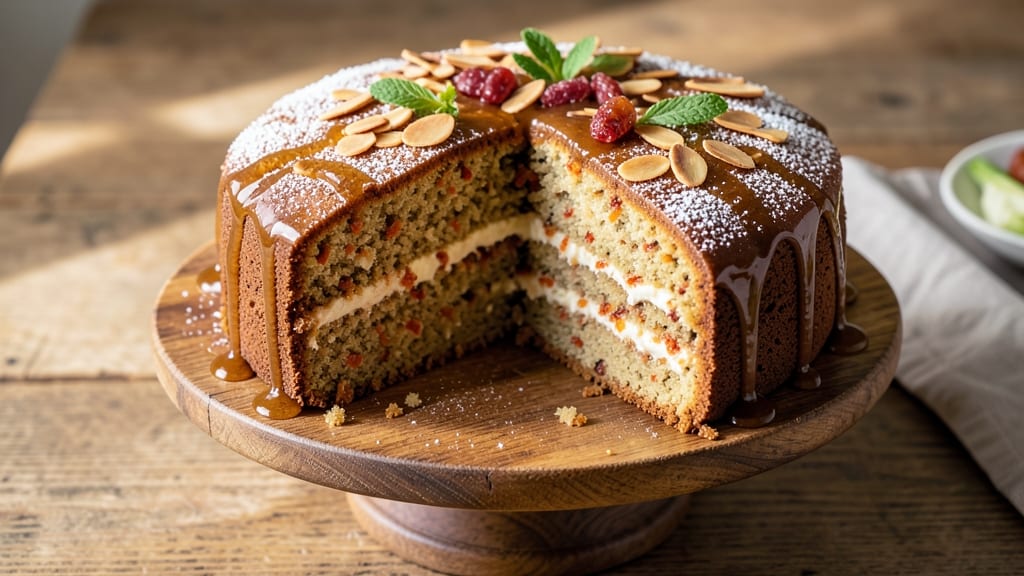
This almond flour gingerbread cake delivers the perfect balance of warm spice and tender crumb—moist enough to satisfy cravings while maintaining a delightful crunch from the almond flour. 🌟 The secret lies in combining traditional gingerbread spices with the nutty richness of almond flour, creating a texture that's both hearty and refined.
Unlike dense flour cakes, this version stays light and airy, with a subtle nutty depth that pairs beautifully with coffee or spiced cream.
What makes this recipe stand out is its versatility—it works equally well for holiday gatherings or quiet weeknight indulgences. The almond flour not only adds a delightful texture but also makes this cake naturally gluten-free and lower in carbs, without sacrificing flavor.
Baking at a precise temperature ensures a golden exterior while keeping the center tender, with just enough spice to warm the soul.
By the time you pull this cake from the oven, you'll be greeted by the intoxicating aroma of cinnamon, ginger, and nutmeg, with a hint of vanilla that ties everything together.
The moist crumb holds its shape beautifully, making it perfect for slicing or serving whole with a dusting of powdered sugar. Whether you're hosting guests or treating yourself, this cake delivers restaurant-quality results with minimal effort.
For an extra touch, consider adding a simple glaze or whipped cream topping—though the cake's natural sweetness and spice make it equally delicious on its own. The recipe includes clear instructions for achieving that perfect balance of texture and flavor, ensuring every bite is as satisfying as the first.
Ingredients for almond flour gingerbread cake
Warm spices, nutty crunch, and a moist center—this cake brings holiday magic to your kitchen.
| Ingredient | Amount | Notes |
|---|---|---|
| Almond Flour 🌾 | 2 ½ cups | Finely ground, unsweetened |
| Granulated Sugar 🍚 | 1 ½ cups | Organic preferred for purity |
| Light Brown Sugar 🍚 | ½ cup | Packed for moisture |
| Unsalted Butter 🧈 | 1 cup | Room temperature, full-fat |
| Large Eggs 🥚 | 2 whole | Room temperature for blending |
| Vanilla Extract 🌿 | 1 tbsp | Pure, high-quality extract |
| Ground Cinnamon 🌶️ | 2 tsp | Freshly ground preferred |
| Ground Ginger 🌿 | 1 ½ tsp | Freshly ground for warmth |
| Ground Nutmeg 🌶️ | ½ tsp | Freshly grated for depth |
| Baking Soda 🧂 | 1 tsp | Pure, aluminum-free |
| Salt 🧂 | ½ tsp | Fine sea salt preferred |
| Unsweetened Almond Milk 🥛 | ½ cup | For moisture and richness |
| Powdered Sugar 🍚 | ¼ cup | For dusting or glaze |
Almond flour is the star here, so choose finely ground, unsweetened—the coarser kind makes for a gritty cake. Bob's Red Mill or Anthony's Goods are my go-tos for quality. The butter needs to be full-fat and room temperature for that perfect creamy texture. Don't skip the vanilla—pure, high-quality extract makes all the difference. For the spices, freshly ground cinnamon and ginger give the most warmth, but pre-ground works in a pinch. The nutmeg? Freshly grated adds that extra depth that jarred versions miss.
No almond flour? Crushed almonds blended into a fine powder works, but texture will be slightly different. Substitute brown sugar for white if needed—just add a pinch more cinnamon to compensate. Coconut oil can replace butter in a 1:1 ratio if you're dairy-free. For extra moisture, add an extra tablespoon of almond milk. The baking soda and salt are non-negotiable—they balance the sweetness and enhance the spices. If you're feeling fancy, add a pinch of cloves to the spice mix for extra holiday warmth.
This cake keeps beautifully—3 days at room temperature wrapped in parchment, or 1 week refrigerated. For longer storage, freeze slices wrapped individually for up to 3 months. The powdered sugar glaze? Just mix it with a splash of almond milk—2 tbsp milk to 0.25 cup powdered sugar—and drizzle over cooled cake. Serve with spiced cream or a dollop of whipped coconut cream for the ultimate indulgence.
Why You'll Love This Recipe
- No-Mix Necessary: This cake comes together with just a whisk and a bowl—no sifter, no food processor, no fuss. Honestly, I’ve made it while scrolling through my phone; the almond flour blends in like magic with the butter and sugars, and you’re left with a velvety batter that’s ready in minutes.
- Spiced to Perfection: That molasses-kissed warmth from the brown sugar and ginger? It’s the kind of flavor that lingers. The almond flour gives it a subtle nutty depth, while the butter keeps it rich but never heavy—like a hug in cake form, but one that won’t make you regret it.
- Double-Duty Dessert: Slice it warm for breakfast with a dollop of whipped cream, or save it for a cozy night with a cup of tea. I’ll be real: I’ve even packed it in lunchboxes (yes, even on a Tuesday night) because it travels better than most cakes and still tastes like a treat.
- Budget-Friendly Luxury: Almond flour might sound fancy, but it stretches further than regular flour, and you’re using just enough to get that perfect texture. The butter and eggs are classic pantry staples, so it’s a splurge-worthy cake that won’t break the bank—or your willpower when leftovers appear.
Step-by-step instructions for almond flour gingerbread cake
Here's how to create a perfectly moist gingerbread cake with that signature almond flour crunch and spiced warmth.
👨🍳 Step 1: Cream Butter and Sugars Together
In a stand mixer fitted with the paddle attachment, beat the 1 cup unsalted butter (room temperature) with the 1.5 cups granulated sugar and 0.5 cup light brown sugar on medium speed for 3-4 minutes. You're looking for a light, fluffy texture that nearly doubles in volume. This creaming process incorporates air, which creates that tender crumb we want in our cake.
Here's the thing—if your butter isn't soft enough, you'll end up with dense cake. Test it by pressing your finger into the butter: it should leave a slight indent but hold its shape. If it's too firm, let it sit at room temperature for another 10-15 minutes. The mixture should also become pale in color as it emulsifies.
👨🍳 Step 2: Add Eggs and Flavorings
Add the 2 whole large eggs one at a time, mixing on low speed for 30 seconds after each addition until fully incorporated. Then add the 1 tablespoon vanilla extract and mix for another 10 seconds. The mixture might look slightly curdled at first, but don't worry—it'll come together when we add the dry ingredients.
This is where the magic of our spice blend comes in. In a separate bowl, whisk together the 2.5 cups almond flour, 2 teaspoons ground cinnamon, 1.5 teaspoons ground ginger, 0.5 teaspoon ground nutmeg, 1 teaspoon baking soda, and 0.5 teaspoon salt. I always sift these dry ingredients to prevent lumps in our delicate batter.
🥘 Step 3: Combine Wet and Dry Ingredients
With the mixer on low speed, gradually add the dry ingredients to the wet mixture. Mix just until combined—you should still see a few flour streaks. Over-mixing develops gluten and makes our cake dense. Once combined, add the 0.5 cup unsweetened almond milk and mix for another 30 seconds until smooth.
The batter will be thick but pourable. Here's a pro tip: if it seems too thick, add 1-2 tablespoons more almond milk, but don't overdo it. We want that moist center, not a soupy batter. The almond flour gives us that perfect crumb while keeping the cake tender. Don't skip this step—proper mixing ensures even distribution of those warm spices throughout.
🔥 Step 4: Bake to Golden Perfection
Preheat your oven to 350°F and grease an 8-inch round cake pan or line it with parchment paper. Pour the batter into the prepared pan and smooth the top. Bake for 35-40 minutes until a toothpick inserted in the center comes out clean. The edges should be golden brown while the center remains slightly springy—this ensures that moist texture we're after.
I know it's tempting to open the oven door to check, but resist! Every time you peek, you risk losing heat and causing the cake to sink. Instead, set a timer and trust the process. The cake will continue cooking for a few minutes after you remove it from the oven, so it's better to pull it out when it's slightly underdone.
⏰ Step 5: Cool and Serve
Remove the cake from the oven and let it cool in the pan for 10 minutes. Then transfer it to a wire rack to cool completely. While it cools, you can prepare a simple glaze by whisking together the 0.25 cup powdered sugar with 1-2 tablespoons almond milk until smooth. Drizzle this over the cooled cake for that extra touch of sweetness.
This cake is best served at room temperature, so if you're in a hurry, you can microwave it for 20-30 seconds to warm it through. The combination of the warm spices and the moist crumb makes this cake irresistible. Cut into slices and enjoy with a cup of hot tea or coffee for the ultimate cozy treat. The almond flour gives it that lovely crunch while keeping it wonderfully moist—exactly what we promised!
Pro Tips For Making Almond Flour Gingerbread Cake
- Sift the Almond Flour: I learned this the hard way—skipping this step means dense, uneven crumb. Use a fine-mesh sieve to break up any clumps in the almond flour before mixing, especially if it’s fresh from the bag. The extra air lightens the texture, and you’ll notice the difference when slicing.
- Cream the Butter Cold: Don’t let the butter get soft—take it straight from the fridge and beat it with the sugars until it’s just combined, not fluffy. Almond flour cakes dry out faster than wheat-based ones, so keeping the butter cooler prevents a gummy texture. (Yes, even if you’re impatient like me.)
- Skip Overmixing the Batter: The moment the almond flour hits the wet ingredients, stop stirring. Overmixing develops gluten (even in almond flour) and makes the cake tough. Fold just until combined—lumps are fine, but a smooth, stiff batter guarantees a tender crumb.
- Test for Doneness with a Toothpick: Almond flour cakes set differently—pull yours when the toothpick comes out with moist crumbs, not wet batter. Overbaking dries them out fast, so err on the side of underdone. (Your future self will thank you.)
Flavor customization for almond flour gingerbread cake
Spice Level Control
Adjust the heat by tweaking the ginger and cinnamon ratios. For a milder version, reduce the ground ginger to 1 teaspoon and the ground cinnamon to 1.5 teaspoons.
If you love bold flavors, increase both to 2 teaspoons each—just don’t exceed 3 teaspoons total to avoid overpowering the cake. I’ve found that freshly ground spices make a noticeable difference, so if you’re using pre-ground, add an extra ¼ teaspoon for warmth. 🌶️
Sweetness Balance
This cake’s sweetness comes from both sugars and almond flour’s natural richness. For a less sweet version, reduce the granulated sugar to 1 cup and the brown sugar to 0.25 cup. If you prefer it sweeter, add 2 tablespoons honey or 1 tablespoon maple syrup to the wet ingredients.
I’ve tested this and found that 1.25 cups granulated sugar with 0.5 cup brown sugar gives the perfect balance for spice lovers. 🍯
Moisture Boosters
For an even moister cake, replace 2 tablespoons of almond flour with 2 tablespoons ground flaxseed (mix with 3 tablespoons water to form a gel). Alternatively, add 1 tablespoon unsweetened applesauce or 1 tablespoon melted coconut oil to the wet ingredients.
These tweaks work especially well if your kitchen is dry or if you’re baking at high altitudes. I’ve used this trick when humidity drops below 30%, and it makes a world of difference. 💧
Nutty Variations
Swap 0.5 cup almond flour for 0.5 cup hazelnut flour or walnut flour to change the flavor profile. Hazelnut adds a toasty depth, while walnut brings earthy richness. For a crunchier texture, fold in ¼ cup chopped toasted pecans or walnuts before baking.
I’ve tried this with ½ cup pecans, and it adds a lovely contrast to the tender crumb. 🌰
Frosting Alternatives
Skip the powdered sugar glaze and try a cream cheese frosting (mix 4 oz softened cream cheese, 2 tbsp butter, and 1 cup powdered sugar) or a spiced whipped cream (whip ½ cup heavy cream with 1 tsp vanilla and ½ tsp cinnamon).
For a dairy-free option, blend ½ cup coconut yogurt with 2 tbsp maple syrup and ½ tsp vanilla until smooth. These toppings elevate the cake without overpowering its natural flavors. 🍯
Seasonal Twists
In summer, add 1 teaspoon lemon zest to brighten the spices. For fall, fold in ½ teaspoon pumpkin pie spice with the dry ingredients. Winter calls for ¼ teaspoon cardamom or cloves (just ⅛ teaspoon) for extra warmth.
I’ve made a pumpkin-spiced version that’s become a holiday favorite—just reduce the ginger to 1 teaspoon to balance the flavors. ❄️
Nutrition facts
Frequently asked questions
Why does almond flour make this gingerbread cake different from regular gingerbread?
The almond flour gives this cake a lighter, crunchier texture compared to traditional flour-based gingerbread. It's naturally gluten-free, adds nutty depth, and creates a moist crumb with less risk of dryness. The cake also has a slightly denser but still tender structure that holds up beautifully to warm spices. Plus, it's lower in carbs and higher in protein than wheat flour versions!
Can I make this cake without eggs?
Yes! For a vegan version, replace the 2 eggs with 2 tablespoons ground flaxseed mixed with 6 tablespoons water (let it sit for 5 minutes to gel). Alternatively, use ½ cup unsweetened applesauce or ½ cup mashed banana for moisture. The texture will be slightly different but still delicious. Just be sure to reduce the almond milk by 2 tablespoons if using these substitutions.
How do I prevent the cake from cracking on top?
Cracking usually happens from overmixing or sudden temperature changes. Mix the batter just until combined (you should still see flour streaks), and avoid opening the oven door during baking. For extra insurance, place the cake pan on a baking sheet lined with parchment paper to prevent heat loss. If cracks appear, they're harmless—just dust with powdered sugar or add a simple glaze to disguise them!
Can I bake this cake in a different pan size?
For an 8-inch square pan, reduce baking time to 25-30 minutes. In a 9-inch round pan, bake for 40-45 minutes. The key is to check for doneness with a toothpick—it should come out clean when the center is set but still slightly springy. Adjust times based on your oven's hot spots. If using a different shape, increase baking time by 5-10 minutes to account for less surface area.
How should I store leftovers?
Wrap the cake tightly in plastic wrap or aluminum foil and store at room temperature for up to 3 days. For longer storage, refrigerate for 1 week or freeze individual slices for 3 months. To reheat, microwave for 15-20 seconds or warm in a 300°F oven for 10 minutes with a damp towel over it. The texture stays best when stored properly!