
Desserts
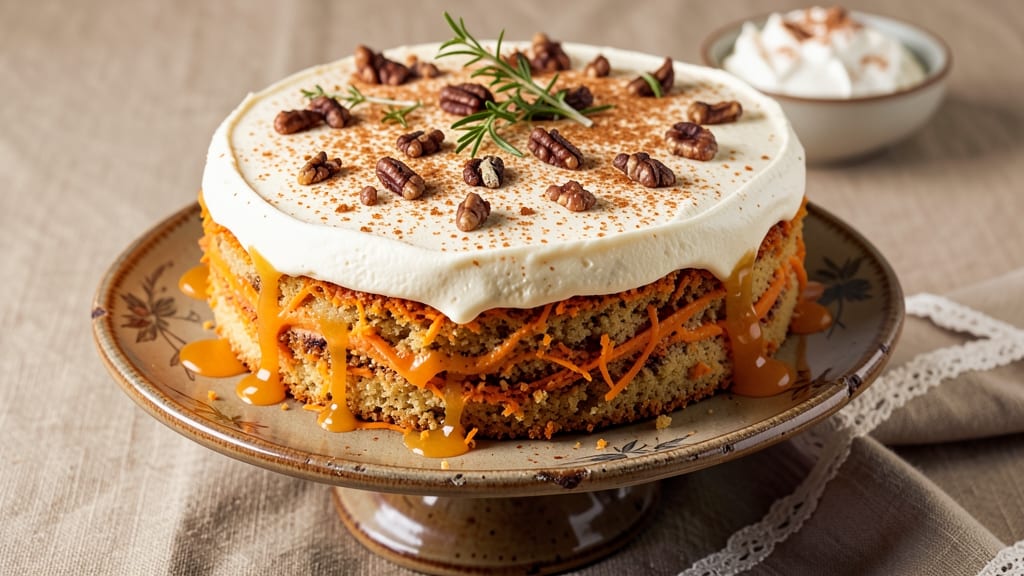
This American carrot cake recipe delivers the perfect balance of moist spiced layers and velvety cream cheese frosting—every bite is pure comfort. 💛 The secret lies in finely grated carrots and warm cinnamon that infuse the cake with natural sweetness, while a tangy cream cheese frosting ties it all together in classic American style.
What makes this recipe stand out is its foolproof technique: no overmixing, precise baking at 350°F, and a cooling method that ensures layers stay tender.
The cake's signature texture—moist yet sturdy—comes from a simple mix of flour, sugar, and oil, while the frosting achieves that signature tangy-sweet flavor without being overly sweet.
By the time you're done, you'll have a carrot cake with perfectly spiced layers that hold up to the creamy frosting, creating each bite's ideal contrast. The recipe also includes optional garnishes like chopped nuts or pineapple for added texture and a modern twist.
Whether you're baking for a celebration or a cozy dessert night, this recipe delivers restaurant-quality results with minimal fuss. Let's get started on creating your perfect slice!
Ingredients for american carrot cake
The perfect blend of tender spiced layers and velvety cream cheese frosting awaits—just gather these quality ingredients.
| Ingredient | Amount | Notes |
|---|---|---|
| All-Purpose Flour 🌾 | 2 ½ cups | Sifted for even texture |
| Granulated Sugar 🍚 | 2 cups | White or light brown |
| Vegetable Oil 🫒 | 1 cup | Light or canola preferred |
| Orange Juice 🍊 | 1 cup | Freshly squeezed for brightness |
| Large Eggs 🥚 | 4 whole | Room temperature for even baking |
| Unsalted Butter 🧈 | 1 cup | Melted and cooled slightly |
| Medium Carrots 🥕 | 3 cups | Finely grated (about 3 medium carrots) |
| Ground Cinnamon 🌿 | 2 tsp | Freshly ground preferred |
| Ground Ginger 🌿 | 1 tsp | Freshly ground for warmth |
| Ground Nutmeg 🌿 | ½ tsp | Freshly grated for depth |
| Baking Soda 🧂 | 1 tsp | Pure baking soda |
| Salt 🧂 | ½ tsp | Fine sea salt |
| Walnuts 🥜 | 1 cup | Chopped, optional garnish |
| Cream Cheese 🧀 | 16 oz | Room temperature, full-fat |
| Powdered Sugar 🍚 | 3 cups | Sifted for smooth frosting |
| Vanilla Extract 🌸 | 1 tbsp | Pure vanilla preferred |
| Lemon Juice 🍋 | 1 tbsp | Freshly squeezed for tang |
The carrots should be fresh, vibrant, and medium-sized—avoid any with blemishes or soft spots. Organic carrots from Trader Joe's or your local farmers' market work beautifully, but conventional store-bought will do in a pinch. Grate them finely for even distribution throughout the cake, and don't skip the orange juice—it adds natural moisture and balances the sweetness. For the spices, Penzeys or bulk bins at Whole Foods offer the freshest ground cinnamon and nutmeg, which make all the difference in that signature warm flavor. If you're using walnuts, toast them first for extra depth of flavor—just 5 minutes in a dry pan until fragrant.
No fresh orange juice? Substitute with bottled pulp-free orange juice, though it lacks the same brightness. For the frosting, if you're short on cream cheese, substitute with a mix of butter and powdered sugar**—though the tang will be less pronounced. The baking soda and salt are non-negotiable for proper rise and flavor balance, but if you're using a high-altitude recipe, consider adding an extra 1/4 tsp of baking soda. For the frosting, if you prefer a lighter texture, add an extra 1 tbsp of milk or cream to thin it out slightly. And if you're feeling adventurous, swap the walnuts for chopped pecans or pineapple tidbits for a modern twist.
Store the cake layers wrapped tightly in plastic wrap at room temperature for up to 2 days, or in the fridge for 5 days. The frosting can be made a day ahead and stored in an airtight container in the fridge—just let it soften at room temperature before spreading. For longer storage, freeze the unfrosted layers for up to 3 months. When ready to serve, bring the cake to room temperature for about 30 minutes before slicing—this ensures clean, perfect slices every time. The frosting can be piped or spread with a knife, depending on your preference for texture.
Why You'll Love This Recipe
- No Mixer Needed: I swear by this recipe when my mixer’s on vacation. The wet ingredients—oil, orange juice, and eggs—come together so smoothly with the dry flour and sugar that you barely need to stir. Just fold, pour, and bake. Honestly, it’s the kind of recipe that makes me feel like a baking pro even when I’m not.
- Taste Like Childhood: That bright, zesty kick from the orange juice? It’s the secret weapon. It cuts through the sweetness just enough to make every bite feel nostalgic—like the carrot cake your grandma made, but with a modern twist. And the crumb? So tender it practically melts in your mouth.
- Crowd-Pleaser Any Day: Between us, this cake is the go-to for birthdays, potlucks, or even a lazy Sunday. The orange juice keeps it from being too heavy, so it’s light enough for brunch but still rich enough for dessert. Plus, it’s one of those rare cakes where even the picky eaters in my family ask for seconds.
- Budget-Friendly Magic: I make this at least once a month because it’s cheap to feed a crowd—flour, sugar, and eggs are pantry staples, and the orange juice adds freshness without breaking the bank. And the best part? It keeps well for days, so I can bake one batch and enjoy it all week. No sad, dried-out cake here.
Step-by-step instructions for American carrot cake with cream cheese frosting
Mastering this classic requires precision in layering and frosting—here's how to nail it every time.
👨🍳 Step 1: Grate Carrots and Prepare Wet Ingredients
Start by grating the 3 cups medium carrots using a box grater or food processor. You'll need about 3 medium carrots total—this yields roughly 3 cups of finely grated texture. Set aside in a bowl.
In a separate large mixing bowl, combine the 1 cup vegetable oil, 1 cup orange juice, 4 whole large eggs (room temperature), 1 cup melted and slightly cooled unsalted butter, 2 cups granulated sugar, 1 tbsp vanilla extract, and 1 tbsp lemon juice. Whisk vigorously for 3-4 minutes until fully emulsified and pale in color. This step creates the cake's moist, tender crumb foundation.
👨🍳 Step 2: Combine Dry Ingredients and Fold in Carrots
In a medium bowl, sift together the 2.5 cups all-purpose flour, 2 tsp ground cinnamon, 1 tsp ground ginger, 0.5 tsp ground nutmeg, 1 tsp baking soda, and 0.5 tsp salt. This ensures even distribution of leavening agents and spices.
Gradually add the dry mixture to the wet ingredients while mixing on low speed with an electric mixer. Mix just until combined—do not overmix—then fold in the grated carrots and 1 cup chopped walnuts using a spatula. The batter should be thick but pourable. Real talk: if it looks too thick, add 1-2 tablespoons orange juice to loosen it.
🔥 Step 3: Bake the Layers to Perfect Doneness
Preheat your oven to 350°F and grease two 9-inch round cake pans with vegetable oil, then line the bottoms with parchment paper. Divide the batter evenly between the pans and smooth the tops. Bake for 25-30 minutes or until a toothpick inserted in the center comes out clean with just a few moist crumbs.
I press down gently on the cake layers during the first 10 minutes of baking—this prevents doming and ensures even cooking. Let the cakes cool in the pans for 10 minutes, then transfer to a wire rack to cool completely. Here's the thing—cooling completely prevents the frosting from melting when you assemble.
🥘 Step 4: Prepare the Cream Cheese Frosting
In a large mixing bowl, beat the 16 oz cream cheese (at room temperature) with an electric mixer on medium speed until smooth. Gradually add the 3 cups powdered sugar and mix until fully incorporated. Add the 1 tbsp vanilla extract and 1 tbsp lemon juice, then beat on high speed for 2-3 minutes until light and fluffy. This is where the magic happens—the frosting should be thick enough to hold peaks but still spreadable.
🍽️ Step 5: Assemble and Garnish the Cake
Place one cake layer on a serving plate and spread a generous layer of frosting on top. Repeat with the second layer, then frost the entire cake. For extra flair, pipe additional frosting around the edges or create a rosette pattern. Sprinkle the top with extra chopped walnuts for texture contrast.
Chill the cake in the refrigerator for at least 1 hour before serving—this allows the frosting to set properly and the flavors to meld. The final result should be moist, spiced layers with a velvety cream cheese frosting that balances sweetness and tang. Slice with a sharp knife dipped in hot water for clean cuts every time.
Pro Tips For Making American Carrot Cake
- Mix Eggs Cold: Crack those eggs straight from the fridge into your bowl—no pre-warming. Cold eggs blend better with the oil and sugar, creating a smoother batter that won’t curdle when you add the orange juice later. I learned this the hard way after a batch turned grainy mid-mix.
- Grate Carrots Fine: Skip the food processor unless you want a cake that tastes like carrot puree. Use a box grater and aim for shreds no bigger than a grain of rice—this ensures even distribution and prevents dry pockets. (Yes, it takes 10 minutes, but your cake will thank you.)
- Don’t Overmix: The moment your flour turns from speckled to uniform gray, stop stirring. Overmixing develops gluten and turns your tender cake into a dense brick. Two minutes max after adding the flour—set a timer if you’re distracted.
- Bake Until Slightly Under: Pull the cake out when the center still jiggles like Jell-O—it’ll firm up as it cools. Overbaking dries out the texture, especially with all that orange juice in the mix. A toothpick with moist crumbs (not wet batter) is your goal.
Make-ahead tips for this dish
Batter Prep Ahead
Mix the cake batter up to 24 hours ahead and store it in an airtight container in the fridge. The flavors meld beautifully overnight, and the batter thickens slightly—just whisk in 1-2 tablespoons orange juice before baking to restore proper consistency.
I always make mine the night before for that extra depth of flavor. 🌟
Bake and Freeze Layers
Bake the cake layers as directed, then cool completely before wrapping each layer individually in plastic wrap. Place them in a freezer-safe bag with parchment paper between layers to prevent sticking. They’ll keep in the freezer for up to 3 months.
Thaw overnight in the fridge before frosting—no need to bring to room temperature. This is my go-to method for holiday baking!
Frosting Prep
Make the frosting a full 2 days ahead and store it in an airtight container in the fridge. It actually improves as it sits, becoming even smoother and more flavorful.
Let it soften at room temperature for 30-45 minutes before spreading—just give it a quick beat with a mixer to fluff it up. Pro tip: Add a splash of milk if it seems too thick after chilling.
Assemble in Layers
For the cleanest assembly, frost the bottom layer the day before and place it in the fridge. Add the second layer and frost the top just before serving. This creates a stable base that won’t shift when sliced.
I like to pipe decorative swirls on the sides right before serving—it adds a restaurant-worthy touch without extra effort. ✨
Storage After Assembly
Once fully frosted, store the cake in the fridge for up to 5 days, covered with a cake dome or plastic wrap. For short-term storage (up to 2 days), keep it at room temperature in a cool, dry place.
If you’re serving it at a party, bring it out of the fridge 1 hour before serving so the frosting is perfectly set but still creamy.
Reheating Slices
If you’ve stored leftovers, warm slices in the microwave for 10-15 seconds to soften the frosting slightly. For a more even reheat, place slices on a baking sheet and warm in a 300°F oven for 5-7 minutes**.
This method keeps the cake moist without melting the frosting completely. Trust me, it makes all the difference! 💛
Nutrition facts
Frequently asked questions
Why does this recipe use orange juice instead of water?
The orange juice adds natural moisture and brightness that balances the sweetness of the carrots and sugar. It also helps create that signature tender crumb texture—water just can't match the flavor depth. Plus, it's a classic American carrot cake trick that makes all the difference!
Can I substitute oil for butter in the cake?
Yes, but with a few adjustments. Use the same amount of melted butter (1 cup) and reduce the vegetable oil to ½ cup. The butter adds richness, but oil keeps the cake extra moist. For best results, use light or canola oil—it has a neutral flavor that won't overpower the spices.
How do I prevent the cake from cracking?
Cracking usually happens from overmixing or opening the oven too soon. Mix just until combined (no more than 30 seconds after dry ingredients are added) and avoid pressing on the cake while baking. Let it cool completely in the pan for 10 minutes before transferring—this helps the layers set properly.
What's the best way to store leftovers?
Wrap individual slices tightly in plastic wrap and store in an airtight container in the fridge for up to 5 days. For longer storage, freeze unfrosted layers for 3 months. To reheat, microwave for 10-15 seconds—just enough to soften the frosting without making it runny.
Can I make this cake gluten-free?
Yes, but you'll need to substitute the all-purpose flour with a 1:1 gluten-free baking flour blend (like Bob's Red Mill). Add ½ tsp xanthan gum to help with structure. Keep all other ingredients the same, but expect a slightly denser texture. The cream cheese frosting remains unchanged—it's naturally gluten-free!