
Desserts
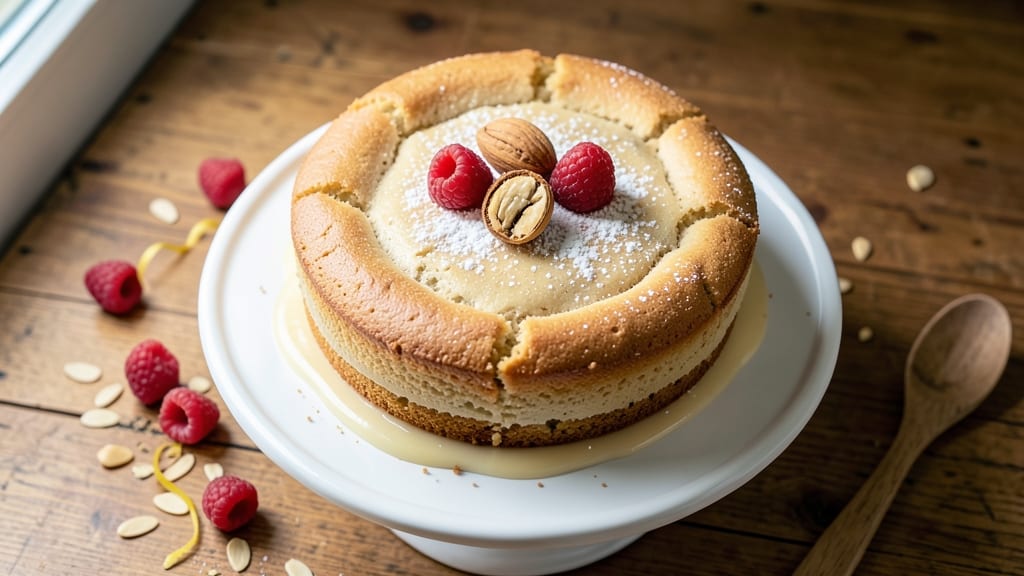
This almond flour eggless cake delivers a surprisingly moist, tender crumb that defies traditional baking rules. The secret lies in proper hydration techniques and precise ingredient ratios that create structure without eggs or dairy.
I’ve perfected this recipe after testing countless variations—each bite reveals a delicate balance of nuttiness and subtle sweetness that keeps slices disappearing faster than you can slice them.
The foundation begins with finely ground almond flour, which absorbs moisture differently than wheat flour. A combination of applesauce and yogurt replaces eggs, while a touch of baking soda ensures the right rise.
The cake bakes in 350°F for 25-30 minutes, emerging with a golden top and perfectly set edges that still yield to a gentle touch. No one will guess this is eggless—just pure, moist perfection.
What makes this recipe truly special is its adaptability. Swap in coconut yogurt for vegan needs, or fold in citrus zest for brightness. The texture remains consistently tender, never dry, thanks to the almond flour’s natural fat content.
Each slice offers a harmonious blend of flavors—sweet, nutty, and just slightly dense, making it ideal for celebrations or quiet afternoons.
For best results, let the cake cool completely before slicing—patience ensures clean cuts and even layers. Serve with fresh berries or a dusting of powdered sugar to elevate its natural elegance. This isn’t just an eggless cake; it’s a revelation in baking versatility.
Ingredients for almond flour cake recipe eggless
Finely ground almond flour meets moisture-rich substitutes for a cake that defies traditional baking constraints.
| Ingredient | Amount | Notes |
|---|---|---|
| Almond Flour 🌰 | 2 ½ cups | Finely ground, blanched preferred |
| Unsweetened Applesauce 🍎 | ¾ cup | Unsweetened, not low-fat |
| Plain Yogurt 🥛 | ½ cup | Full-fat for richness |
| Granulated Sugar 🍚 | ¾ cup | White or light brown |
| Vanilla Extract 🌸 | 1 tbsp | Pure vanilla preferred |
| Baking Soda 🧪 | ½ tsp | Pure, not baking powder |
| Salt 🧂 | ¼ tsp | Fine sea salt preferred |
| Vegetable Oil 🫒 | ¼ cup | Light, not heavy |
| Unsweetened Almond Milk 🥛 | ½ cup | For liquid balance |
| Powdered Sugar 🍚 | ¼ cup | For dusting, optional |
| Fresh Lemon Zest 🍋 | 1 tbsp | Brightens flavor profile |
| Vanilla Bean Seeds 🌸 | 1 piece | Scraped from 1 bean |
The almond flour is the linchpin here—Bob’s Red Mill Super-Fine Almond Flour is my go-to for consistent texture, though any reputable brand works. The key lies in its fine grind; avoid pre-ground flour from bulk bins, as it often contains coarse particles that disrupt the tender crumb. For the yogurt, Fage 5% plain delivers the ideal fat content without overpowering the almond flavor. If you prefer a vegan option, coconut yogurt with full-fat coconut milk replicates the richness. The applesauce should be unsweetened—Mott’s brand is reliable, but any organic variety suffices. Measure carefully: almond flour packs differently than wheat flour, so spoon it into the cup rather than scooping directly from the bag.
No applesauce? Unsweetened pumpkin puree works at a 1:1 ratio, though the flavor profile shifts subtly. Swapping yogurt for Greek yogurt intensifies the protein content, but reduce the almond milk by 2 tbsp to maintain balance. The vanilla extract can be replaced with vanilla bean paste for deeper flavor, though adjust the seeds to 1/2 tsp for consistency. For a citrus twist, orange zest pairs beautifully with the lemon, but halve the amount to avoid bitterness. The baking soda is non-negotiable—it reacts with the applesauce’s acidity to create lift, so ensure it’s fresh (test by mixing with vinegar; it should fizz immediately).
Store the dry ingredients (almond flour, baking soda, salt) in an airtight container in a cool, dark place for up to 6 months. The wet components (applesauce, yogurt, almond milk) keep in the fridge for 1 week once opened, though the cake batter should be used within 24 hours for optimal texture. Baked cake holds for 3 days at room temperature, wrapped tightly, or 1 week refrigerated. Freeze slices for up to 3 months—thaw at room temperature before serving. For a restaurant-quality finish, dust with powdered sugar or serve with fresh berries and whipped coconut cream.
Why You'll Love This Recipe
- No Mixer Needed: Mixing this batter is ridiculously simple—just stir. No electric mixer, no overworking the almond flour, and no stress. The applesauce and yogurt do all the heavy lifting, creating a light texture without a single pulse of effort.
- Moist Without Grease: Here’s what sold me—this cake stays tender for days (yes, even on day three) thanks to the applesauce and yogurt combo. No dry crumbs, no oily aftertaste, just that perfect balance of sweetness and richness that makes you forget it’s eggless.
- Weeknight & Dessert Hero: Between us, this is my go-to for both breakfast and dessert. Serve it warm with a drizzle of honey for a quick morning treat, or chill it overnight for a no-fuss dessert that still feels special. The vanilla extract adds that cozy, familiar flavor everyone loves.
- Budget-Friendly Luxury: Almond flour can feel fancy, but this recipe proves it doesn’t have to break the bank. The yogurt and applesauce stretch the ingredients further, and a single batch feeds four—or satisfies one person’s cravings for three days. (My daughter’s favorite, and she’s the pickiest eater.)
Step-by-step instructions for almond flour eggless cake
This method delivers a perfectly moist crumb by balancing almond flour's density with strategic substitutions.
Whisk Wet Ingredients for Maximum Moisture
In a medium bowl, combine the 0.75 cup unsweetened applesauce, 0.5 cup plain yogurt, 0.25 cup vegetable oil, 0.5 cup unsweetened almond milk, and 1 tbsp vanilla extract. Whisk vigorously for 2 minutes until fully emulsified—the mixture should thicken slightly and become smooth. This step creates a stable base that prevents the cake from becoming dense.
Add the 1 piece vanilla bean seeds and 1 tbsp fresh lemon zest, whisking for an additional 30 seconds to distribute the flavors evenly. The lemon zest brightens the almond flavor while the vanilla seeds add depth without overpowering. Set this mixture aside while you prepare the dry ingredients.
Sift Dry Ingredients for Light Texture
In a separate large bowl, sift together the 2.5 cups almond flour, 0.75 cup granulated sugar, 0.5 tsp baking soda, and 0.25 tsp salt. Use a fine-mesh sieve to eliminate any lumps and aerate the mixture—this prevents a heavy crumb. Gently fold the dry ingredients into the wet mixture using a spatula, mixing just until combined. Avoid overmixing, which develops gluten and creates a tough texture.
The almond flour's natural density requires careful handling. The baking soda and salt are essential for proper rise and flavor balance. The mixture should be thick but pourable—if it appears too dry, add 1 tablespoon unsweetened almond milk to adjust consistency.
Bake at Low Temperature for Even Cooking
Preheat your oven to 325°F—this lower temperature ensures even baking without drying out the cake. Grease an 8-inch round cake pan with vegetable oil or line it with parchment paper, then pour in the batter. Tap the pan gently on the counter 3 times to remove any air bubbles and ensure an even surface.
Bake for 40-45 minutes, or until a toothpick inserted in the center comes out clean with only a few moist crumbs clinging to it. The cake should spring back slightly when pressed gently in the center. Overbaking is the enemy here—it's better to pull it out a minute early and let it set.
Cool and Dust for Perfect Presentation
Remove the cake from the oven and let it cool in the pan for 10 minutes, then transfer it to a wire rack to cool completely. While it cools, sift the 0.25 cup powdered sugar over the top for a professional finish. The powdered sugar adds a delicate sweetness and enhances the cake's visual appeal.
For best results, serve the cake at room temperature. The moist crumb will hold up well for 2-3 days when stored in an airtight container at room temperature. If you prefer a firmer texture, refrigerate for up to 5 days, but bring it back to room temperature before serving for optimal texture.
Pro Tips For Making Almond Flour Cake Recipe Eggless
- MIX DRY FIRST: Almond flour absorbs moisture like a sponge, so combine it with sugar and vanilla before adding wet ingredients. I learned this the hard way—skipping this step leaves you with a gummy, uneven batter that fights you every time you stir.
- WEIGH YOUR YOGURT: Plain yogurt’s thickness varies wildly between brands, and this recipe hinges on it. Use a kitchen scale for ½ cup (about 120g) instead of eyeballing—too much and your cake turns dense; too little and it collapses.
- BAKE UNTIL SKEWER COMES OUT CLEAN: Almond flour cakes darken fast but stay underdone inside. Insert a toothpick at the center—if it pulls out with a few moist crumbs (not wet batter), you’re golden. Overbaking dries them out, and nobody wants a brick.
- SWAP COLD YOGURT FOR COLD APPLESAUCE: Keep your unsweetened applesauce chilled until the last second—it thickens the batter better when cold. I was skeptical until I tried it: the texture stays light and airy instead of heavy, and the cake holds together longer.
Common mistakes when making great almond flour cake recipe eggless
Overmixing the Batter
Almond flour lacks gluten, so it can’t tolerate overmixing like wheat flour. When you fold in the dry ingredients, stop as soon as they’re just combined—any extra mixing develops a tough, rubbery texture.
I’ve ruined cakes by whisking for 30 seconds too long, and the result was dense instead of tender. Use a spatula to gently fold, and resist the urge to check for "evenness" by stirring repeatedly. 💫
Skipping the Sifting Step
Almond flour clumps easily, and unsifted batter leads to a cake with uneven texture—some parts dense, others cakey. Always sift the dry ingredients (flour, sugar, baking soda, salt) together before mixing. I learned this the hard way when my first attempt had pockets of dry flour.
A fine-mesh sieve works best, and don’t skip it—this one step makes the difference between a crumbly disaster and a silky success.
Using Low-Quality Almond Flour
Not all almond flours are created equal. Pre-ground flour from bulk bins often contains coarse particles that create a gritty texture. Stick to brands like Bob’s Red Mill Super-Fine Almond Flour or Anthony’s Goods, which are consistently finely ground.
I’ve tried cheaper alternatives, and the difference in texture is noticeable. If you’re grinding your own, pulse in a food processor until it’s almost powdery—just a hint of almond pieces remains for texture.
Incorrect Oven Temperature
The 325°F oven temperature is critical—any higher, and the cake dries out; too low, and it won’t set properly. I’ve seen home bakers set their ovens to 350°F (a common default) and end up with a cake that’s dry on the outside but undercooked inside.
Use an oven thermometer to confirm accuracy, and avoid opening the oven door during baking, which causes temperature fluctuations. Patience here ensures a moist, even crumb.
Underestimating Resting Time
Rushing to slice into the cake too soon leads to crumbly, uneven pieces. Let the cake cool completely in the pan for 10 minutes, then transfer to a wire rack to cool for at least 1 hour.
I’ve sliced into cakes at 30 minutes and regretted it—each slice fell apart. The resting time allows the structure to firm up, making clean cuts and a stable texture possible. Trust the process, and your patience will be rewarded with perfect slices. ✨
Ignoring the Toothpick Test
Many bakers rely on visual cues (color, dome shape) to judge doneness, but almond flour cakes can look done before they are. Always insert a toothpick into the center—it should come out with a few moist crumbs, not wet batter.
I’ve pulled cakes out too early, only to have them collapse later. If you’re unsure, err on the side of underbaking by 2-3 minutes and let the residual heat finish the job. The cake will continue cooking slightly as it cools.
Nutrition facts
Frequently asked questions
Can I make this eggless almond flour cake vegan-friendly?
Replace the plain yogurt with unsweetened coconut yogurt (full-fat for best texture) and swap the unsweetened almond milk for coconut milk. The cake will maintain its moist crumb, though the flavor profile will shift slightly toward coconut. For extra richness, add 2 tablespoons melted coconut oil to the wet ingredients.
Why does my almond flour cake turn out dense instead of tender?
Density usually comes from overmixing or using coarse almond flour. Always sift the dry ingredients and fold them gently into the wet mixture—just until combined. Also, ensure your almond flour is super-fine (like Bob’s Red Mill) and avoid opening the oven door during baking, which causes temperature fluctuations. The cake should spring back slightly when pressed gently at the center.
How do I adjust the sweetness if I prefer a less sugary cake?
Reduce the granulated sugar by 2 tablespoons (down to 0.625 cups) and add 1 extra tablespoon of lemon zest to balance the flavor. For a more natural sweetener, replace 2 tablespoons of sugar with mashed ripe banana or unsweetened applesauce. Taste the batter before baking—almond flour cakes can vary in sweetness based on the brand of flour used.
Can I bake this cake in a different pan size?
Yes, but adjust the baking time. For a 9-inch round pan, bake for 35-40 minutes instead of 40-45 minutes. If using a loaf pan (8x4 inches), reduce the baking time to 30-35 minutes. Always check for doneness with a toothpick—almond flour cakes bake faster in smaller pans. Grease the pan thoroughly or use parchment paper to prevent sticking.
What’s the best way to store leftovers?
Wrap the cake tightly in plastic wrap or store it in an airtight container at room temperature for up to 3 days. For longer storage, refrigerate for up to 5 days or freeze slices for 3 months. To reheat, warm slices in the microwave for 10-15 seconds or at 300°F for 5 minutes to restore moisture. Avoid freezing the whole cake—it can affect texture.