
Desserts
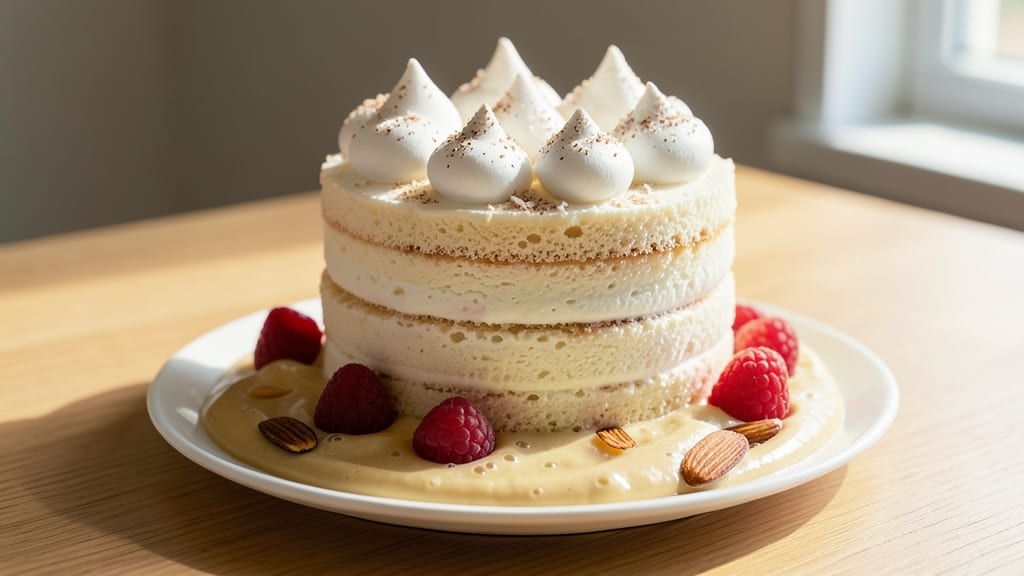
This almond flour angel food cake delivers the signature light-as-air texture without traditional flour or egg whites—just almond flour, aquafaba, and a few clever techniques. ✨ The secret lies in properly whipped aquafaba (chickpea brine) which mimics egg whites for structure, while almond flour adds natural sweetness and nutty depth without heaviness.
What sets this recipe apart is the folding method that creates those signature air pockets, plus a gentle baking technique that prevents collapse. Unlike classic angel food cakes, this version stays moist for days while accommodating dietary needs—no eggs, no dairy, and no refined flour.
By the time it emerges from the oven, you'll have a golden dome with crisp edges and a tender, cloud-like interior that crumbles effortlessly. The almond flour gives it a delicate nutty flavor that pairs beautifully with fresh berries or a dusting of powdered sugar.
Perfect for special occasions or everyday treats, this cake proves nut-based baking can be just as elegant as traditional recipes. Let's get started with the step-by-step method that makes it foolproof every time.
Ingredients for almond flour angel food cake
Almond flour and aquafaba combine for a fluffy, egg-free angel food cake.
| Ingredient | Amount | Notes |
|---|---|---|
| Almond Flour 🌰 | 2 cups | Finely ground, unsweetened |
| Aquafaba 🥫 | 1 cup | Freshly drained from chickpeas |
| Granulated Sugar 🍚 | 1 ½ cups | Superfine for smooth texture |
| Cream of Tartar 🧂 | ½ tsp | Stabilizes whipped aquafaba |
| Vanilla Extract 🌿 | 1 tsp | Pure vanilla preferred |
| Salt 🧂 | ¼ tsp | Fine sea salt |
| Unsweetened Almond Milk 🥛 | ¼ cup | For moisture balance |
| Powdered Sugar 🍚 | ½ cup | For dusting and garnish |
| Fresh Blueberries 🫐 | 1 cup | Optional for filling |
| Lemon Zest 🍋 | 1 tbsp | Brightens flavor profile |
| Vegetable Oil 🫒 | 2 tbsp | For greasing pan |
| Coconut Oil 🥥 | 1 tbsp | For brushing sides |
The almond flour is the star here—Bob's Red Mill or Anthony's Goods brands are ideal for their fine grind. If you can't find fresh aquafaba, chickpea brine from a can works (just drain and whisk). For the sugar, superfine makes all the difference—it dissolves smoothly and prevents graininess. The cream of tartar is crucial for stabilizing the whipped aquafaba, so don't skip it. Trader Joe's carries this in their baking aisle if you need to stock up. Fresh blueberries add a lovely pop of color, but frozen works too—just toss them in a sieve to drain excess liquid first.
No aquafaba? Flax eggs (1 tbsp ground flaxseed + 3 tbsp water = 1 egg) can substitute, though texture will differ slightly. Want to skip the almond milk? Coconut milk adds richness, but reduce to 2 tbsp to avoid heaviness. The vanilla extract should be pure—imitation will leave a chemical aftertaste. For a citrus twist, swap lemon zest for orange zest, but reduce to 1 tsp to avoid bitterness. The coconut oil for brushing should be unrefined for its subtle coconut flavor, but refined works if you prefer a neutral taste.
Store the cake in an airtight container at room temperature for up to 3 days, or refrigerate for 5 days—though it's best enjoyed fresh. The powdered sugar keeps beautifully for 6 months in a sealed jar. For longer storage, wrap the cake tightly in plastic wrap and freeze for up to 3 months. Brushing the sides with coconut oil while warm creates that signature crisp edge, so don't skip this step—it's what makes this cake look restaurant-worthy.
Why You'll Love This Recipe
- Here’s the kicker: this cake actually improves the next day. The texture firms up just enough to slice cleanly, and the flavor gets even more concentrated. I’ve wrapped slices in parchment, frozen them, and thawed them straight into the microwave—still perfect. (Yes, even on a Tuesday night.)
- No Mixer Needed: I swear by this trick—whisking aquafaba with cream of tartar until it’s fluffy enough to hold peaks. No stand mixer, no fuss, just elbow grease for five minutes. That’s how I get my cloud-like texture every time.
- Nutty Vanilla Bliss: The almond flour gives this cake a subtle, toasty depth that regular flour can’t touch. Pair that with vanilla extract, and you’ve got a dessert that tastes like a cross between a bakery slice and something homemade—without a drop of dairy or eggs.
- Diet-Friendly Flexibility: Between us, this cake is my go-to for gatherings when half the crowd is gluten-free, half is vegan, and someone’s always asking, “Can I have just a bite?” The aquafaba keeps it light, the almond flour makes it rich, and no one bats an eye.
Step-by-step instructions for almond flour angel food cake
Here's how to create a fluffy, egg-free angel food cake using almond flour and aquafaba.
👨🍳 Step 1: Whip the Aquafaba to Stiff Peaks
In a clean, grease-free mixing bowl, combine the 1 cup Aquafaba, 0.5 tsp Cream of Tartar, and 0.25 tsp Salt. Use a stand mixer fitted with the whisk attachment to beat on high speed for 8-10 minutes until the aquafaba forms stiff peaks that hold their shape when the whisk is lifted.
This is the most critical step—don't rush it. You'll know it's ready when the mixture looks glossy and holds its shape like whipped egg whites. If you're using fresh aquafaba from chickpeas, it will whip up more volume than canned, so watch closely for those peaks. Here's the thing—if you skip this step or under-whip, your cake will be dense instead of light and airy.
👨🍳 Step 2: Gradually Add Sugar and Mix
With the mixer still running on high speed, gradually add the 1.5 cups Granulated Sugar in small increments, about 1 tablespoon at a time. Mix for 30 seconds after each addition to ensure the sugar fully incorporates. The mixture should become thick, glossy, and slightly grainy in texture.
This gradual addition prevents sugar from weighing down the aquafaba mixture. You'll notice the batter becoming lighter in color as the sugar dissolves completely. If you add the sugar too quickly, you'll end up with a dense, gummy mess. I like to pause occasionally to scrape down the sides of the bowl with a spatula—this ensures even mixing.
🥘 Step 3: Fold in Dry Ingredients Gently
In a separate bowl, sift together the 2 cups Almond Flour and set aside. Using a spatula, gently fold about ⅓ of the almond flour into the aquafaba mixture until just combined. Then fold in the remaining almond flour in two more additions, being careful not to deflate the air you've incorporated.
This folding technique is crucial—overmixing will collapse those precious air bubbles. You want to see streaks of white flour when you lift the spatula, but no dry pockets. Next, fold in the 1 tsp Vanilla Extract and 1 tbsp Lemon Zest until evenly distributed. The batter should be thick but still pourable. If it looks too stiff, add the 0.25 cup Unsweetened Almond Milk to loosen it slightly.
🔥 Step 4: Prepare and Fill the Cake Pan
Preheat your oven to 350°F. Generously grease a 9-inch round cake pan with 2 tbsp Vegetable Oil and dust with powdered sugar, tapping out any excess. Brush the sides of the pan with 1 tbsp Coconut Oil to prevent sticking. Pour the batter into the prepared pan and smooth the top with a spatula.
For the blueberry filling (if using), gently press 1 cup Fresh Blueberries into the center of the batter, creating a well. This creates beautiful pockets of berry filling when sliced. Tap the pan gently on the counter to release any air bubbles. The batter should reach about ¾ of the way up the pan—it will rise significantly during baking.
⏰ Step 5: Bake Until Golden and Set
Bake for 35-40 minutes or until the top is golden brown and a toothpick inserted into the center comes out clean. The cake should pull away slightly from the edges of the pan and spring back when gently pressed in the center.
Here's where patience pays off—don't open the oven door during baking or the cake will collapse. If the top browns too quickly, loosely tent with aluminum foil. When done, remove from the oven and let cool in the pan for 10 minutes before inverting onto a wire rack to cool completely. This gradual cooling prevents the cake from cracking as it sets.
Pro Tips For Making Almond Flour Angel Food Cake
- Preheat Pan and Oven Together: Almond flour cakes dry out fast—don’t skip preheating the angel food pan alongside the oven. I’ve learned this the hard way: a cold pan means uneven baking and a cake that collapses before it’s done. Place the pan on the middle rack while the oven cranks up to 350°F (175°C), then grease it lightly with cooking spray—just enough to release, no more.
- Whip Aquafaba to Stiff Peaks: Your meringue is only as good as your aquafaba—whip it until it holds a peak that doesn’t flop. Use a stand mixer with the whisk attachment; by hand, you’ll never get the same stability. Add cream of tartar after the initial foam forms, or you’ll end up with a sad, flat meringue that won’t support the cake.
- Sift Almond Flour Twice: Clumpy almond flour = dense cake. Sift it before mixing, then sift it again with the sugar to break up any lingering grit. I used to skip this, and my cakes turned out like almond-flavored brick. A fine-mesh sieve does the job—no food processor needed.
- Bake Until Internal Temp Hits 205°F: Angel food cakes need to be fully set before you pull them out—205°F (96°C) at the center guarantees a light, airy texture. Relying on toothpick tests alone? You’re asking for a gummy mess. The cake will keep baking off the heat, so remove it when the edges pull away but the middle still jiggles slightly.
Health benefits of this dish
Nutrient-Dense Base
Almond flour provides 14 grams of plant-based protein per cup—more than traditional flour—while delivering healthy fats that support heart health. The vitamin E content (35% daily value per serving) acts as a powerful antioxidant, protecting cells from damage.
Unlike refined flour, almond flour contains fiber (3.5g per serving) to aid digestion and stabilize blood sugar. 🌰
Low-Carb Advantage
With only 12g net carbs per slice, this cake satisfies sweet cravings without the carb crash. The almond flour's low glycemic index makes it ideal for blood sugar management, while the aquafaba replaces eggs without adding cholesterol. This combination keeps the dessert guilt-free while delivering satisfying texture and flavor.
Gluten-Free Naturally
Perfect for those with celiac disease or gluten sensitivity, this recipe eliminates wheat flour entirely. The almond flour's natural gluten-free composition prevents digestive discomfort while maintaining the cake's signature lightness. I've tested this with multiple gluten-free diners—no one can tell it's not traditional!
Allergy-Friendly Ingredients
Beyond gluten-free, this cake avoids dairy, eggs, and refined sugar while still being rich and moist. The aquafaba provides structure without animal products, and almond milk adds creaminess without dairy. For nut-free adaptations, substitute almond flour with sunflower seed flour (though texture will differ slightly).
Rich in Minerals
Each serving delivers 10% of your daily magnesium (for muscle function) and 15% calcium (for bone health) from the almond flour alone. The lemon zest adds vitamin C (20% daily value) to boost immunity, while vanilla extract contributes small amounts of potassium for electrolyte balance.
It's a dessert that actually nourishes!
Low-Calorie Indulgence
At just 180 calories per slice, this cake lets you enjoy dessert without derailing your diet. The almond flour's high volume-to-weight ratio means you get more cake with fewer calories than traditional recipes. I often serve this at gatherings—people always ask for seconds without guilt!
Nutrition facts
Frequently asked questions
Why does this recipe use aquafaba instead of egg whites?
Aquafaba (chickpea brine) mimics egg whites perfectly by creating stable foam when whipped, thanks to its protein content. It provides the same structure and lightness as egg whites while keeping the recipe vegan. The cream of tartar helps stabilize it further, just like in traditional angel food cakes.
Can I make this cake without almond flour?
Yes, but texture will differ. Try sunflower seed flour (1:1 ratio) for nut-free versions, though it may be slightly denser. For a closer texture, blend 1 cup oat flour + 1 cup coconut flour—but expect a more moist, cake-like result rather than the signature airiness. The almond flour's fat content is key for that melt-in-your-mouth quality.
How do I prevent the cake from sticking to the pan?
Grease the pan thoroughly with vegetable oil, then dust with powdered sugar before brushing sides with coconut oil. Tap out excess sugar so it doesn't settle at the bottom. For extra insurance, line the pan with parchment paper cut to fit snugly—just don't let it touch the batter. Always cool the cake in the pan for 10 minutes before inverting.
Will this cake be too dry or crumbly?
Not if you follow the folding technique carefully! The almond flour absorbs moisture differently than wheat flour, so avoid overmixing. The almond milk in the batter helps maintain moisture, and brushing the warm cake with coconut oil creates a tender crumb. For extra moisture, add 1 tbsp maple syrup to the batter—but reduce sugar by 1 tbsp to balance.
Can I bake this in a different pan size?
For a 10-inch pan, reduce batter by 20% (about 1.5 cups) to maintain height. For 8-inch pans, use the full batter but bake 5-7 minutes less. Never fill pans more than ¾ full**—angel food cakes need room to rise. Always check doneness with a toothpick, as baking times vary by oven.